Dr. Vikas Singh is a distinguished Consultant Urological Oncologist in Indore, specializing in the diagnosis, precise staging, and intricate surgical management of Penile Squamous Cell Carcinoma. The prognosis for Penile Cancer depends critically on accurate lymph node staging in the groin region. Dr. Singh emphasizes a comprehensive multi-modal approach, incorporating Penile Sparing Surgery (PSS) whenever feasible to preserve cosmetic and functional outcomes, alongside definitive regional lymph node management through Dynamic Sentinel Lymph Node Biopsy (DSNLB) and customized Inguinal Lymph Node Dissection (ILND). His specialized proficiency ensures both effective cancer control and optimal quality of life.
Focus on local excision, glans resurfacing, and laser ablation to preserve function.
Dedicated emphasis on Urological Oncology, including complex Penile Cancer management.
Expertise in Dynamic Sentinel Node Biopsy to prevent unnecessary extensive surgery.
A tissue sample is obtained from the suspicious lesion for pathological examination. This is the only method to confirm Penile Squamous Cell Carcinoma diagnosis (the most common type) and establish its grade and invasion depth, which is essential for staging.
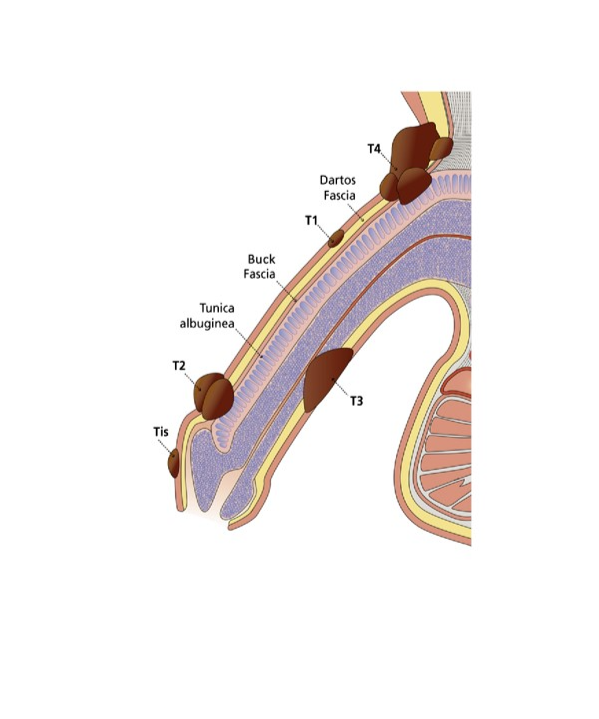
High-resolution imaging, such as penile MRI or high-frequency ultrasound, determines tumor invasion depth (e.g., into the corpus cavernosum). This local staging establishes whether Penile Sparing Surgery is a safe option or if more extensive excision is necessary.
The most significant prognostic factor is inguinal lymph node status (in the groin). For clinically negative nodes, Dynamic Sentinel Lymph Node Biopsy (DSNLB) is employed to identify and sample the initial draining nodes, helping avoid unnecessary complete Groin Dissection in approximately 80% of cases.
The objective is always to treat cancer curatively while preserving maximum functional length. Depending on tumor size and stage, this may involve Penile Sparing Surgery (PSS)—utilizing techniques like wide local excision or Glans Resurfacing. For larger tumors, Partial Penectomy ensures adequate tumor-free margins (typically 2 cm), which is essential for preventing recurrence. Primary Goal: Achieving clear surgical margins and maximizing remaining penile function for sexual activity and urination.
If lymph nodes are clinically enlarged or confirmed positive by DSNLB, therapeutic ILND (Groin Dissection) becomes necessary. This surgery is technically challenging and carries risks of lymphoedema (swelling) and wound complications. Dr. Singh performs customized dissection (modified vs. radical) based on disease extent to minimize morbidity while ensuring complete cancer clearance. This step is vital for preventing metastatic spread and significantly influences survival outcomes. Primary Goal: Accurate nodal staging, complete disease clearance, and minimizing side effects like lymphoedema.
Prioritizing Penile Sparing Surgery to maintain sexual and urinary function whenever clinically appropriate.
Prophylactic interventions and patient education to minimize leg swelling risk following Groin Dissection.
Addressing the distinctive emotional and psychological challenges associated with Penile Cancer treatment.
Discussing alternatives for neourethra or perineal urethrostomy following total penectomy for comfortable voiding.
Schedule a private, confidential consultation with Dr. Singh in Indore.
The main risk factors include inadequate hygiene, Phimosis (inability to retract the foreskin), chronic inflammatory conditions, and Human Papillomavirus (HPV) infection. Circumcision, particularly when performed early in life, is recognized to substantially reduce risk.
A Partial Penectomy removes only the cancerous portion of the penis, leaving a functional stump for urination and potentially sexual activity. A Total Penectomy removes the entire organ, and the urethra is redirected to an opening in the perineum (between the scrotum and anus), termed a Perineal Urethrostomy. This is reserved for very advanced or proximally located tumors.
Lymphoedema (chronic leg swelling) represents a major complication after Inguinal Lymph Node Dissection (ILND) because the surgery removes lymph nodes crucial for draining fluid from the legs. Dr. Singh employs modified and nerve-sparing techniques to limit dissection extent whenever possible, which substantially reduces this long-term side effect risk.
Spread risk correlates directly with primary tumor depth and grade. For low-risk, small tumors, risk is minimal, and Active Surveillance or DSNLB may be utilized. However, if cancer has invaded deeply, risk increases, necessitating complete Inguinal Lymph Node Dissection to prevent life-threatening systemic spread. Accurate staging is fundamental to determining required treatment.

The leading center for advanced, compassionate urological care and treatment in Indore, Madhya Pradesh.