
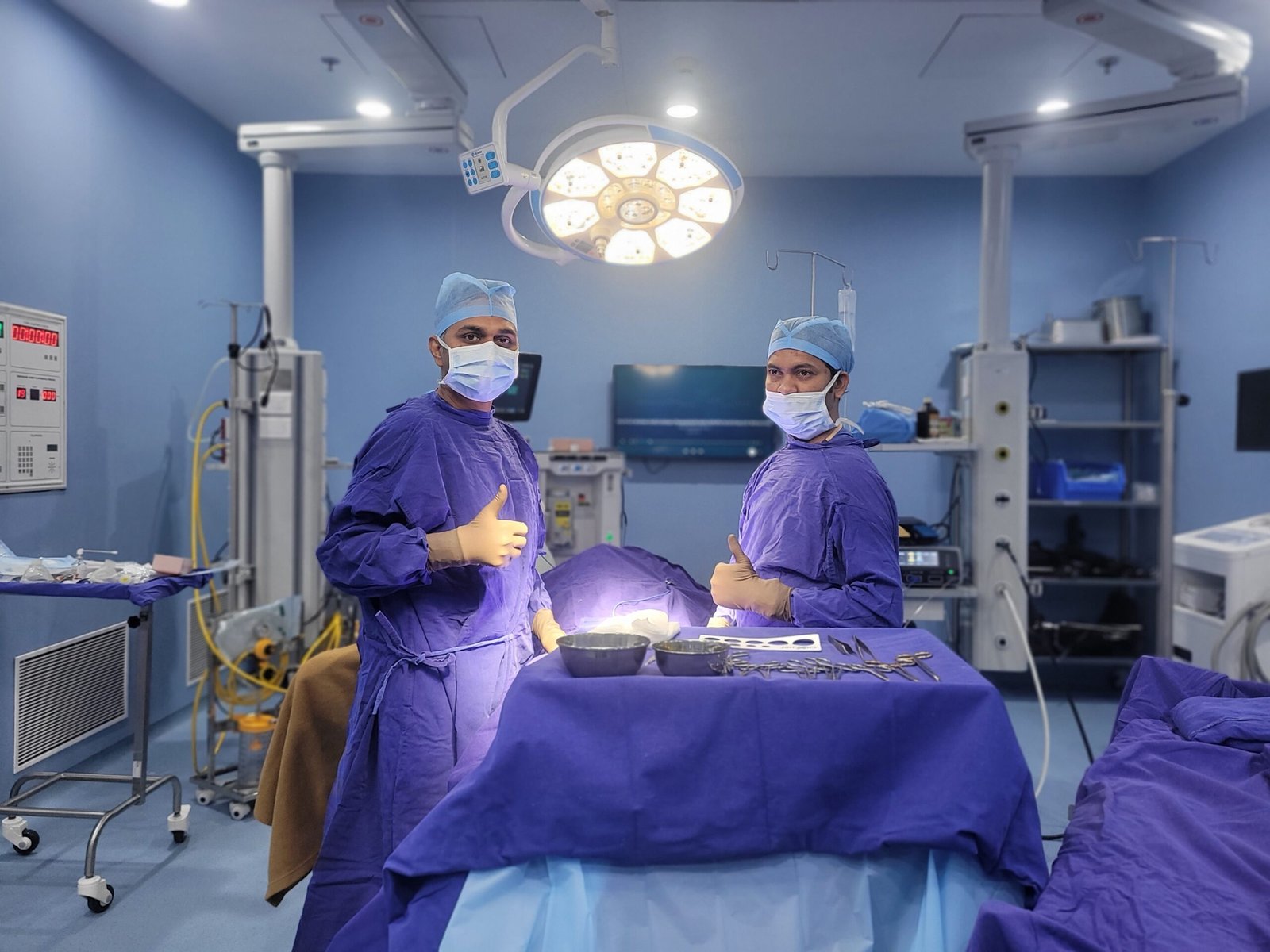
Circumcision has been practiced for thousands of years, but the way it is performed has changed dramatically in the modern era. Once a scalpel and sutures were the only tools, today’s patients have many advanced options, each providing a better experience, faster healing and better results than traditional open surgery. Stapler circumcision is one of the most innovative of these modern approaches and in many respects the fastest and mechanically most precise method available.
Stapler circumcision is a specially designed, disposable, circular stapling device, similar in principle to the stapling instruments used in abdominal and colorectal surgery. The device removes the foreskin, and simultaneously seals the wound edges with a ring of tiny titanium or absorbable staples, in one smooth motion that takes less than five to 10 minutes. This results in a perfectly circular, uniformly symmetric circumcision with very little bleeding, no sutures and a clean healing process due to a self-separating staple ring.
Stapler circumcision (also known as circular stapler circumcision or the disposable circumcision stapler (DCS) technique) is a modern, minimally invasive surgical technique for circumcision that uses a purpose-built, single-use circular stapling device to excise the foreskin in a single, controlled firing action. The device cuts the foreskin and simultaneously places a ring of equally spaced staples around the perimeter of the wound, mechanically sealing the cut edges and eliminating the need for surgical sutures.
The stapler device comprises 2 main parts: an inner bell (to be inserted under the foreskin over the glans) and an outer ring (to be inserted over the foreskin at the desired level of resection). The foreskin is evenly held between the two parts. When the device is fired a circular blade inside the device cuts through the foreskin at a perfectly even plane around the entire circumference at the same time and the staple ring is deployed in the same motion – sealing the wound edges before they can bleed. The foreskin and device are removed together, resulting in a neat circumferential wound that is protected by the staple ring.
The whole firing process takes less than five minutes from the moment the device is placed to the removal of the cut off foreskin. The staple ring, a thin, rigid circular structure that sits around the circumcision wound, will gradually loosen and separate from the healed wound over the next five to ten days and will fall off naturally, usually without requiring a return visit for removal. The healed circumcision line below is clean, even and nearly indistinguishable from a neatly done hand-sewn circumcision, but is done with much greater speed and mechanical uniformity.
In adults and older adolescents, stapler circumcision is performed under local anesthesia (penile ring block) or, if full sedation is preferred, under short general anesthesia. It is a day-care procedure, meaning patients go home the same day, usually within two to three hours of arriving at the hospital. The technique is well established globally with millions of stapler circumcisions performed over the last two decades and an excellent published safety and outcome record.
Circumcision is the surgical removal of the prepuce, the foreskin that covers the head of the penis. While the foreskin does provide a protective function in early childhood, there are several medical conditions that affect the foreskin that require its removal. Stapler circumcision is suitable in adult and older paediatric patients for most of these indications.
Phimosis (Tight or Non-Retractile Foreskin)
Phimosis is the most common medical indication for circumcision, a condition in which the opening of the foreskin is too tight to allow it to be retracted over the glans penis. Physiological non-retractile foreskin is normal in infants and young children and does not require treatment. By the time a boy reaches puberty, in most males the foreskin should be retractable. Persistent phimosis in adults — particularly with pain on erection, difficulty with hygiene, or obstruction of urination — is a clear indication for circumcision. Phimosis is graded from mild ( partial retraction possible ) to severe ( pinpoint opening , no retraction possible ) . Surgery is usually required for grades 3–5. Stapler circumcision is a good option for adults and adolescents with phimosis who need a dependable removal of the tight foreskin with great cosmetic outcome and minimal downtime.
Paraphimosis (Foreskin Trapped Behind the Glans)
Paraphimosis is a urological emergency in which a retracted foreskin becomes trapped behind the glans and cannot be reduced to its normal forward position. The tightening ring of foreskin obstructs venous drainage and leads to progressive engorgement and swelling of the glans which further aggravates the constriction. Paraphimosis, if not treated promptly, can lead to ischaemia and permanent tissue damage. Elective circumcision is strongly recommended after emergency manual reduction or surgical release of the acute episode to prevent recurrence. Stapler circumcision is an appropriate definitive procedure in men with recurrent paraphimosis after the acute episode has settled and any residual swelling has subsided.
Recurrent Balanitis & Posthitis (Chronic Foreskin Infections)
Balanitis (glans inflammation) and posthitis (inflammation of the foreskin) are very common in men with tight, poorly retractile foreskins because the enclosed preputial space provides an ideal warm, moist environment for bacterial and fungal colonisation. “Recurrent episodes of redness, swelling, pain, discharge and offensive odour are a cause of significant distress and invariably affect quality of life and sexual confidence.” Circumcision is an effective way to address the fundamental anatomical cause by permanently removing the preputial environment that causes recurrence when three or more episodes occur per year, or when infections do not adequately resolve with medical treatment. Stapler circumcision does this quickly and accurately and with minimal recovery time.
Lichen Sclerosus BXO Causing Foreskin Scarring
Lichen sclerosus (LS) (formerly known as balanitis xerotica obliterans (BXO)) is a chronic inflammatory dermatosis resulting in progressive white, sclerotic, atrophic scarring of the foreskin and, in advanced cases, the glans and distal urethra. Lichen sclerosus leads to pathological phimosis of the foreskin, which is resistant to treatment with topical steroids. Circumcision removes the diseased tissue and permits histological proof of the diagnosis. If lichen sclerosus is limited to the foreskin without significant urethral involvement, stapler circumcision is a suitable surgical procedure. However, the stapler device fitting and foreskin preparation require additional surgical care compared with standard phimosis cases, because the lichen sclerosus tissue is often rigid, thickened and adherent to the glans. If there is urethral involvement it may require extra urethral procedures at the same time as the circumcision.
Recurrent UTIs in Boys Due to Tight Foreskin
Male infants and young boys with a tight, non-retractile foreskin are at greater risk of urinary tract infections – bacteria colonise the preputial space and ascend the urethra. Boys with 2 or more documented urinary tract infections (UTI) are evaluated for preputial contributing factors. If a tight foreskin is identified to be a contributing cause of recurrent UTIs in a child, circumcision eliminates this risk factor of anatomy. For young boys laser circumcision under general anaesthesia is usually preferred because precise, gentle handling of the foreskin in small paediatric anatomy is required. Stapler circumcision is most commonly used in older boys (adolescents) and adults when the anatomy is appropriate for the circular stapling device.
Religious & Elective Circumcision Requests
Large numbers of families across India and worldwide perform circumcision for religious and cultural reasons; it is a central ritual practice in Islam and Judaism and a cultural norm in many communities. Some adult men ask to be circumcised electively for reasons of personal hygiene, aesthetics or at the behest of a partner. Dr Vikas Singh performs religious and elective circumcision with the same level of care and procedural excellence as medically indicated circumcision – and offers stapler circumcision for suitable adult and older paediatric candidates who prefer its mechanical precision, speed and stitchless healing.
Foreskin problems are some of the most common urological conditions to go under-reported, with many men suffering debilitating symptoms for years before seeking advice. A urologist should evaluate the following symptoms, as they may indicate a condition requiring circumcision.
Painful or Difficult Urination Due to Foreskin Tightness
In severe phimosis the opening of the foreskin can become so tight that it visibly constricts the flow of urine – the stream becomes thin and strained, urination takes longer than usual and in the worst cases the patient has to strain considerably to pass urine. Obstructive uropathy from a tight foreskin is rare in adults (who would usually present earlier with pain or infection symptoms) but more easily recognized in children. Any child or adult who has difficulty urinating because of a tight foreskin should be seen as soon as possible – even a mild obstruction to the flow of urine can, over time, affect the way the bladder works.
Ballooning of Foreskin While Passing Urine
Foreskin ballooning is an unmistakable and characteristic sign of significant phimosis in children, where the foreskin visibly balloons with urine during micturition before the urine escapes through the tight meatus. This occurs because the opening of the foreskin is so tight that urine is unable to flow out fast enough to match its production in the preputial space during voiding. Often it is through ballooning that the parents realise their child needs to see a doctor. Significant phimosis is confirmed, and is an indication for circumcision if it persists beyond five to six years of age (or is associated with urinary symptoms or infections).
Inability to Retract Foreskin During Erection or Cleaning
In the absence of symptoms, failure of complete retraction of the prepuce is clinically significant in adult males. It results in poor penile hygiene predisposing to smegma accumulation, chronic odour and infection. It makes intercourse and erection uncomfortable, and sometimes impossible. Many men with adult phimosis have suffered these restrictions for years – believing them to be unavoidable. Diagnosis can be confirmed with a short urological consultation, and definitive treatment is available with circumcision, which cures the condition permanently.
Redness, Swelling & Foul-Smelling Discharge From Foreskin
Balanitis or balanoposthitis is characterized by acute or recurrent redness, tenderness, swelling and discharge from underneath the foreskin or around the glans. These episodes are accompanied by a lot of local discomfort, sometimes with systemic symptoms of infection (fever, general malaise). Antibiotics or antifungals alone are not able to fix the anatomical cause, as the underlying phimosis creates the conditions for recurrence in men with tight foreskins. Circumcision is the definitive treatment when episodes recur despite adequate medical therapy. Choosing the right peri-operative antibiotic prophylaxis is aided by diagnosis of the infecting organism (bacterial, candidal or mixed) prior to circumcision.
Painful Erections Due to Phimosis in Adults
During erection, the tight, inelastic phimotic ring stretches painfully against the engorged penis, causing splitting, tearing, or simply sustained pain, and makes erection very uncomfortable. Phimosis causing pain during erection and intercourse is one of the most motivating symptoms for adult men to undergo circumcision, since it directly affects sexual function and sexual enjoyment. Circumcision is a permanent and complete solution – the tight ring of foreskin is cut away, and the mechanical constraint that causes the pain is gone. Many adult men who have circumcision for this indication report the procedure to be transformative to their sexual confidence and relationship quality.
White Hardened Scarring of Foreskin (BXO / Lichen Sclerosus)
Clinical features of lichen sclerosus are distinctive white, thickened, porcelain-like plaques on the foreskin. They move forward over time, progressing from the tip of the foreskin to the glans, and in severe cases may reach the urethral meatus. Lichen sclerosus, unlike simple phimosis, responds to topical steroid therapy in most cases until significant scarring has occurred and the condition tends to progress if left untreated. The diseased tissue is removed by circumcision and the necessary histological specimen is obtained for diagnosis. When lichen sclerosus is clinically suspected, the circumcision specimen is routinely submitted for pathological analysis.
Stapler circumcision is an elective day care procedure and in most of the patients does not require extensive pre operative workup. However, a detailed assessment is necessary to ensure patient safety, identify any factors that may influence technique choice or wound healing, and optimize the outcome.
Clinical Examination & Phimosis Grading
Before stapler circumcision, all patients undergo a detailed clinical examination of the foreskin and glans. The degree of phimosis is graded (Grade 1 to 5) on a validated scale to assess the severity of the narrowing and its implication for surgical planning. The examination also assesses whether the foreskin is adherent to the glans (which may necessitate further separation prior to fitting of the stapler device), whether there is any active infection or inflammation (which should be treated prior to elective surgery), and whether there are any skin changes suggestive of lichen sclerosus or other dermatological conditions. For stapler circumcision , the diameter of the opening in the foreskin and the overall dimensions of the penis are measured to ensure that a stapler device of appropriate size can be comfortably accommodated .
Urine Culture & Infection Screening If Required
If the patient has current or recent symptoms of urinary tract infection or active balanitis, urine culture and mid-stream urine sample are taken before surgery. Elective circumcision should not be performed until active infection has been treated and cleared as documented. Performing surgery on infected tissue increases the risk of wound complications significantly. In adults who suffer from recurrent balanitis and have had several episodes of infection of the penis or prepuce, a swab culture from beneath the foreskin can be sent to identify the causative organism and help choose the perioperative antibiotics. Sexually transmitted infection screening (Chlamydia, gonorrhoea) offered where clinically appropriate.
Blood Sugar Testing for Diabetic Patients
Pre-operative glycaemic assessment should be done in all diabetic patients undergoing stapler circumcision. Fasting blood glucose and HbA1c are measured and surgery is preferably performed when blood glucose control is optimised, targeting a HbA1c below 8 percent, ideally below 7.5 percent. Poorly controlled diabetes impairs wound healing, increases the risk of infection and slows the natural process by which the staple ring separates from the wound. Diabetic patients should also watch their post-operative wounds and contact for an earlier than usual follow-up call if there is any change in the appearance of the wound or delayed separation of the ring. Stapler circumcision is preferred over open surgery in diabetic patients due to better wound security with its sealed wound edges and minimal bleeding.
Skin Biopsy in Suspected BXO / Lichen Sclerosus Cases
Diagnosis of lichen sclerosus is based on the clinical appearance of the foreskin, with white, hardened, atrophic plaques at the tip of the foreskin or over the inner surface of the foreskin, and is confirmed histologically either from a pre-operative biopsy or from the circumcision specimen. In all cases of clinically suspected lichen sclerosus, the circumcision specimen is sent routinely for pathological examination. Histological confirmation of BXO/lichen sclerosus is important for medicolegal documentation of the diagnosis, for counselling patients about the chronic nature of the condition and the need for long-term surveillance (including monitoring for urethral involvement and the very small but real risk of malignant transformation), and for planning postoperative follow-up.
Pre-Anaesthesia Fitness Checkup
All patients who require stapler circumcision under general anaesthesia (mostly young children and anxious adults who would prefer to be sedated) need to be assessed for fitness before anaesthesia. Assessment includes clinical history with particular attention to cardiac and respiratory health, review of current medication (particularly anticoagulants and antiplatelets that may need to be temporarily modified), resting ECG in patients over 40 years of age or with a history of cardiac disease and routine blood tests (full blood count, coagulation screen). For adult patients undergoing the procedure under local anaesthesia alone, a focused health assessment reviews fitness for the minor surgical procedure – identifying any contraindications to local anaesthetic agents or procedural sedation.
Stapler circumcision offers a powerful mix of technical benefits that are translated directly into an improved patient journey from the procedure itself to the recovery period and the end result:
Single-Step Cutting & Sealing in One Fire
The main technical feature of the stapler circumcision is the combination of two different surgical steps – tissue resection and wound closure – in a single instant of the device. In conventional circumcision, the processes of cutting and suturing are separate sequential steps whereas in laser circumcision the processes of cutting and coagulating are performed in a continuous, but sequential motion. The stapler does both in one mechanical action, the circular blade cuts the foreskin and the staple ring is deployed at the same time around the circumference of the wound. This simultaneous execution is not a technical curiosity – it means that the wound is sealed before it has time to bleed, eliminating the need for haemostatic sutures, dramatically reducing operative time and producing a consistently sealed wound edge that begins healing immediately.
Minimal Bleeding Due to Simultaneous Stapling
The staple ring is a mechanical device that instantaneously seals the wound edges as the foreskin is cut so there is virtually no opportunity for blood to pool in the wound. The titanium or absorbable staples approximate the edges of the tissue with precise, even tension – achieving haemostasis through mechanical compression rather than the surgeon having to identify and tie each bleeding vessel individually as in open surgery. The result is an almost bloodless operative field and a very low risk of post operative haematoma (blood collection under the skin) – one of the most frequent and uncomfortable complications of traditional circumcision. One of the most reassuring things for anxious patients and families is the virtually bloodless nature of stapler circumcision.
No Sutures Required in Most Cases
Sutures (dissolvable or non-dissolvable) are among the most commonly reported causes of post-circumcision discomfort. They may cause a feeling of tightness, sometimes do not dissolve as expected and sometimes cause local tissue reaction. Stapler circumcision replaces the sutures with the mechanical staple ring entirely — removing all complications associated with sutures and the visits to remove the sutures. The staple ring itself is a temporary structure that is supposed to fall off naturally as the wound underneath heals, usually between day five and day ten after the procedure. If the ring has not separated by day twelve to fourteen, which is unlikely, it can be removed easily and painlessly at a short follow-up visit.
Day Care Procedure – Discharge Same Day
Stapler circumcision can be done as a day care procedure. The patient arrives to the hospital, given local anaesthesia (penile ring block) or short general anaesthesia for young patients or those who prefer sedation. The procedure takes five to ten minutes. The patient is discharged home after one to two hours of post-procedure monitoring with a simple dressing, written care instructions and prescription for mild analgesics. It does not require overnight hospitalization, inpatient nursing care, or long-term observation. The procedure is quick and easy which makes it especially convenient for busy working adults and for families with children wanting the least amount of time in the hospital.
Uniform & Symmetrical Cosmetic Result
Cosmetic outcome is a major concern for most men undergoing circumcision. This is particularly true with adult elective circumcisions and religious circumcisions where appearance is a major concern. The mechanical design of the circular stapling device creates a perfectly even circumcision line of 360 degrees around the entire circumference of the penis at the same time. This geometric precision is independent of the surgeons freehand technique and ensures that the foreskin removal and wound edge placement is perfectly symmetrical – no uneven mucosal cuff, no irregular wound edge, no one sided asymmetry. The healed scar is a clean, uniform circumferential line that fades gradually over several months. The consistency of the stapler result is particularly attractive for men who have seen results of suboptimal traditional circumcisions.
Shorter Operation Time Compared to Open Surgery
Stapler circumcision has a total operative time of about fifteen to twenty minutes from local anaesthetic injection to dressing application and the actual stapling step takes less than five minutes. Traditional open circumcision takes 30–40 minutes of continuous surgical work (cutting, haemostasis, suture); laser circumcision takes 20–30 minutes. For the patient under local anaesthesia, a shorter operative time means less time in the procedure room, less cumulative discomfort from the local anaesthetic injection site and faster progression to discharge. The surgeon benefits from longer operative time through better use of operating time, especially in a high-volume practice where multiple procedures are done in one session.
Suitable for Adults & Older Children
Stapler circumcision is suitable for adults and older adolescents (usually from the age of fourteen to fifteen years and above) where penile anatomy has sufficiently matured to comfortably accommodate the standard circumcision stapler device sizes. Laser circumcision is generally a preferable alternative for younger children, such as infants and boys in primary school. The fine cutting beam of the laser provides greater accuracy and tissue economy for the smaller, more delicate foreskin anatomy. The stapler device was well tolerated in older adolescents and adults, the staple ring was tolerated without difficulty, and the mechanical symmetry of the outcome was particularly appreciated. For diabetic adults who need the most reliable sealing of the wound, stapler circumcision is best suited.
No matter if the circumcision is medical, religious, or elective, it is a procedure that patients and families put a lot of trust in their surgeon to do well, safely, and with very real compassion. This is why patients from all over Indore and Central India prefer Dr. Vikas Singh:
Posted on GoogleTrustindex verifies that the original source of the review is Google. Dr vikas singh is best urologist in IndorePosted on GoogleTrustindex verifies that the original source of the review is Google. Nice treatmentPosted on GoogleTrustindex verifies that the original source of the review is Google. My treatment given by Dr vikas sir he is best doctorPosted on GoogleTrustindex verifies that the original source of the review is Google. Best doctorPosted on GoogleTrustindex verifies that the original source of the review is Google. Hm log shivpuri se dr vikas sir ko dikhane aaye, sir se milkar bahut acha lga, nature or treatment bahut sahi hePosted on GoogleTrustindex verifies that the original source of the review is Google. Nice doctorPosted on GoogleTrustindex verifies that the original source of the review is Google. Very experienced and caring doctor. Excellent treatment and patient-friendly approach. Highly recommended.”Posted on GoogleTrustindex verifies that the original source of the review is Google. On dt27.06.2026 dr.vikas singh performed my prostatomegaly surgery by Urolift method . I am now fealing very well.Within two days l got discharged from Kokilaban Dhirubhai Ambani hospital Indore (MP).I am very thankfull to this very new method Urolift,Dr.Vikas singh sir and BCM Kokilaben Dhirubhai Ambani hospital,Nipania Indore. ByAdarsh kumar pauranik.Posted on GoogleTrustindex verifies that the original source of the review is Google. Good experience for testis treatment for my son
Stapler circumcision utilizes a disposable circular stapling device that excises the foreskin and concurrently applies a ring of evenly spaced staples around the circumference of the wound in a single firing of the device lasting less than five minutes. The staple ring keeps the edges of the wound together as it heals underneath, so you do not need to hand-sew it up. After approximately five to ten days, when the wound under the ring has healed enough, the ring will loosen and fall off naturally. The process is completely painless and in most cases no return visit is needed for ring removal.
Stapler circumcision is performed under local anaesthetic (penile ring block) in adults and older adolescents, the penis being totally numb at the time of the procedure and the firing of the stapler device being painless. Soreness, mild to moderate, develops once the anaesthetic wears off (about three to four hours) and is well managed with paracetamol. The staple ring may cause a mild sensation of tightness or pressure in the first few days, especially if erections are experienced. Most patients rate the discomfort as mild and manageable and it generally subsides within five to seven days as the ring begins to loosen.
The stapled circumcision surgery itself, from insertion of the device to removal of the skin, lasts five to ten minutes. The total time in the procedure room is usually fifteen to twenty minutes including administration of local anaesthetic, preparation of the device and application of the protective dressing. After the procedure, patients stay in the recovery area for one to two hours before being released home. In total, most patients take two to three hours from arrival in hospital to leaving.
In most patients, usually more than 80 to 85 percent, the staple ring separates and drops off spontaneously between day five and day 10 after the procedure without a return visit. This separation usually happens when showering, cleaning a wound or changing underwear and is painless. If the ring has not fallen out by day twelve to fourteen, patients are advised to contact the clinic for a short follow-up visit – at this stage, the ring can be easily removed with minimal intervention. Patients should not attempt to forcibly pull or remove the ring before it has loosened on its own, as premature removal can interfere with healing.
Stapler circumcision is usually recommended for older adolescents (around 14 years and above) and adults who have developed a penile anatomy that can easily accommodate the circular stapling device. Laser circumcision is generally the preferred method for younger children, such as infants, toddlers and primary school age boys, as the laser’s fine cutting beam can work with greater precision and tissue conservation on small, delicate paediatric foreskin anatomy. Dr. Vikas Singh examines the age, anatomy, and medical indication of the child to determine whether stapler or laser circumcision would be suitable for the child during the consultation.
Both the stapler and the laser circumcision are modern, minimally invasive options to avoid significant bleeding and give excellent cosmetic results when compared to the traditional open surgery. Main differences: Laser circumcision uses laser energy to cut the foreskin and simultaneously seal blood vessels, resulting in an almost bloodless wound that does not need stitches. Stapler circumcision uses a mechanical circular stapling instrument to cut the foreskin and place a staple ring in one shot. Laser circumcision is usually preferred for young children and cases requiring fine anatomical accuracy. Stapler circumcision is the fastest (five to ten minutes for the stapling step), yields the most mechanically uniform circumferential result, and is particularly appropriate for adults and older adolescents. Both techniques provide day-care discharge and rapid recovery compared to open surgery.
Stapler circumcision devices use either tiny titanium staples (similar to surgical clips used in abdominal and thoracic surgery) or absorbable polymer staples. After the ring separates , the titanium staples are permanently in the tissue . They are very small ( submillimetre ) , biocompatible , and cause no clinical problems . They are not visible from the outside, rarely detectable through the scar tissue after healing, and do not set off metal detectors. Absorbable staples are absorbed over a period of weeks to months. But in either case, after the ring is separated, the individual staples do not need to be removed or managed.
Most adult patients return to desk-based work within five to seven days, normal daily activities within one to two weeks of ring separation, and are fully healed within three to four weeks. Avoid heavy physical activity for two to three weeks and sexual activity for four to six weeks. Kids and teens usually recover faster — they’re back to normal activity within a week to two for most patients. Unlike other procedures, the most prominent aspect of stapler circumcision recovery is the staple ring period (five to ten days), during which the patients are recommended to keep the area clean and dry and to let the ring drop off on its own.
Yes, and stapler circumcision is a good and safe option for diabetic patients who need circumcision. The staple ring presses the edges of the tissue together and reduces the wound surface area exposed to bacteria . Thus , the mechanically sealed wound edges of the stapler technique are less prone to infection than an open surgical wound . Pre-operative optimisation of blood sugar (HbA1c < 8%) is essential and diabetic patients are counselled about the importance of meticulous wound hygiene and prompt reporting of any signs of infection. Wound healing can be slightly slower in diabetics – ring separation can occur at the later end of the normal range (day ten to fourteen instead of day five to eight).