
Buccal mucosa graft urethroplasty has been the gold standard for urethral stricture surgery for decades, and rightly so. It gives good results in the vast majority of patients with long or recurrent strictures. But there is a small but important subset of patients who have a more complicated situation: insufficient buccal mucosa, stricture length or complexity precluding standard grafting, failed urethroplasty, or panurethral disease that makes traditional reconstruction technically impossible. A new biological remedy has arrived for these patients: AALBEC.
AALBEC (Autologous Augmentation of Lumen by Buccal Epithelial Cells) is a tissue-engineering approach to urethral reconstruction that uses the patient’s own buccal mucosal cells, harvested in small quantities, expanded in a laboratory, and then implanted onto a scaffold that is placed within the strictured urethra. AALBEC operates at the cellular level, growing new urethral lining from the patient’s own cells, with less donor site disruption and potentially better biological integration than a conventional full-thickness graft instead of requiring the physical transfer of a large piece of buccal mucosa.
AALBEC is a significant conceptual leap over the traditional buccal mucosa graft urethroplasty. Rather than taking a strip of full thickness buccal mucosa and physically transplanting it into the urethra, AALBEC utilizes the cellular components of the buccal mucosa – the epithelial cells – isolated, expanded and delivered to the stricture site on a biocompatible scaffold. The result is a biological urethral reconstruction with the patient’s own living cells, with new urethral lining being regenerated rather than a simple transplant of existing tissue.
This is especially applicable in patients with limited buccal mucosa available, for example those who have had their cheeks harvested previously, those with lichen sclerosus affecting the oral mucosa, or those with a stricture length that exceeds the available tissue from a conventional graft. It is also relevant in patients who have had multiple previous surgeries resulting in a hostile scarred environment that may not allow a conventional graft to take adequately.
AALBEC = Autologous Augmentation of Lumen by Buccal Epithelial Cells Every word has clinical meaning:
The AALBEC procedure is made up of several different phases, which are important for its success. The process begins with a small buccal mucosal biopsy – a tiny piece of inner cheek lining, much smaller than the strip needed for traditional BMG urethroplasty – obtained under local anaesthesia in a minimally invasive outpatient procedure. This biopsy is sent to a specialized cell culture laboratory where the buccal epithelial cells are isolated from the tissue, purified and cultured under controlled conditions.
In the laboratory the cells are allowed to grow under controlled conditions, dividing and multiplying over a period of about two to four weeks until enough good healthy viable buccal epithelial cells have been produced. These cells are then seeded on a biocompatible scaffold – a 3D matrix material that provides a support for cell attachment, growth and tissue formation. The scaffold acts as a structural template for the cells to arrange themselves into a coherent epithelial sheet mimicking the natural layered structure of urethral mucosa.
The cell seeded scaffold is then surgically implanted into the strictured urethra. The scaffold is inserted into the urethra at the site of the stricture, the cells grow into the surrounding urethral tissue and over the next weeks and months the scaffold is gradually resorbed as the newly grown epithelial lining matures and the reconstructed urethral segment stabilizes. A urethral catheter is placed and left in during this critical early healing period to maintain the urethra patent as new tissue is laid down.
The major biological advantage of this approach is that the new urethral lining is grown from living cells that are biologically identical to native urethral epithelium, rather than a passive strip of transplanted tissue. This living reconstruction can lead to improved integration with the surrounding tissue, less scarring at the graft-native tissue interfaces and a more durable long-term result in carefully selected patients.
AALBEC is not a substitute of conventional buccal mucosa graft urethroplasty, but a complementary technology for selected clinical situations for which standard approaches are either not sufficient, unavailable or failed. Good AALBEC outcomes depend on careful patient selection.
Long Segment Urethral Strictures (More Than 3 cm)
The traditional method of excision and primary anastomosis (EPA) is limited to strictures of less than about two centimeters, because beyond this length tension on the anastomosis predisposes to recurrence and penile shortening. Standard buccal mucosa graft urethroplasty has been used to reconstruct strictures measuring three to eight centimetres using tissue from both cheeks. However, very long strictures (greater than eight to ten centimetres) or pan-urethral strictures, extending the entire length of the urethra, may deplete the available buccal mucosal supply, even when both cheeks are harvested. In principle, AALBEC can generate sufficient cellular material for very long segment reconstruction independent of the original biopsy volume through the expansion of a small biopsy into a large cell population, which makes it especially suited for long segment cases where conventional grafting would not be sufficient.
Patients With Multiple Failed OIU or Dilatation Procedures
Each treatment has meant that a patient who has undergone multiple OIU or urethral dilatation procedures has added more scar tissue to the urethral wall, further deepening the spongiofibrosis, lengthening the strictured segment and creating a hostile inflammatory environment less receptive to conventional grafting. In these patients a conventional buccal mucosa graft placed in a heavily scarred and poorly vascularised urethral bed has less chance of adequate take and long-term integration. The living cellular component of AALBEC’s cell-based approach is actively producing extracellular matrix and integrating with surrounding tissue which could be an advantage in this chronically inflamed, multiply-operated environment.
Failed Previous Urethroplasty (Redo Cases)
Re-urethroplasty after failed previous repair is one of the most technically challenging operations in reconstructive urology. The scar tissue from prior surgery obscures anatomical planes, decreases tissue vascularity and decreases the available urethral tissue for reconstitution. AALBEC solves the problem of donor tissue shortage in case a second open urethroplasty is needed and buccal mucosa has been harvested from both cheeks in the first operation by regenerating new cellular material from a small new biopsy, instead of requiring a complete second graft harvest. Especially for this indication AALBEC is of special clinical relevance.
Pan-Urethral Stricture & Complex Urethral Diseases
The most severe form of stricture disease is pan-urethral stricture with scar tissue involving the entire length of the urethra from the meatus to the sphincter, most commonly due to gonococcal infection, lichen sclerosus or repeated traumatic catheterisation. In the traditional management of pan-urethral stricture, staged reconstruction is performed in multiple operations using buccal mucosa from both cheeks. This is a long and complicated surgical odyssey with a significant morbidity at each stage. AALBEC is a potential avenue to more efficient pan-urethral reconstruction, offering large quantities of biological graft material from a single small biopsy, and potentially reducing staged procedures required.
Patients Who Want to Avoid Extensive Open Surgery
Some patients with urethral strictures that technically qualify for conventional urethroplasty may be very reluctant to have extensive open surgery due to medical comorbidities, occupational constraints, previous difficult surgical recoveries or personal preference. Although the endoscopic option (OIU) for these patients has a high recurrence rate, AALBEC provides a biologically sophisticated alternative with less extensive open dissection than a full urethroplasty and possibly with a better long-term outcome than repeated endoscopic procedures. The choice of AALBEC vs conventional urethroplasty vs endoscopic management in such patients should be made on an individual basis with an honest discussion of the relative evidence base.
Patients referred for AALBEC evaluation are usually beyond the stage where conventional treatments give adequate or prolonged relief. Symptoms indicate the severity and chronicity of their urethral disease.
Severely Weak or Near-Complete Urinary Blockage
When a patient is being considered for AALBEC, the urine stream has typically deteriorated to a fine trickle or near-complete obstruction requiring prolonged, strenuous effort to pass even small volumes of urine. At this point many patients have had attacks of complete urinary retention. The severity of the obstruction, confirmed by uroflowmetry with maximum flow rates less than five millilitres per second, is indicative of the extent and density of the stricture disease that has developed through multiple failed treatments.
Recurrent UTIs Despite Repeated Procedures
In patients with long-standing or complex stricture disease, recurrent urinary tract infections, sometimes several times a year, develop because of chronic incomplete bladder emptying, stagnant residual urine and the persistent presence of foreign material (catheters, stents) in the urinary tract. Urethral inflammation persists with each episode of infection, contributing to the fibrotic burden and worsening the stricture. Patients are often on antibiotics for years, have been hospitalized for urosepsis and have had short term improvements in symptoms which are never sustained, at the AALBEC evaluation stage.
Chronic Urinary Retention & Dependence on Catheter
A substantial number of patients referred for AALBEC evaluation are living with a permanent urethral or suprapubic catheter – because their stricture is too severe for urine to pass naturally, and because previous treatments have failed to give lasting relief. Chronic dependence on catheter has a profound impact on quality of life. Limitations on physical activity, recurrent infections, social embarrassment and constant physical discomfort to the patient. AALBEC offers these patients a real chance of catheter-free voiding where other methods have failed.
Bladder Dysfunction Due to Long-Standing Obstruction
Years of severe urethral obstruction are not just a urethral problem but alter bladder function fundamentally. The detrusor muscle is forced to contract at abnormally high pressures to push urine through the narrowed channel and becomes thickened, trabeculated and overactive. When the obstruction is finally relieved, either by conventional surgery or by AALBEC, the bladder does not immediately return to normal. In the early post-treatment period, the bladder may adapt and present with overactive bladder symptoms (urgency, frequency, sometimes incontinence), underactive detrusor contractility and post-obstructive diuresis. Understanding and managing these secondary bladder changes is a major part of holistic care post-AALBEC.
Multiple Surgeries With No Lasting Relief
A history of multiple prior urethral procedures (OIU, dilation, one or more urethroplasties) with no lasting relief is one of the most important defining characteristics of an AALBEC candidate. Repeated treatment failures take a heavy toll on these patients, both psychologically and physically. They often visit Dr. Vikas Singh for a consultation after being told there is nothing more that can be done for their stricture. For this group, AALBEC is not simply a technical option, but a real source of renewed hope – a biologically distinct approach that has a realistic chance of success precisely because it works through a different mechanism to the treatments that have already failed.
Recovery from the AALBEC procedure is different to a conventional urethroplasty as the implantation surgery is generally less invasive than an open urethroplasty, but the post-operative period needs to be carefully managed to allow the cell-seeded scaffold to integrate properly with the surrounding urethral tissue.
Hospital Stay & Immediate Post-Procedure Care
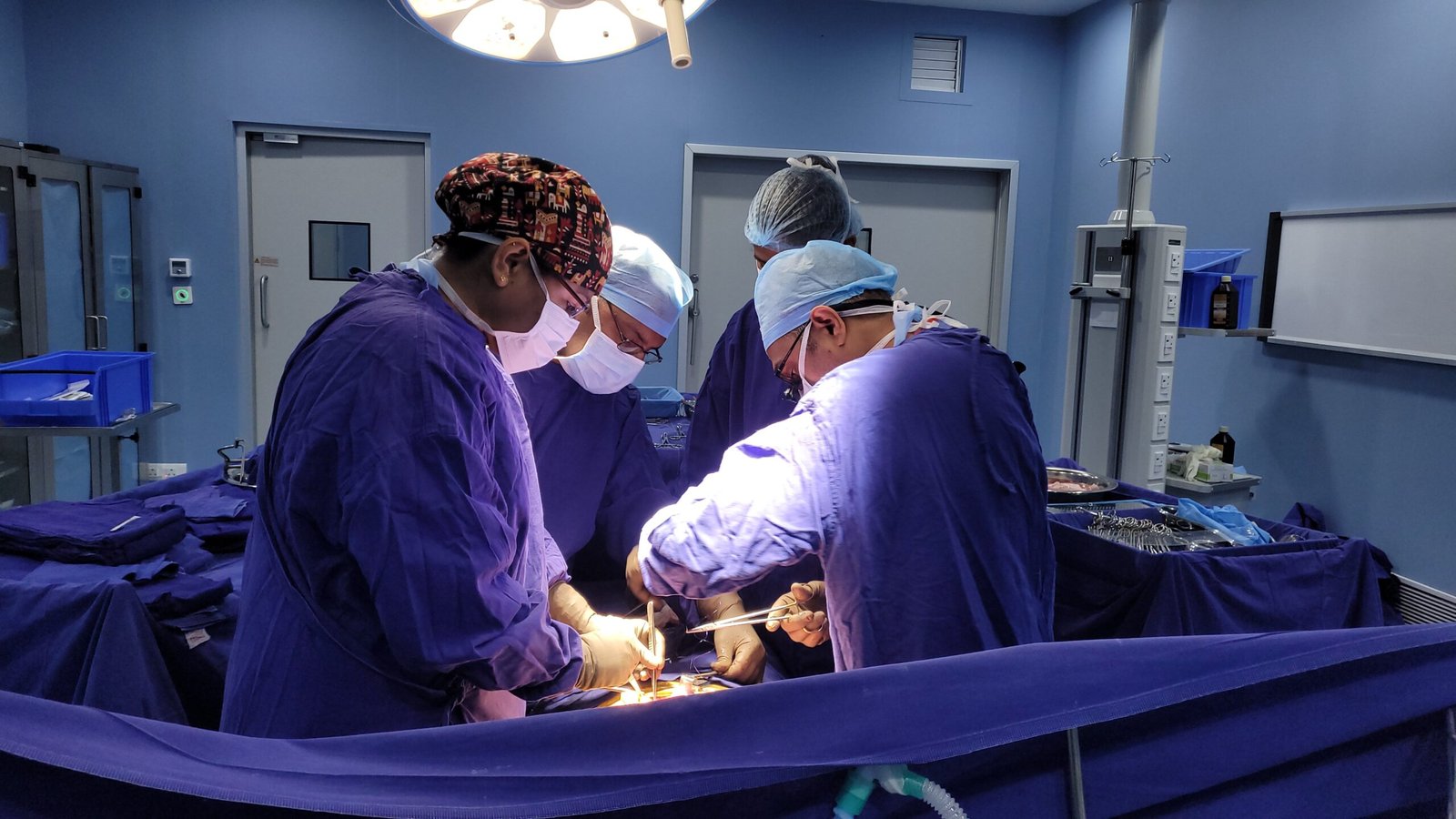
The implantation segment of the AALBEC procedure is carried out under general or spinal anaesthesia, usually through an incision similar to that used for conventional urethroplasty – perineal for bulbar strictures, penile for distal strictures. The AALBEC scaffold is laid within a prepared urethral bed, not requiring the same extent of tissue mobilisation as in full open urethroplasty . As such operative time is often shorter and the immediate post operative course is correspondingly less demanding. Most patients are discharged 2-4 days post-implantation surgery, with removal of the urethral catheter and wound drain prior to discharge.
Immediate post-operative monitoring includes urethral catheter patency and output, wound healing, signs of infection and pain control. Because the buccal biopsy is so small compared to the conventional BMG harvest, oral care at the biopsy site is simple: gentle rinses with antiseptic mouthwash and a soft diet for the first few days.
Catheter Duration & Home Care Instructions
A urethral catheter is maintained for 2 to 4 weeks after AALBEC implantation, depending on the complexity of the procedure and the surgeon’s evaluation of scaffold integration. The catheter is of the same critical importance as after classical urethroplasty in maintaining the urethral lumen patent during the critical early period of cell integration, scaffold degradation and maturation of the new epithelial lining . If the catheter is removed too early, the reconstructed segment may collapse before it has achieved structural integrity.
Patients at home with the catheter in place should be advised to: – keep the catheter and surrounding skin clean and dry – maintain a high fluid intake (minimum two to three litres per day) to keep urine dilute and flowing freely through the catheter – take any prophylactic antibiotics prescribed to reduce the risk of catheter-associated urinary tract infection – attend all scheduled follow-up appointments – report any fever, unusual pain, blocked catheter or significant haematuria to the clinical team immediately. A retrograde urethrogram or voiding cystourethrogram may be performed 2 to 4 weeks before catheter removal to confirm the integrity of the reconstructed segment.
Diet, Hydration & Physical Activity After AALBEC
A soft diet is advised for the first week after AALBEC implantation, mainly to reduce stress on the oral biopsy site, although this restriction is less stringent than after conventional BMG urethroplasty, as the biopsy is small. Normal diet is usually reintroduced in the first one to two weeks. In the postoperative period, a high fluid intake, of at least two litres of water per day, is strongly advised to keep the urine flowing, dilute the urine and reduce the risk of catheter blockage and urinary infection.
Activity is limited for the first 4 to 6 weeks after implantation of AALBEC. Light walking is encouraged starting the first day after your surgery to help prevent venous thromboembolism (VTE). Avoid strenuous activity, heavy lifting, vigorous exercise and activities that put pressure on the perineum (cycling, horse riding) until given specific clearance by Dr Vikas Singh at the follow up assessment. Most patients are able to resume desk work and light daily activity within two to three weeks after removal of the catheter.
AALBEC is a technically challenging procedure with a favourable risk profile, but not without potential complications. These risks should be understood by every patient before consenting to the procedure.
Temporary Discomfort at Buccal Cell Harvesting Site
The oral biopsy to harvest the buccal epithelial cells for AALBEC is small, much smaller than the strip used for conventional BMG urethroplasty, and heals quickly. The only discomfort for most patients is mild soreness at the biopsy site for two to five days, which is treated with routine oral analgesics. The size of the biopsy does not change the way it looks on the outside or affect speech, eating or the look of the face. The AALBEC biopsy site is a minor clinical concern for the majority of patients compared with the traditional BMG donor site morbidity (weeks of cheek tightness, trismus, and altered sensation).
Risk of Stricture Recurrence Post-AALBEC
As with all forms of urethral reconstruction there is a risk of stricture recurrence with AALBEC. The risk of recurrence depends on the complexity of the stricture treated, the amount of spongiofibrosis around the stricture, the quality of the urethral bed where the scaffold is implanted and the adequacy of post-operative catheter management and follow-up. Published series have reported stricture-free rates of 70 to 85 percent at 2 to 5 years in selected cases that appear comparable to conventional urethroplasty in similar patient populations. There are no long-term (10-year) recurrence data for AALBEC as a technology and this uncertainty is honestly discussed with each patient during the consent process.
Infection or Inflammation at Implant Site
Infection at the implant site (urethral or perineal wound) is a risk following any urethral reconstruction. The AALBEC scaffold is biocompatible; however, during the integration period, it is a foreign material in the urethra and theoretically can be a focus for bacterial colonization. Pre-operative urine culture and treatment of any active infection with antibiotics, as well as peri-operative and post-operative prophylactic antibiotics, significantly reduce this risk. Local infection symptoms – fever, redness of the wound, purulent discharge, increasing pain – are immediately treated with antibiotics and, if necessary, surgical wound care.
Urinary Leakage or Fistula Formation (Rare)
Urethrocutaneous fistula is a rare but well-known complication of urethral reconstructive surgery, in which an abnormal connection between the urethra and the skin surface allows urine to leak. Fistula formation may occur post-AALBEC if there is poor integration of the scaffold, wound breakdown secondary to infection or tension, or premature removal of the catheter before the reconstructed segment has adequate structural integrity. Small fistulas may spontaneously close with conservative management, but larger fistulas require surgical repair after adequate time for the surrounding tissue to mature, usually six to twelve months after the AALBEC procedure.
AALBEC is one of the most technically demanding and specialized procedures in reconstructive urology. The expertise required is more than just surgical skill, it is patient selection, understanding the biology of tissue engineering, coordination with cell culture laboratory services, and having the reconstructive urologic experience to handle any complexity encountered during or after surgery. This is why patients from all over Central India & beyond choose Dr. Vikas Singh for AALBEC treatment:
Posted on GoogleTrustindex verifies that the original source of the review is Google. Dr vikas singh is best urologist in IndorePosted on GoogleTrustindex verifies that the original source of the review is Google. Nice treatmentPosted on GoogleTrustindex verifies that the original source of the review is Google. My treatment given by Dr vikas sir he is best doctorPosted on GoogleTrustindex verifies that the original source of the review is Google. Best doctorPosted on GoogleTrustindex verifies that the original source of the review is Google. Hm log shivpuri se dr vikas sir ko dikhane aaye, sir se milkar bahut acha lga, nature or treatment bahut sahi hePosted on GoogleTrustindex verifies that the original source of the review is Google. Nice doctorPosted on GoogleTrustindex verifies that the original source of the review is Google. Very experienced and caring doctor. Excellent treatment and patient-friendly approach. Highly recommended.”Posted on GoogleTrustindex verifies that the original source of the review is Google. On dt27.06.2026 dr.vikas singh performed my prostatomegaly surgery by Urolift method . I am now fealing very well.Within two days l got discharged from Kokilaban Dhirubhai Ambani hospital Indore (MP).I am very thankfull to this very new method Urolift,Dr.Vikas singh sir and BCM Kokilaben Dhirubhai Ambani hospital,Nipania Indore. ByAdarsh kumar pauranik.Posted on GoogleTrustindex verifies that the original source of the review is Google. Good experience for testis treatment for my son
AALBEC means Autologous Augmentation of Lumen by Buccal Epithelial Cells. It is a tissue-engineering approach to urethral reconstruction using the patient’s own buccal mucosal cells, harvested in tiny quantities, expanded in a cell culture laboratory and seeded onto a biocompatible scaffold placed within the strictured urethra. AALBEC is not the same as traditional buccal mucosa graft (BMG) urethroplasty, which physically transplants a full thickness strip of cheek lining. AALBEC works on the cellular level to produce a living, regenerating urethral lining from a small biopsy. This is especially useful in situations where conventional grafting is not possible because of lack of donor tissue, previous failed harvesting or very long strictures.
The best indications for AALBEC are patients with very long urethral strictures (> three centimetres, especially pan-urethral disease) where traditional grafting cannot provide enough material, patients who have previously had buccal mucosa harvested from both cheeks in previous failed urethroplasty, patients with lichen sclerosus affecting the oral mucosa where traditional cheek tissue is unsuitable as a graft material, and complex re-do cases after multiple failed reconstructive procedures. For patients with typical strictures amenable to conventional BMG urethroplasty, that approach with its longer and better established evidence base remains the first recommendation.
AALBEC is generally linked to less general discomfort than traditional urethroplasty, as the oral biopsy is small, much smaller than the intraoral harvest for standard BMG urethroplasty. Discomfort is minimal and the small biopsy site heals in a few days. The implantation operation is similar in nature to conventional urethroplasty, but may be less extensive in terms of perineal dissection . Post-operative pain is usually mild to moderate and well controlled with standard oral analgesics
The complete AALBEC process involves two major phases. The first phase, oral biopsy and cell culture, takes about two to four weeks while the harvested cells are expanded in the laboratory and seeded on the scaffold. The second phase, surgical implantation of the cell-seeded scaffold, occurs once the scaffold is ready and the patient is ready for surgery. Patients usually wait four to six weeks from the first consultation and biopsy to the actual procedure of implantation. The catheter remains in place for two to four weeks after placement during the integration period prior to removal.
Traditional buccal mucosa graft urethroplasty has decades of outcome data showing stricture-free rates of 80 to 95 percent at five to 10 years. It is one of the best studied and most successful elective urologic procedures. AALBEC has a shorter publication history, and early to intermediate series (two to five years follow-up) have shown encouraging stricture-free rates of 70 to 85 percent in selected complex cases. AALBEC as a technology still has long term data (beyond five years) emerging. This difference in maturity of evidence is disclosed to patients in an honest way – AALBEC is offered when conventional urethroplasty is not good enough, not as a routine alternative to it.
Yes – AALBEC implantation is performed under general or spinal anaesthetic and requires a hospital stay of two to four days post-operatively. This allows monitoring of wound healing, catheter function, signs of infection and pain management in the immediate post-operative period. The patient is discharged with the indwelling urethral catheter in place, complete written instructions for home catheter care, and a confirmed follow-up appointment in two to four weeks at which time removal of the catheter will be considered.
Posterior urethral distraction defects (caused by pelvic fracture injuries) are most reliably treated by excision of the fibrous obliteration and primary anastamosis deep in the perineum (posterior urethroplasty). For simple pelvic fracture distraction defects, conventional anastomotic urethroplasty remains the gold standard with excellent success rates. AALBEC may have a role in complex posterior strictures where the defect is too long for primary anastomosis and a graft or scaffold is required to bridge the gap – but this is a specialised indication and assessed on an individual basis. The surgical approach is decided on a case-to-case basis by Dr. Vikas Singh, who evaluates every posterior stricture.
Yes — AALBEC is an autologous procedure, meaning the cells are your own. Buccal mucosal cells are taken from inside your cheek, grown and expanded, and then seeded back into your own urethra. Since the cells are autologous – biologically identical to your own tissue – there is no risk of immune rejection, no need for immunosuppressive medication and no risk of disease transmission from a donor. This is one of the major biological advantages of AALBEC compared to synthetic or allograft alternatives.
Polyglycolic acid, collagen or other biocompatible polymer based synthetic urethral grafts have been investigated as alternatives to biological grafts, but these generally have poorer results, particularly higher rates of infection, problems with scaffold degradation and lower rates of long-term stricture-free patency compared with biological tissue. Unlike purely synthetic approaches, AALBEC’s key differentiator is that the scaffold is seeded with the patient’s own living cells prior to implantation – transforming a passive structural material into an actively biological construct that integrates into the surrounding tissue rather than merely filling the space. The scaffold is degraded and resorbed as the cells produce their own extracellular matrix, leaving regenerated urethral tissue instead of a permanent foreign body.