
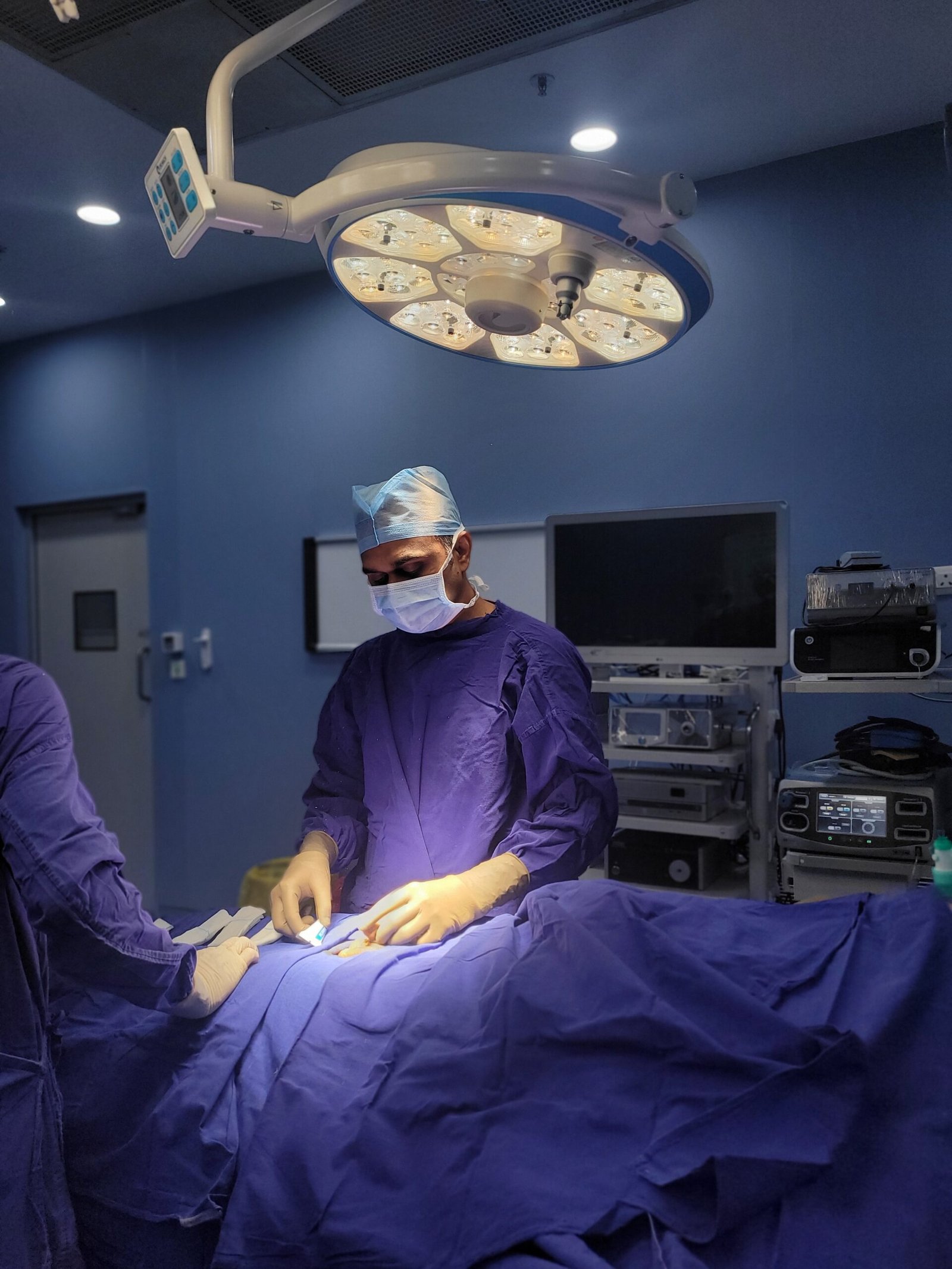
Struggling to urinate? Is there a shooting pain in your back while urinating? Do you feel the need to wake up multiple times in the night to urinate? Do you feel that your bladder is not completely empty? An enlarged prostate may be the reason for your discomfort. If the medication has stopped working, then the answer to your issue is TURP or Laser TURP.
TURP or Transurethral Resection of the Prostate is a procedure where some of the prostate gland is removed. It is the procedure of choice to take back control of your urination. Apart from traditional TURP, there are HoLEP and ThuLEP, which are advanced Laser TURP procedures. These Laser TURP procedures make the surgery safer and less invasive.
Dr. Vikas Singh, Senior Consultant Urologist at Kokilaben Dhirubhai Ambani Hospital, Nipania, Indore, is the best choice for TURP and Laser TURP procedures. We have traditional TURP, Bipolar TURP, HoLEP, and ThuLEP all at our fingertips. We take into account the size of the prostate, health status, and patient comfort to best approach the scenario. Dr. Vikas Singh has over 15 years of surgical experience and has performed countless prostate procedures, giving him the trust of the entire Central India for prostate surgery.
TURP means Transurethral Resection of the Prostate. Understanding the TURP procedure means first understanding the anatomy it deals with.
The prostate gland is located directly below the bladder and encases the urethra, which is the tube used for urine disposal from the bladder and through the penis. Prostate growth is normal with age, a condition referred to as BPH. An enlarged prostate means encroachment of the urethra from outside, diminishing the diameter of the urethra. Prostate enlargement leads to an increase of urine pressure, which due to encroachment on the urethra, causes urine at the penis to flow at a low rate.
The TURP procedure is a surgical technique involving a resectoscope (an operative telescope with a retractable cutting element that is extended at the distal end), which is inserted through the urethra to the inner aspect of the prostate. The cutting loop dismantles the attacking prostate element, one element at a time, creating ease for the flow of urine. The resected chips of the prostate flow through the bladder with the aid of irrigation fluid. The TURP procedure does not fully resect the prostate. The outer layer of the prostate is preserved from the resection.
The procedure is performed with either a spinal or general anesthesia and is done through the urethra with no external surgical incisions or stitching.
TURP has been practiced for more than five decades and has a notable history of being both a safe and effective technique. It has been said to be the gold standard surgical treatment for Benign Prostatic Hyperplasia (BPH) and the technique against which all other prostate surgical methods are measured. Many men experience a notable change in their urinary flow, with most of them observing the change in the first week after the procedure. (BPH) A large majority of men experience a considerable improvement in urinary flow soon after the procedure. Most men see a change within the first week and a huge difference within the first few months.
Bipolar TURP is a notable enhancement of existing TURP technology designed to circumvent one of the major challenges of traditional monopolar TURP – TURP syndrome. In Bipolar TURP, both the active and the return electrodes are positioned inside the resectoscope. Thus, the electrical current is passed between the two poles of the instrument, and does not travel through the patient’s body to an external ground pad.
This design of the bipolar circuit allows the use of saline solution (i.e., normal physiological salt solution) as the irrigating fluid, as opposed to glycine, thus removing altogether the risk of TURP syndrome and the related electrolyte imbalance. In addition, Bipolar TURP has less monopolar TURP and results in less post-operative bleeding.
Bipolar TURP is a great alternative for prostate resection patients who are not candidates for laser procedures, in cases where laser technology is not available. The surgical technique is almost the same as in TURP, and the learning curve for veteran TURP doctors is very minor. Dr. Vikas Singh is happy to offer Bipolar TURP as one of the modalities in his arsenal for the treatment of BPH.
To help patients differentiate between Traditional TURP and Laser TURP (HoLEP/ThuLEP) here is a straightforward side by side comparison:
Factor | Traditional TURP | Laser TURP (HoLEP/ThuLEP) |
Technique | Electrical loop shaves tissue chip by chip | Laser enucleates entire inner prostatic lobes |
Irrigation Fluid | Glycine (non-saline) – TURP syndrome risk | Normal saline – no TURP syndrome risk |
Bleeding | Moderate – electrical coagulation | Minimal – laser seals vessels continuously |
Prostate Size Limit | Best for prostates under 80–100 grams | Size-independent – effective for any size prostate |
Tissue Removal | Partial (chips) – some tissue left | Complete enucleation of obstructing tissue |
Long-term Durability | Good – 10–15% may need repeat surgery in 10 years | Excellent – very low re-treatment rate |
Blood Transfusion Risk | Low but present (~2–5%) | Very low (<1%) with laser |
Suitability for High-Risk | Moderate caution needed | Excellent – suitable for anticoagulated & frail patients |
Hospital Stay | 2–3 days typically | 1–2 days typically |
Recovery | 2–4 weeks | 1–3 weeks |
Recommendations of techniques will be based off of Dr. Vikas Singh view of your prostate size, health, medications (especially blood thinners), and unique situation. Treatment plans are individualized for each patient in order to best accommodate.
By far, an enlarged prostate is the most common reason men need TURP or Laser TURP. The predominant form of enlargement of the prostate is benign, and is seen most prevalent in men over the age of 50. The proliferation of the prostate and being over 50 are seen in 50% of men; and the statistic remains the same for 80% of men over the age of 80.
The prostate gland is in close proximity to the urethra, thus, an enlarged prostate exerts compression on the urethra and narrows it in size. The bladder is able to compensate for a time by contracting harder, which is the reason BPH first leads to symptoms of urgency and frequency, and then to a lack of symptoms and a weakened urine flow. Eventually the bladder runs out of its compensatory ability and is unable to empty, leading to a state of bladder retention.
For the cases of BPH being of a less severe or less significant nature, prescription medications are the initial choice. Drugs such as tamsulosin/alfuzosin, and also finasteride or dutasteride, are a few common therapies. Relapse though, and continued progression of symptoms, significant size or enlargement of the prostate, or further complication through formation of calculi in the bladder, or further renal changes, are clear indications for INTERVENTION.
Obstruction in the urinary system occurs when either a part of the urinary system rejects urine or is blocked from flowing urine out of the system. For men, the most frequent cause of blockage in bladder outlet is an enlarged prostate. Other causes for Blockage of Outlet Obstruction include, but are not limited to, prostate cancer, urethral stricture, bladder neck contracture, or a high bladder neck. Obstuction at the prostate requires the most common form of surgical intervention (TURP or Laser TURP) to remove the blockage, which is tissue at the prostate.
Urodynamic studies measure the two combined elements of bladder pressure and urinary system flow. They are used to provide a definitive diagnosis of bladder outlet obstruction. For men, this is typically the most common diagnosis. Evidence for the diagnosis is based on clinically ill, not on the basis of evidence. Dr. Vikas Singh can arrange a time for the test at a later date.
There is no greater medical emergency than acute urinary retention. The inability to urinate results in complete bladder distention and necessitates immediate bladder drainage via catheter. Bladder distention from benign prostatic hyperplasia (BPH) can be worse depending on the frequency of distention. If TURP or Laser TURP has been attempted and the patient still results multiple bladder catheters, these procedures are suggested to be definitive.
Urinary retention problems can affect bladder and renal function during chronic urinary retention. The residual urine volume damns renal function by increasing renal pressure (hydronephrosis) and distends bladder walls to the maximum capacity. If the post-void urine volume is above 200 to 300 ml, then the top surgical prostate therapies are indicated.
Medications are the first-line treatments for BPH. These line therapies are in reference to the pathways utilized for urinary retention symptoms. Alpha-blockers reduce prostate neck and urinary bladder smooth wall tension to improve urinary flow in 4 to 6 weeks. For case number 5-alpha-reductase inhibitors, the prostate shrinks, but the effect is felt over a 6 to 12 month timeline. Combination therapy is offered for moderate to severe cases.
Unfortunately, medications can cause sexual dysfunction, which stops use, and also may cause dilation of the prostate via bladder wall tissue to cause a high compulsion for the listed therapies. Fortunately, these surgical procedures (TURP or Laser TURP) need to be the main surgical therapy for these patients.
Recommendations of techniques will be based off of Dr. Vikas Singh view of your prostate size, health, medications (especially blood thinners), and unique situation. Treatment plans are individualized for each patient in order to best accommodate.
Men often brush off urinary issues as a natural part of aging and often postpone getting professional help for years. Here’s how to recognize urinary issues related to the state of your prostate and the potential need for surgery:
The International Prosthetic Symptom Score (IPSS) assesses urinary symptoms and provides a gradual score improvement as treatment intervention is provided. If a patient has an IPSS in the moderate to severe range and reduced flow in a urinary test, we at Urology suggest a TURP or Laser TURP.
Once symptoms become severe, it forces an intervention. The prostate surgery early on causes less impact to the bladder. Schedule an appointment at +91 81468 73931.
At Kokilaben Hospital in Indore, before TURP or Laser TURP, the following pre-surgical evaluations and tests are completed:
Among the pre-operative tests that warrant surgical clearance, TURP or Laser TURP is performed, taking the following surgical steps into consideration:
Step 1 - Positioning
To perform TURP procedures, a lithotomy position is employed, where the patient is laid on a stretcher back, and his/her limbs are rested on stirrups. The position facilitates access to the resectoscope during the surgery.
Step 2 - Instrument Passage
Depending on the type of TURP procedure, the resectoscope or laser cystoscope is handled. The urethra is ‘cut’ to provide a passage to reach the prostate.
Step 3- Visualization
A camera captures the urethra, prostate, and bladder, sends the information to a display monitor, and provides Dr. Vikas Singh with a picture that is clear enough to detail the prostatic lobes of the bladder and the urethra and the bladder to begin the process of resection or enucleation.
Step 4 - Tissue Removal
For traditional bi-polar TURP procedures, an electrical loop is used to meticulously shave prostate tissue. In HoLEP or ThuLEP procedures, a laser fiber is utilized to separate the prostatic lobes from the capsule for the morcellator, which then removes them. The field of operation is enhanced and cleaned through continuous saline irrigation.
Step 5 - Hemostasis
During TURP or HoLEP/ThuLEP procedures, electro thermal or laser loops are used to coagulate tissue and/or vessels to minimize the risk of postoperative prostate bed bleeding.
Step 6 - Catheter Placement
A three-way urinary catheter is inserted at the conclusion of the procedure. It is used to drain urine from the catheter for 24 – 48 hours, as it is used to wash blood stained urine. Saline is used to help wash blood stained urine for the first couple of days to help ensure the new prostatic channel remains clear.
Both TURP and Laser TURP most often use spinal anaesthesia, which requires an anaesthetic injection in the lower back to numb almost the entire body from the waist down. During time of this anaesthesia, the patient remains completely awake, and feels nothing from the waist down. Spinal anaesthesia is preferred during the TURP and Laser TURP procedures as compared to general anaesthesia, as an anaesthetist is able to check the patient’s neurological status during the procedure, and therefore monitor for the possible surgical complication of TURP, TURP syndrome. General anaesthesia is reserved for the patients who would like to be completely asleep during the procedure and/or in cases where spinal anaesthesia is contraindicated for the patient.
The estimated duration of the surgery covered in TURP and Laser TURP is dictated by the surgical technique and the size of the patient’s prostate. The estimated duration of Traditional and Bipolar TURP surgery for a patient with a moderately enlarged prostate, is between 45 and 90 minutes. Similar adaptations (with the exception of the larger prostate size) for HoLEP and ThuLEP procedures, would be 60 to 120 minutes; however, the enucleation is often faster than traditional TURP for a very large prostate case. Dr. Vikas Singh will provide an estimate of the duration of the procedure for your case, based on the size of your prostate.
Post-surgery, patients who have had either TURP or Laser TURP are moved from the surgical staff to the ward, where the three-way catheter irrigation will be performed for 24 to 48 hours, depending on the case, until the irrigating fluid has completely cleared the catheter. At the conclusion of this process, the catheter will be converted to a two-way catheter. Patients will then be able to have the catheter completely removed and are allowed to practice urination; this is 1 to 3 days for Laser TURP, and 2 to 3 days for cases of traditional TURP.
Hospital stays are short, going for 1 to 2 days in Laser TURP (HoLEP/ThuLEP) cases, while traditional or Bipolar TURP cases go for 2 to 3 days. They will be guided to discharge once the patient’s ability to urinate is confirmed, giving the discharge instructions along with the scheduled 2 to 4 week follow-up appointment. The instructions provided to the patient will guide them on next steps.
Like standard TURP, Laser TURP is a procedure where no outer skin incisions are made. Skin incisions, cuts, and stitches are completely absent, along with any resultant scarring. This is a welcome feature for many patients due to the anxiety caused by many forms of “prostate surgeries.”
Besides, laser TURP uses laser energy as a substitute for the electrical loop of traditional TURP. The laser is more precise and also causes less collateral tissue damage as a result. The laser’s precision is such that the boundary of the obstructive inner Major Prostate Tissues and the Major Prostatic Capsule can be defined and preserved, making the procedure cleaner and yielding better results in the future.
Natural TURP procedures are often associated with a great deal of bleeding. This is a great disadvantage of traditional TURP, and a corresponding great advantage of Laser TURP. As they make cuts through tissue, HoLEP and ThuLEP Thulium and Holmium lasers immediately seal the cut blood vessels as they seal the tissues, and blood loss diminishes drastically.
The potential practical advantage is that the risk of a blood transfusion following Laser TURP is less than 1% in contrast to the 2% to 5% risk seen with conventional TURP. The irrigating fluid is absorbed much faster resulting in a shorter duration of catheterization. Moreover, patients who are on blood thinners, such as aspirin, clopidogrel, or warfarin, can safely be allowed to undergo HoLEP or ThuLEP procedures with very minimal disruption to their anticoagulant therapy, as they would have previously been required to interrupt their anticoagulant therapy prior to undergoing conventional TURP procedures, resulting in a risk of thromboembolic events. This example especially cites a valuable opportunity for the elderly population with comorbid cardiovascular disease and a history of stroke.
The turbulation of the bladder is done with the holmium laser and reduces bleeding. There is also much less trauma to the bladder so the rate of recovery is much faster when compared to TURP. Since there are no external incisions, recovery time is improved. Also the catheter stays in and is removed after 24 to 48 hours and the patient is out of the hospital after 1 to 2 days in compared to 2 to 3 days. Most people are also able to return to normal activity much faster with the average time being from 2 to 3 weeks.
Laser TURP in particular HoLEP and ThuLEP, has many clinically important advantages, and safety in high-risk patients is arguably the most important. Compared to HoLEP and ThuLEP, traditional TURP is more dangerous for elderly patients and those who have cardiovascular disease, reduced cardiac reserve, chronic kidney disease, or are on anticoagulation therapy, and have risks for bleeding due to absorption of fluids intraoperatively.
Persistent bleeding and the need to switch to HoLEP or ThuLEP, and the need to irrigate fluid due to TURP syndrome, and the presence of less intraoperative cardiac stress due to the short duration of the procedure and the skill of the surgeon, makes the procedure consequently safer due to the many factors for which the elderly are more vulnerable. Many studies of HoLEP for high-risk patients, including those with severe cardiac disease and those on anticoagulation therapy, have been shown to have the same results as those for standard surgical patients.
Men over the age of 75, with large prostate glands and significant medical comorbidity, have been managed with chronic urinary catheter placement and no surgical option. If you are in this demographic, you should speak with Dr. Vikas Singh regarding your options to restore urinary function and eliminate the need for a urinary catheter.
For most, recovery from TURP and Laser TURP has a predictable pattern. Knowing what is to be expected during your recovery can minimize surprise and built-up anxiety, and help you be more prepared.
Days 1 to 3 – In the Hospital
After surgery, a three-way catheter is placed to open up continuous blood-stained urine through the process of bladder washing. Afterwards you may experience some mild burning, cramping, and urge to pee. This is normal and can be managed and controlled through medication. After surgery, you will begin to consume fluids and food as normal. You will also be encouraged to get up and walk. After the fluids have run clear through the catheter, (within 24 to 48 hours for Laser TURP, and 48 to 72 hours for standard TURP) the catheter will be removed.
First Week at Home
After the catheter is removed, you may experience some burning and/or stinging while urinating. Additionally, during the recovery, you will have to urinate often and have a strong urge to pee. In the beginning, your urine may have some blood in it. This will often happen more with a higher level of activity and can be regulated by resting and increasing your water consumption to 2-3 L each day.
Weeks 2 to 4
Your urination will become less frequent and the urge will lessen. You will likely notice a strong improvement in the relief of your symptoms. After 1 to 2 weeks, you are cleared to return to work and to drive. After 4 weeks, you can resume all normal physical activity, sex, and lifting.
Weeks 4-6 and beyond
During this period of follow up, the definite improvement of urinary function is perceived by the patient. Uroflowmetry performed at that time can objectively document patient improvement. A PSA test performed 6 to 12 weeks after TURP gives a new baseline level (removal of prostate tissue by TURP lowers PSA significantly). Transformative is how the majority of men describe the improvement of urinary function after TURP or Laser TURP. For the first time in years, normal voiding is achieved.
Posted on GoogleTrustindex verifies that the original source of the review is Google. Dr vikas singh is best urologist in IndorePosted on GoogleTrustindex verifies that the original source of the review is Google. Nice treatmentPosted on GoogleTrustindex verifies that the original source of the review is Google. My treatment given by Dr vikas sir he is best doctorPosted on GoogleTrustindex verifies that the original source of the review is Google. Best doctorPosted on GoogleTrustindex verifies that the original source of the review is Google. Hm log shivpuri se dr vikas sir ko dikhane aaye, sir se milkar bahut acha lga, nature or treatment bahut sahi hePosted on GoogleTrustindex verifies that the original source of the review is Google. Nice doctorPosted on GoogleTrustindex verifies that the original source of the review is Google. Very experienced and caring doctor. Excellent treatment and patient-friendly approach. Highly recommended.”Posted on GoogleTrustindex verifies that the original source of the review is Google. On dt27.06.2026 dr.vikas singh performed my prostatomegaly surgery by Urolift method . I am now fealing very well.Within two days l got discharged from Kokilaban Dhirubhai Ambani hospital Indore (MP).I am very thankfull to this very new method Urolift,Dr.Vikas singh sir and BCM Kokilaben Dhirubhai Ambani hospital,Nipania Indore. ByAdarsh kumar pauranik.Posted on GoogleTrustindex verifies that the original source of the review is Google. Good experience for testis treatment for my son
While TURP is a big surgery and considered a major step in terms of urological surgery, as there are zero cuts in a surgery performed only through a urethra, it is not comparable to other major surgeries. Many patients feel this highly unexpected procedure is relatively easy and involves a recovery process that is a lot shorter than recovery from other surgeries like open surgeries or laparoscopic surgeries. On top of this, Laser TURP surgeries (HoLEP/ThuLEP) are said to be less stressful than traditional TURP surgeries and involve less bleeding than typical TURP pertaining to surgeries and less blood loss (less is ankle rehab) means a faster recovery time and quicker discharge.
The main side effect that people experience first-hand when it comes to the TURP surgical procedure is transformation to retrograde ejaculation. This means that 50-90% of the patients who perform TURP or Laser TURP ultimately ejaculate in retrograde as the ejaculate goes in the direction back to the urinary bladder. Not only this phenomenon is a lesser evil in terms of surgical side effects, it is harbored and not be painful, and replaces the discomfort of the regularly experienced retrograde ejaculation so called “ejaculate”. Normally, the ejaculate is not produced backwards right after the surgical procedure, but the quality of the sensation of the ejaculate and the quality of the erection remain as is. Nuts are usually retained post TURP, so the issue of fertility is addressed and if it is of concern, Dr. Vikas Singh will sit and talk about this topic at length.
Both Bipolar and Traditional TURP remove some prostate tissue. Because the techniques will not completely remove the inner prostate tissue, the chances of needing repeated surgery due to tissue regeneration will be 10 to 15% over the 10 years. In comparison, HoLEP and ThuLEP remove the completely inner obstructing tissues and the recurrence rates of these procedures will be less than 2 to 3% over 10 years.
Of all the available surgical procedures for BPH, Laser TURP (HoLEP/ThuLEP) promises the least short-term and long-term results. Since the complete inner obstructing tissues is removed during these procedures, studies with 10 years of follow-up show sustained improvement in urinary flow and very few patients need to be treated again. Most patients can expect the improvement in urinary function to last for the remainder of their lives.
For those needing blood thinners, laser TURP, such as HoLEP and ThuLEP, is as safe as laser TURP gets. Superior vessel sealing laser techniques help innovators overcome the blood thinners barrier, allowing them to perform TURP effectively. Traditional TURP, however, often requires patients to stop blood thinners (approximately 5 to 7 days) before the procedure. Dr. Vikas Singh will examine your prescribed medications and offer a solution. In several cases, Laser TURP is the reason patients who were previously told they were “too high-risk” for surgery can safely be treated.
HoLEP and ThuLEP, which stand for Holmium Laser Enucleation (HoLEP) and Thulium Laser Enucleation (ThuLEP), respectively, are both laser enucleation techniques, both of which take Holmium:YAG laser to enucleate the prostate. While both of HoLEP and ThuLEP of Thulium:YAG laser take Holmium:YAG laser to take part to enucleate, some surgeons do find that the Thulium:YAG laser takes part to enucleate some of the prostate to help with superior haemostasis. In experienced hands, there is little clinically apparent advantage to be had from choosing one method over another. Dr. Vikas Singh will determine which is most useful for your particular structure and the devices he can access.
There are no cancerous tissues suitable for TURP, and neither is there a cancer treatment for TURP. TURP (Trans Urethral Resection for Prostate) is primarily used for benign enlargement of the prostate (Benign Prostatic Hyperplasia) that obstructs urinary flow. TURP is also used for patients whose prostate is cancerous and whose cancer is no longer operable. There are occasions when the cancerous tissues of the prostate are discovered in TURP resected tissues. For all his patients, Dr. Vikas Singh thoroughly analyzes the PSA and provides cancer management prior to the surgery.
Yes, one of the most difficult clinical problems of large prostate treatment is resolved by Laser TURP. HoLEP and ThuLEP procedures are completely size-independent. Laser techniques fully enucleate the prostate over 80-100-150-200 gram size, in the hands of an experienced physician. The classical TURP has practical limitations over 80-100 gram size (due to bleeding and absorption time limits) and therefore open prostatectomy (Millin’s procedure) was used for such larger prostates. Laser TURP has practically made open prostatectomy for BPH redundant. If it has been told to you that your prostate is “beyond the limits” for classical TURP, please see Dr. Vikas Singh for a consultation with Laser TURP.
Whether TURP or medication is indicated depends on several factors. These include the severity of the symptoms as given by the IPSS score, the degree of the obstruction as given by the uroflowmetry, the post-void residual as given by the ultrasound, the size of the prostate, and the presence of any complicating factors such as recurrent infection, bladder stones, or hydronephrosis. Dr. Vikas Singh will assess these factors and provide his honest, individualized opinion. Many patients remain on medication for years, and surgery is unnecessary. There are also many patients who do have surgery and see a significant benefit soon after. There is no one right answer, and the right answer is what best meets your specific clinical situation, as well as your personal and life priorities.