
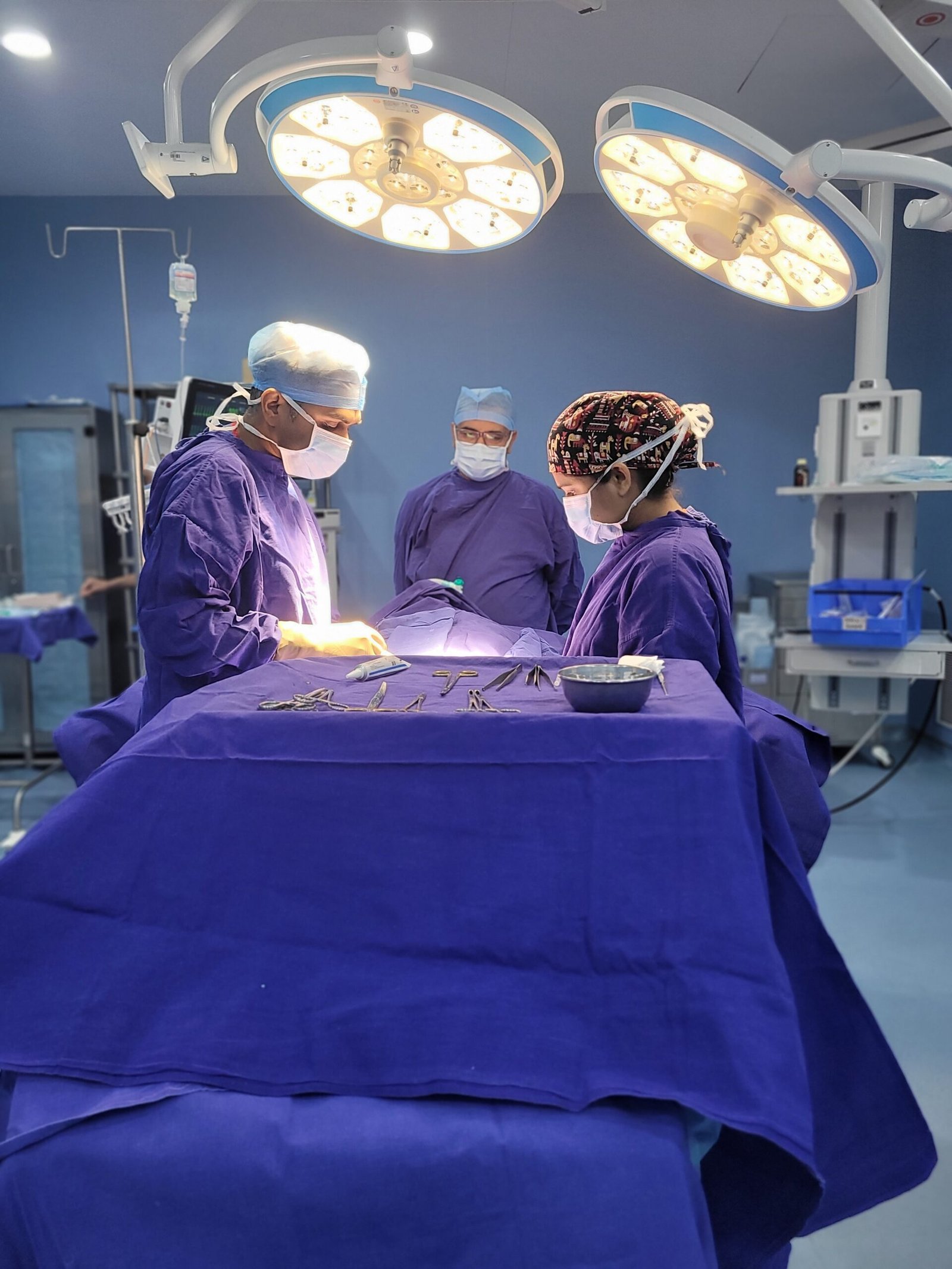
Bladder Neck Obstruction (BNO) is a condition in which a patient is unable to pass urine, not because the prostate is enlarged, but because the narrow junction between the bladder and urethra has closed as a result of scarring. BNO is an overlooked cause of urinary obstruction; it is not medicated by prostate surgery and needs a specific surgical procedure to remedy it.
Laser Bladder Neck Incision (LASER BNI) is a modern procedure that is used to treat bladder neck conditions. For the patient, there is no external incision. A laser is used to open the narrowed/scarred bladder neck. The whole procedure is done within the vein.
Dr. Vikas Singh, a senior consultant urologist at Kokilaben Dhirubhai Ambani Hospital located at Nipania, Indore, has competence and care for complex bladder neck contracture post prostate surgery, primary bladder neck stenosis, post radiation strictures, and to name a few. He has command and competence even for complex endoscopic urological surgery.
BNI is an abbreviation for Bladder Neck Incision. The bladder neck is the ring of muscle tissue that is located at the bottom of the bladder, where the bladder connects to the urethra. When the bladder is normal and healthy, that ring of tissue opens up when a person urinates, allowing the bladder to empty through the urethra, and the urethra in turn empties into the body. However, due to pre-existing surgical changes, inflammation, and/or other structural changes, the ring scar tissue can become narrowed or obstructed. This obstruction of the bladder neck is called.
In conventional BNI, a loop of wire that is electrically charged, called a cutting loop, is used to cut the bladder neck that is obstructed. The LASER BNI process substitutes the loop of fire for a powerful laser beam, most often a Holmium: YAG or Thulium fiber laser. Like in all BNI cases, a cystoscope is used to deliver the laser to the obstruction, and the laser is intravenously placed. This allows Dr. Vikas Singh to cut the bladder neck in the obstruction to his full satisfaction and in his full vision, with far less blood than what would be expected with conventional methods.
The laser used in this procedure is special in that it allows the procedure to be virtually bloodless. The laser cuts through the tissue of the bladder neck scar and, as it makes contact, it seals the blood vessels. This allows the obstruction for urine flow to be widened. The procedure is done through the urethra and involves cutting through the bladder neck obstruction. It is skinless and only takes up to 40 minutes.
LASER BNI is not a BPH (benign prostatic hyperplasia) treatment per se. It specifically treats bladder neck obstruction from scarring or fibrosis. This is a different type of problem versus the type of inner prostatic obstruction that is treated by TURP, HoLEP, or UroLift. Accurate diagnosis is critical in order to know which procedure is most appropriate. Knowing this is a key component of the process.
The bladder neck connects the bladder and urethra (the passage where urine leaves the body). While there is urine in the bladder, this connection is sealed by the smooth muscle (internal urethral sphincter) to keep urine stored in the bladder. Once the bladder has a sufficient amount of urine, it sends a signal to the sphincter (the bladder neck muscle) to open. This allows urine to exit the bladder and enter the urethra for the process of urination.
The bladder neck is a flexible, smooth (or funnel) opening. When it has scarring, such as with fibrosis, it restricts the opening. It can no longer open with the bladder neck sphincter during urination. This creates a static obstruction to the urethral opening. Even if a person has a healthy urethra and all the associated urogenital systems, a narrowed bladder neck will cause significant urinary obstruction.
Bladder neck obstruction can be caused by a range of factors:
Patients Suffering from Bladder Neck Stenosis
The majority of Laser BNI applicants are men diagnosed with either primary or secondary bladder neck stenosis after confirmation through cystoscopy and urodynamic tests. Stenosis, or narrowing, can be primary (i.e., Marian’s) or secondary, and the secondary form can be the result of previous surgeries, radiation therapy, or inflammatory processes. It is important to note that when the bladder neck is narrowed to the point that it causes the urinary tract to become obstructed, incisional surgery using a laser is the best option, regardless of the etiology.
In terms of bladder neck stenosis, the majority of cases are misdiagnosed as either BPH, a urethral stricture, or an overactive bladder. This is generally the case due to the fact that the symptoms are often in alignment. From the initial diagnosis to the treatment of bladder neck obstructions, the steps can include multiple tests, such as a post-void residual and a diagnostic cystoscopy. Dr. Vikas Singh carries out all of the tests listed above prior to suggesting Laser BNI.
In terms of post-operative complications after a radical prostatectomy, the presence of a bladder neck contraction is considered one of the more difficult complications to manage after prostate cancer surgery. This complication is present in approximately 5% to 15% of prostate cancer patients and causes a slow decline in urinary flow, often accompanied by urinary leakage and an urgent need to void. If the contraction is left untreated, it can lead to a total blockage of the voiding cycle.
Laser Bladder Neck Incision (BNI) is currently the gold standard approach for the endoscopic treatment of bladder neck contractures following prostate surgery. Laser BNI is Swede’s approach to treatment for contractures of mild or moderate contractures. However, in cases of more severe, recurrent, fibrous contractures from prior pelvic radiation and surgery, multiple Laser BNI treatments, in addition to interventions (mitomycin-C or triamcinolone) at the treatment site, are necessary.
Patients with Recurrent Urinary Retention
Men who have several episodes of acute urinary retention must have their bladder neck diagnosed by an endoscopy to see if the obstruction is at the bladder neck, at the proximal prostate, or at the distal urethra, in order to assess candidacy for Laser BNI. This is a much more significant burden than having to use a permanent catheter due to a blockage at the bladder neck. This obstruction can be resolved with a simple procedure to restore the bladder and enable the patient to void freely. Dr. Vikas Singh has a very strong motivation to enable these patients to void freely without the use of a catheter.
The role of medications to treat bladder neck obstructions is very limited. The main medications (alpha blockers) can have a sort of therapeutic relief at the level of the smooth muscle at the bladder neck. The use of these medications is prescribed for the milder cases of bladder neck obstruction. However, the use of these medications has little or no impact on the case of fibrotic or more severe bladder neck obstructions. These types of cases do not even have any possibility of being treated with medications to relax the obstructions. These patients, who have not found any relief from their attempts to medically manage, are strongly recommended for consideration of Laser BNI.
Very Low or No Urine Flow
BPH usually causes a weaker flow of urine. Obstruction at the bladder neck is an even more extreme form of outlet flow impairment. Many men with bladder neck stenosis show a severely reduced urinary flow and, at times, may demonstrate almost the complete absence of flow. Instead, they may pass urine in a slow, painful dribble with a filled bladder. Uroflowmetry will show a very low maximum flow rate (Qmax), usually measuring less than or equal to 5 to 7 ml/s, and have a flat, prolonged flow curve as opposed to the BPH-related curve.
In its extreme form, bladder neck obstruction results in complete urinary retention, whereby the patient is incapable of passing any urine. This necessitates a urological emergency whereby a catheter has to be inserted in order to relieve the bladder of urine, as subsequent complications may damage the kidneys. Any patient presenting with complete urinary retention following a prostatic surgical procedure needs to have a careful assessment of the bladder neck as a potential site of obstruction. Laser BNI in the elective, planned setting is far preferable to repeated emergency catheterisations.
Residual urine forms when the bladder cannot completely empty. This can be a source for bacterial growth. In men’s recurrent UTIs, the low prevalence of urinary tract infections should be cause for concern and should be investigated. Urethral stricture often manifests as bladder neck obstruction. The continuing threat of recurrent UTIs persists if the obstruction is not addressed, even if the bladder neck obstruction infection is.
Bladder neck obstruction creates a restriction at the bladder outlet. This means that for the bladder to void, it must generate high amounts of pressure to overcome the resistance, causing users to strain to void. This is an obstructive voiding symptom, particularly for those with a history of having a prostatectomy or prostate radiation.
Frequent high PVR volume ascertained from an ultrasound is one of the most significant features of bladder neck obstruction. This stagnant urine consumes the bladder outlet and generates a cycle of urinary urgency and infection. One of the most definitive examples of treatment success in Laser BNI follows PVR at the post Tucker and Nott.
Here is a comparison of Laser BNI against traditional open surgical bladder neck procedures:
Factor | LASER BNI | Traditional Open / Electrosurgical BNI |
Incision on Body | None – completely endoscopic | None (endoscopic) or open incision |
Bleeding | Near-zero – laser seals vessels simultaneously | Moderate – electrical loop haemostasis is less precise |
Precision | Excellent – laser allows fine, controlled incisions | Good but less refined than laser |
Hospital Stay | 1–2 days | 2–3 days |
Catheter Duration | 2–5 days typically | 3–7 days typically |
Recovery | 5–10 days to light activity | 1–2 weeks |
TURP Syndrome Risk | None – saline irrigation with laser | Present with monopolar electrosurgery |
Suitability for High-Risk | Excellent – minimal physiological stress | Moderate |
Recurrence Rate | Low in experienced hands | Similarly, depends on the technique and adjuvants |
Unlike traditional surgical procedures, Laser BNI does not slice into the skin, make an incision on the abdominal wall, or require postoperative stitches. This cystoscopic surgery is performed entirely within the urinary tract, targeting the bladder, injuries caused by other surgical interventions, or other organ translocations. Unlike traditional cystoscopic surgeries, Laser BNI is performed nearly trauma-free to other organs and tissues. Patients who have already undergone multiple complex surgical interventions or procedures to the lower abdominal or pelvic region, e.g., radical prostatectomy, can especially benefit from Laser BNI to avoid trauma and extensive scarring.
When incising bladder neck tissues, using Holmium or Thulium laser during Laser BNI severs blood vessels, creating an immediate and bloodless combat field, opposite to the incisions created during traditional electrosurgical BNI using electrodes and blade loops that leave a combat field ready for bleeding. In addition to the low blood loss during the procedure, the ruptured combat field eliminates the remaining surgical irrigation fluid, and the heating edema created by the blade loops, within a short span, and ultimately, the patient experiences less discomfort during the surgery. Generally, the total catheter duration is drastically low, ranging from 1 day or less to 5 days, and the patients have remarked that they are eventually more comfortable and functional post-Laser BNI compared to traditional methods.
The intricacies of the bladder neck incision (BNI) procedure entail cutting multiple circumferential incisions at the bladder neck, which require avoiding injury to the external sphincter (which lies just below the bladder), ureter openings (which are just above the bladder), and the adjacent structures of the pelvis. Using HoLEP and Thulium fiber lasers, Dr. Vikas Singh is cutting incisions that penetrate tissue at only 1mm at the treatment point, providing more control and incision specificity in comparison to electric cutting loops, which inherently provide a larger thermal spread and are less controlled. This, in turn, leads to better functional outcomes and a lower probability of inadvertent injuries to the adjacent structures.
Hospitalization following Laser BNI at Kokilaben Hospital, Indore, is typically 1 to 2 days post-surgery. As a result of the minimally invasive nature of the procedure, including the lack of or minimally disrupted absorption of large or open bleedings, and the lack of significant surgeries on the physiology of the target organ, the patients return to their baseline physiology very rapidly. For those patients with uncomplicated bladder neck contractures, the procedure can be performed as a 23-hour admission. As a result, the hospital is able to reduce the number of patients spread across unit classical of admission for post-procedure monitoring, while the patients are able to return home for post-procedure monitoring.
Laser BNI is a short (20 to 40 minutes) treatment that allows for more blood to be kept in the body during the whole process. Saline is used for irrigation in place of a possible risk of developing TURP syndrome, and spinal anesthesia allows for the entire treatment to be more comfortable. This makes Laser BNI later in life or those with additional medical problems a more fitting treatment. Elderly patients tend to be on blood thinners or have serious heart problems or damage to their lungs, and as a result, the use of Laser BNI in this category of patients stays well within the safe zone as compared to open surgery that would otherwise be completely out of the question (or unacceptable). Dr. Vikas Singh takes great pride in the level of both care and treatment that he provides to patients. High-risk patients are no more of a challenge than any other patient in his eyes, and he has full confidence that the patients on blood thinners and other anticoagulants are a positive gain, and he looks forward to providing this care.
Immediately after surgery, expect a catheter for draining the bladder. Be prepared for possibly clear or slightly blood-stained irrigation fluid. Lower urinary tract pain is expected and will be handled with medication. Most patients are up and about and eating normally just hours after surgery.
Days 1 – 2: Hospital Stay
Your vital signs and urine are monitored. Your catheter will be irrigated. This will stop when the fluid is clear. Oral fluids and diet are resumed. Early walking is encouraged. Most patients have their catheter removed within 48 hours, and their urine flow is monitored for discharge.
Days 2 – 7: First Week at Home
Burning or a feeling of urgency is to be expected. Take an anti-inflammatory and keep a good liquid intake. Urbanation may be blood-stained. Be patient and rest. Most patients are self-sufficient within 3 – 5 days. Avoid activities and sports that are intensely physical. Avoid sexual activities. The no-strain rule is to be followed for approximately 3 – 4 weeks.
Weeks 2–4: Continuing Recovery
Initial post-operative urinary challenges improve with incision healing and residual swelling dissipating. Most patients note improvement within the first two weeks. Within 4-6 weeks post-operatively, patients undergo uroflowmetry and post-void residual to objectively evaluate improvement. IPSS is expected average improvement over the pre-procedural score.
Long-term Follow-up
Among individuals who have undergone prostate surgery, post-operative bladder neck contracture is not an infrequent occurrence. Some patients also have positive histories of radiation treatments, and repeat procedures often fail. Most of Dr. Vikas Singh’s patients have positive histories of attempts to resolve bladder neck contracture. Follow-up uroflowmetries at 3, 6, and 12 months, which Dr. Vikas Singh orders, allow the early detection of contracture that requires revisions, which are not difficult procedures. Early recurrence helps to avoid post-operatively difficult-to-manage interventions that, if left to allow contraction to progress completely.
Posted on GoogleTrustindex verifies that the original source of the review is Google. Dr vikas singh is best urologist in IndorePosted on GoogleTrustindex verifies that the original source of the review is Google. Nice treatmentPosted on GoogleTrustindex verifies that the original source of the review is Google. My treatment given by Dr vikas sir he is best doctorPosted on GoogleTrustindex verifies that the original source of the review is Google. Best doctorPosted on GoogleTrustindex verifies that the original source of the review is Google. Hm log shivpuri se dr vikas sir ko dikhane aaye, sir se milkar bahut acha lga, nature or treatment bahut sahi hePosted on GoogleTrustindex verifies that the original source of the review is Google. Nice doctorPosted on GoogleTrustindex verifies that the original source of the review is Google. Very experienced and caring doctor. Excellent treatment and patient-friendly approach. Highly recommended.”Posted on GoogleTrustindex verifies that the original source of the review is Google. On dt27.06.2026 dr.vikas singh performed my prostatomegaly surgery by Urolift method . I am now fealing very well.Within two days l got discharged from Kokilaban Dhirubhai Ambani hospital Indore (MP).I am very thankfull to this very new method Urolift,Dr.Vikas singh sir and BCM Kokilaben Dhirubhai Ambani hospital,Nipania Indore. ByAdarsh kumar pauranik.Posted on GoogleTrustindex verifies that the original source of the review is Google. Good experience for testis treatment for my son
TURP is short for Transurethral Resection of the Prostate, a method of reducing the amount of inner prostate tissue to help with a BPH-caused obstruction by decreasing the size of the prostate. Laser BNI tries to solve a different issue, since there is an obstruction caused by scarring or narrowing of the bladder neck junction, and there is no scarring or no enlargement of the prostate. TURP utilizes the electrical or thermal mechanism to shave away tissues of the prostate and create the ablation; Laser BNI creates precise cuts and makes it to the bladder neck area and opens the area without. While both issues are different, the different techniques involve different methods of procedures, and it is imperative to determine the correct subtype of obstruction and then determine the correct treatment options.
Laser BNI is a bladder neck procedure, which means that the formula for the ability to maintain an erection is not in the region. For most, Laser BNI evaluated and diagnosed that the clinical impact was a socially active aspect of the procedure. Nevertheless, patients who have a diagnosis of bladder neck contracture following Radical Prostatectomy would have certainly achieved erectile dysfunction from the initial treatment; then, in this case, the Laser BNI procedure for the contracture would not restore the ability to have an erection either.
Bladder neck contracture, carrying the likelihood of recurrence, is a complicated consequence after management of radical prostatectomy, pelvic radiation, and multiple prior management complexities. Depending on the level of severity, consequences, and causative factor of contracture, the recurrence likelihood may be anywhere between 10 and 40 percent or more. For this reason, the significance of follow-up uroflowmetry leaves nothing to doubt after Laser BNI because the quicker a recurrence is identified, the easier a repeat procedure, possibly with the addition of mitomycin-C or triamcinolone, can be.
The only place where the procedure is done is the urethra. Nothing is cut from the outside. A clear tube, or cystoscope, is led through the urethra and inserted into the bladder neck with a laser fiber. Narrowing of the bladder neck in the lower and upper position closure is addressed by scarred tissue with radial incisions. The procedure employs no cuts to the skin, and no stitches are to be used. The procedure is done with the patient under a spinal block or general anesthesia. The procedure itself takes about 20 to 40 minutes.
The majority of the patients see considerable improvement with urinary flow within the first two weeks after the catheter is removed. This is primarily due to the incised bladder neck opening and the swelling from the procedure dissipating. The improvement peak occurs around three to four weeks. A dispassionate evaluation via a uroflowmetry test can be administered after four to six weeks. Patients who have had previous radiotherapy or have greater degrees of contractures see improvement more gradually, occurring six to eight weeks post-procedure.
Definitely, yes. Primary bladder neck obstruction (Marion’s disease) occurs more frequently in younger men in their 30’s and 40’s, who are mistaken to have BPH or psychogenic voiding. Laser BNI is very advantageous in terms of treating primary bladder neck obstruction, because there is virtually a single procedure to obtain an unobstructed bladder neck and, as a result, a very favorable long-term condition. For the younger male demographic, post-procedure BNO rates are notably lower than those related to other surgical procedures.
Most Laser BNI at Kokilaben Hospital is performed under spinal anaesthesia. This involves a single spinal injection and anesthetizes the patient from the lumbar region downward. The patient is conscious and comfortable and feels nothing in the pelvic region. General anaesthesia can also be given to patients who prefer to be completely unconscious. With the procedure lasting between 20 and 40 minutes, both options are well tolerated.
Laser incision involves near-zero blood loss, and Laser BNI is one of the safest urological procedures for patients on anticoagulation and/or antiplatelet therapy. Patients can usually continue to take aspirin and clopidogrel, and a planned and slight decrease in INR for warfarin is given in combination with the cardiologist. Dr. Vikas Singh evaluates the anticoagulation prescribed to each patient and works with the cardiologist to develop the optimal perioperative plan.
Both urethral dilatation and direct vision internal urethrotomy (DVIU/OIU) are surgical procedures done for urethral stricture, where the urethra narrows below the bladder neck. Laser BNI deals with urethral stricture at a different, higher anatomical location, the bladder neck. These are different phenomena, and treating a bladder neck contracture with urethral dilation, for example, or treating a urethral stricture with a bladder neck incision, would also be a mismatch and would not address the patient’s concern. Dr. Vikas Singh spends considerable time performing evaluations, including cystoscopy, and other assessments to clarify the proper and correct location of the obstruction prior to determining the appropriate intervention.