
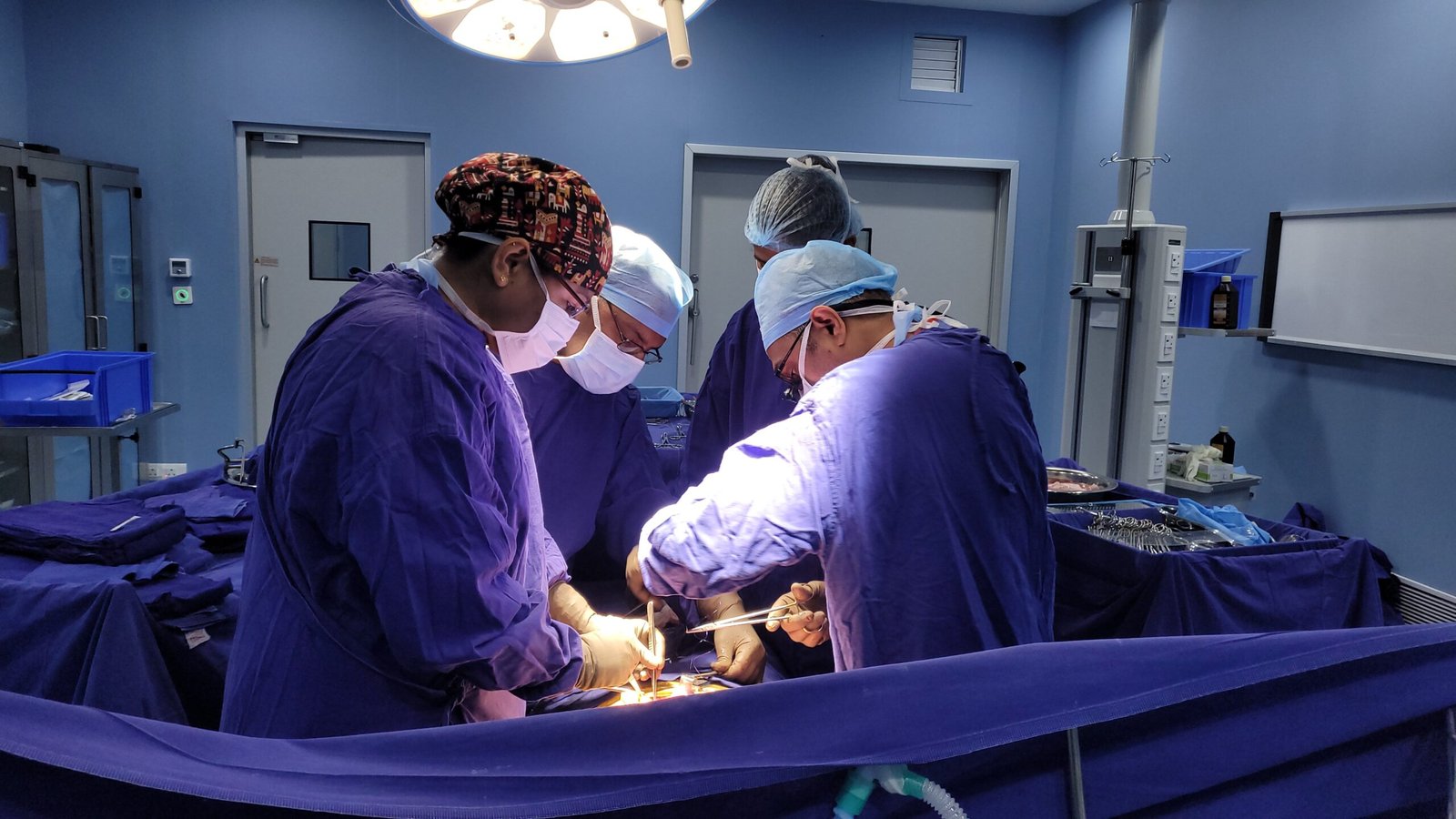
Kidney transplants provide way more than just surgery. They give back the possibility of living the life you want to live. Kidneys fail, and goals are put on hold. These goals remain unreachable until a person receives the transplant, and the freedom to live life the way a person wants to returns. Even the quality of daily life improves. No one looks forward to enduring the torture of dialysis. There are so many tedious restrictions that accompany it, from being kept awake all night to not being able to go on trips.
The question isn’t whether to get a transplant. The question is what type of transplant to get. Laparoscopic donor nephrectomy, a type of keyhole surgery performed to remove a kidney from a living donor, has forever improved the transplant experience. Reduced pain, a faster return to normal existence, and shorter recovery times have made it one of the best options for those in need of a kidney.
Laparoscopic donor nephrectomy is a procedure where surgeons remove a kidney from the donor through a minimally invasive approach using a camera and specialized tools in a monitor. Once removed, the kidney is surgically inserted into a patient with failing kidneys through a separate procedure in an adjacent operating room.
Since the procedure is done on a healthy family member, it is understandable why there is concern about the procedure. Performing the procedure through traditional means with a large incision had led to a lot of concern about the aesthetics of the scars.
To address the concerns, the traditional surgical incision is replaced with laparoscopic approaches with 3 small incisions and a slightly larger incision that is in a more aesthetic location. Because the kidney is removed through a small opening, the kidney uses the ureter and blood vessels which are surgically cut. The laparoscopic approach is performed through an incision and the kidney is removed through the opening. The procedure can take between 3 to 4 hours.
For the person or animal receiving the transplant, a donor kidney is placed in the pelvis, not in the anatomical spot of the kidneys (the original kidneys are generally not removed) and is attached to the blood vessels and bladder. This part of the surgery is done through a standard lower abdominal incision regardless of what donor technique is used.
The donor experience is significantly improved. The donation becomes safer to do and offers families the opportunity to make a living donation and kidney transplant.
The main difference is in how each type of surgery removes the donor’s kidney. Both techniques accomplish the same objective of obtaining a kidney for transplant, but the experience, recovery, and risks that the patient encounters are quite different.
Open Kidney Transplant Surgery – Traditional Approach
Traditional open donor nephrectomy makes use of an incision that is usually 20 to 30 centimeters long across the flank. The incision usually goes through the skin, muscle and sometimes the rib to gain access to the kidney. The surgeon has to operate on the kidney through direct hand contact. While this approach allows the surgeon to have excellent visibility and control, this causes the donor to have significant post-operative pain due to large muscle incisions, a hospital stay of 5 to 7 days, a recovery period of 4 to 6 weeks before they are able to return to normal activities, and having a scar which can be very distressing for a donor. The large incision also means that there is a larger risk of complications with the wound, a hernia, and long term weakness of the flank.
Even though open donor nephrectomy has been effective for a long time, it is the older and more morbid technique for living donor nephrectomy, which means that for the majority of high volume transplant centers that have the ability to perform laparoscopic procedures, open donor nephrectomy is not used anymore.
Laparoscopic Kidney Transplant – Minimally Invasive Approach
Laparoscopic donor nephrectomy revolutionizes the process for the living donor. Using a laparoscope, a camera with specialized tools, the surgeon makes 2–3 incisions, all under 1 centimeter, to remove the donor’s kidney. Less precision as opposed to open surgery, without the traumatic resultant appearance. The incision will be made in a location that is cosmetically non-obtrusive, in the abdomen or in the navel, and will be 5–7 centimeters. In comparison to the open surgery which involves an incision that is a large traumatic appearance, this surgery offers an incision that is much smaller.
Laparoscopic surgery leads to less trauma and pain to the donor. Donors are back at work in 1–2 weeks with a relatively sedentary job, with the ability to participate in rigorous physical activity again in 3–4 weeks. There is minimal blood loss to the donor and the resulting appearance is greatly improved. The quality of the kidney harvested nepheretcomy by laparoscopic means is of the same quality as that harvested by open surgery, and the results of the transplant on the recipient is comparable.
The side-by-side comparison below summarises the key differences for the donor:
Open Kidney Transplant (Donor Surgery) | Laparoscopic Kidney Transplant (Donor Surgery) |
Large flank incision (20–30 cm) | 2–3 small keyhole incisions (0.5–1 cm each) |
Significant post-operative pain | Minimal post-operative pain |
Hospital stay: 5–7 days | Hospital stay: 2–3 days |
Return to work: 4–6 weeks | Return to work: 1–2 weeks |
Higher risk of wound complications | Significantly lower wound complication risk |
Visible, prominent scar | Minimal, cosmetically superior scarring |
Greater blood loss during surgery | Minimal blood loss |
Longer anaesthesia duration | Shorter operating time in expert hands |
More post-operative fatigue | Faster recovery of energy and strength |
Higher overall donor morbidity | Lower donor morbidity – safer for the donor |
When at least one of the kidneys can no longer filter waste products, regulate the balance of fluids, and perform its essential functions, a replacement of the kidneys may be warranted. This condition is called end-stage renal disease (ESRD). In this state, the only option for the patient to survive is through dialysis or a replacement of the kidneys. Replacement of the kidneys is the only treatment option that can restore near-normal kidney function with an improved quality of life. Although dialysis may keep the patient alive, it is a replacement of normal kidney function.
End Stage Renal Disease (ESRD)
End-stage renal disease is the last stage of chronic kidney disease. It is defined by a glomerular filtration rate (GFR) below 15 ml/min/1.73m2, meaning that the kidneys are operating at below 15% of their normal, healthy capacity. At this stage, renal replacement therapy is the only thing that can keep the patient alive. Often, patients suffering from ESRD also suffer from overinflation of the body from excess fluid, anemia, electrolyte imbalances, bone disease, cardiovascular issues, and a severely reduced overall quality of life. For patients that qualify for a kidney transplant, it is the best option for both survival and quality of life. It is a far better option than long-term dialysis.
Chronic Kidney Disease (CKD) Stage 5
CKD Stage 5 equates to ESRD and refers to patients with a GFR of below 15 ml/min/1.73m2. However, patients diagnosed with CKD Stage 4 (GFR 15–30) can begin the transplant evaluation earlier, even before reaching Stage 5, and are therefore candidates for a preemptive kidney transplant. In such cases, the transplant occurs prior to the patient being required to undertake dialysis. It has been evidenced that preemptive transplantation leads to optimal outcomes, increased graft survival, and improved quality of life compared to transplantation occurring after the patient has been on dialysis. Therefore, Dr. Vikas Singh is a strong proponent of the early evaluation for transplantation of patients with CKD stages 4–5 in order to maximize the possibility of achieving a preemptive transplantation.
Diabetic Nephropathy & Kidney Failure
Diabetic nephropathy is damage caused to the kidneys through type 1 or type 2 diabetes. It accounts for the most diagnosed cases of end-stage renal disease and is one of the most common reasons for a kidney transplant. High levels of blood sugar slowly, but surely, damage the small blood vessels located in the glomeruli, and the function of these blood vessels will fail over a long period of time as well. Patients that have diabetes-related kidney disease usually have other co-morbid conditions. Therefore, it is critical that multidisciplinary management along with a cardiac evaluation be done prior to the transplant surgery. For the appropriate patient selection, it is possible to consider a combined organ transplant as well, such as providing a kidney and pancreas. This transplant will be able to help resolve the diabetes and kidney failure as well.
Polycystic Kidney Disease (PKD)
The most common genetic kidney disease is Polycystic kidney disease. Both kidneys get destroyed over many years due to the growth of many cysts. Progressive damage to cyst and normal tissue will result in the need for a kidney transplant. Polycystic kidney disease accounts for 5%-10% of total yearly kidney transplants. Nephrectomy, the surgical removal of the kidney, may be performed when the kidney gets too big and there is not enough space to accommodate the kidney transplant. Polycystic kidney disease patients often have end stage renal disease and are transplant candidates in their 50s and 60s. The disease is genetic, so family members (siblings, children) of those affected have a 50% genetic risk and thus may show the disease as well. As a result, only donors who do not have Polycystic kidney disease may donate kidneys to affected people.
Glomerulonephritis & Autoimmune Kidney Disease
Glomerulonephritis is the inflammation of the glomeruli. The glomeruli are the basic units which compose the kidney’s filtration. This inflammation is caused by the immune system. There are many conditions which cause it such as IgA nephropathy, lupus nephritis, focal segmental glomerulosclerosis, membranous nephropathy, and ANCA-associated vasculitis. IgA nephropathy is the most prevalent form of glomerulonephritis. All of the above mentioned conditions cause progressive scarring of the filtering tissues of the kidneys. If left unchecked, they will lead to severe renal failure. Most patients will undergo a transplant once the underlying condition is in remission or appropriately controlled. Some forms of glomerulonephritis (especially FSGS) have a significant recurrence risk in the transplanted kidney, thus requiring intensive monitoring post-transplant.
To become a living kidney donor, a healthy adult needs to willingly, without any financial or other forms of pressure, and fully informed participate. As a healthy adult, living with only one kidney does not carry any significant long-term health to the individual. The remaining kidney will grow to accommodate both the healthy kidney’s and both kidneys’ function (compensatory hypertrophy). A comprehensive medical, surgical, psychological and legal assessment of the donor’s safety and long-term wellbeing is required prior to any donor approval for surgery.
Living Related Donor – Family Members
A living related donor is a close family member of the transplant recipient (usually a parent, sibling, or child). This type of donor is most likely to be tissue compatible, which means that the transplant tissue is less likely to be rejected, and the donor recipient is likely to need less (or, possibly, no) immunosuppressant medication. First-degree relatives (parents, siblings, and children) are the most common living donors, and the hospital’s authorization committee approves their donations during expedited legal review.
Before donating, the donor must undergo testing and meet the requirements set forth by the transplant team. The pre-transplant requirements include blood type and tissue compatibility testing, cross-match testing to assess the presence of antibodies towards the donor kidney, and a thorough medical and psychological assessment. This may include functional assessment of the donor’s kidneys, CT angiography of the donor’s kidneys, an assessment of the donor’s cardiovascular function, and clearance by the transplant committee.
Living Unrelated Donor – Emotional Donors
An unrelated living donor is not biologically related, but is still close to the recipient, in most cases, a spouse, cousin, or friend. The Transplantation of Human Organs and Tissues Act in India considers emotionally related, unrelated donation with a strict framework. Donors should have a true emotional relationship and should be authorized by the State or the Regional Authorisation Committee. This committee reviews the relationship and ensures that there is no commercial transaction. This committee also does a donor’s evaluation in terms of the donor’s understanding and the donor’s motive.
There is a difference in HLA, (Human leukocyte antigen) which is less ideal in unrelated pairs compared to biological relatives. However, in related or emotionally related, unrelated transplants, modern day immunosuppression makes the outcomes comparable. To increase the living donor pool, the paired kidney exchange program, which has two incompatible pairs of donor-recipient pairs exchange the donors, is also a method which is being explored.
Deceased Donor – Cadaveric Kidney Transplant
A deceased donor (cadaveric) kidney transplant is when a kidney is sourced from an individual who is declared brain dead by a qualified medical practitioner, and whose family members have authorized organ donation. In India, consents for deceased donor transplantation are managed by state organ sharing registries, e.g. NOTTO at the national level and SOTTO/ROTTO at state/regional levels. Patients who wish to receive a kidney from a deceased donor are put on an organ donation waiting list and are given an organ based on an appropriate blood group, waiting list duration, and urgency of the medical condition.
Deceased donor transplants increase the organ donation pool as one deceased donor can give kidneys to two organ recipients, and other organs (liver, heart, lungs, pancreas) to other donation recipients. Optimization of organ preservation and transplantation techniques and post-transplant immunosuppression have helped to improve the results of deceased donor kidney transplantation. However, compared to deceased donation, living donation usually results in better nephron function due to the higher quality of the kidney and shorter cold ischaemia time.
The introduction of laparoscopic donor nephrectomy has been one of the most donor-friendly advances in transplant surgery of the past two decades. It has expanded the living donor pool significantly – because more people are willing to donate when the procedure is less invasive, less painful, and recovery is faster. Here is what makes laparoscopic donor nephrectomy the preferred approach for living kidney donors:
Smaller Incisions & Minimal Scarring for Donor
An open donor nephrectomy leaves a large scar on the side of the abdomen due to the length of incision which is 20-30 centimeters and may require a rib to be removed due to extending all the way to the back. However, laparoscopic donor nephrectomy only requires multiple mini incisions of 1 centimeter or less. In addition, there is only one extraction scar of approximately 5-7 centimeters, which is placed in a location that is surrounded by the bikini line or in the navel region. For many individuals, especially younger male and female donors whose decisions could be impacted by their concern over their personal appearance, this may be a deciding factor for them to proceed with kidney donation.
Less Pain & Faster Recovery for Donor
The largest contributor to post-operative pain after donor nephrectomy is the large muscle incision caused by the open approach. As laparoscopic donor nephrectomy avoids this incision, post-operative pain is reduced and most laparoscopic donors require oral pain medications only 24−48 hours after surgery. In contrast, donors who underwent open donor nephrectomy typically require intravenous and epidural analgesia. Reduced pain causes an earlier return to normal function, and donors are often eating and drinking sooner and moving from the table to a standing position. Most donors are walking within 24 hours after laparoscopic surgery.
Shorter Hospital Stay for Both Donor & Recipient
laparoscopic donors leave the hospital after 2–3 days. On the other hand, open donors stay for 5–7 days. Sometimes, the recipient’s hospital stay after surgery is explained by their recovery. While this is the case, faster recovery of the donor decreases disruption and anxiety for the recipient’s family. When the laparoscopic technique is mastered, this kind of donor nephrectomy does not increase the time the surgeon spends in the operating room, and the kidney that is harvested and placed in the recipient does just as well, with the same survival rate as the kidney obtained by the open technique.
Better Cosmetic Outcome & Less Blood Loss
The cosmetic benefits of laparoscopic donor nephrectomy cannot be overstated, and are consistently cited by donors as the most important benefit to them personally. The small incisions heal to such small marks, they are practically invisible in comparison to the large curved incision of other procedures. There is also less intraoperative blood loss with the laparoscopic technique, which lowers the risk of requiring a blood transfusion and increases the speed of the recovery time. Less blood loss is especially important for a healthy donor undergoing this elective surgery.
Quicker Return to Normal Life for Donor
Nothing matters as much to most donors as the speed at which they can return to their normal activities. Donors who undergo laparoscopy return to its desk and light daily activities within one to two weeks, and can engage in exercise and active work within three to four weeks. Open donors take much longer to engage in work activities, with desk work occurring four to six weeks after the donation, and physical work occurring much longer than six weeks after the donation. Because of this discrepancy, the more occupied and active the donor is, the much more likely they are to agree to laparoscopic donation, especially if they understand that recovery occurs in days and not weeks.
For qualifying patients, end-stage renal disease (ESRD) is best treated via kidney transplant as compared to all options within the spectrum of renal replacement therapies. This fact is not debatable; it is one of the better-supported conclusions in both transplant medicine and nephrology. There is an overwhelming amount of data spanning years and countless patients supporting this conclusion.
Dialysis, whether it is done in a controlled setting via hemodialysis (HD) three times weekly, or involves more autonomy via daily peritoneal dialysis (PD) in a home setting, is a life-sustaining therapy that substitutes one or more of the myriad of functions executed by the kidneys. Dialysis is a remarkable achievement in biomedical engineering and has defied the finality of death. However, it is not curative, and it is a poor surrogate. Patients who are dialyzed will experience a myriad of comorbidities due to incomplete function of kidneys, as dialysis only approximates 10-15% of total normal renal function.
Given that the first year post-operatively sees transplant patients’ renal function of 50-60% of normal and many patients transplant even better, the difference pre and post-transplant is beyond remarkable.
Factor | Kidney Transplant | Dialysis (Haemodialysis/PD) |
Survival | Significantly longer life expectancy | Shorter life expectancy over 10+ years |
Quality of life | Near-normal; full daily activity restored | Significant lifestyle restrictions |
Diet | Mostly normal diet with few restrictions | Strict fluid, salt, potassium, protein limits |
Energy levels | Normal energy levels restored | Chronic fatigue very common |
Frequency | One procedure; then regular monitoring | 3 sessions/week (HD) or daily (PD) |
Cardiovascular risk | Reduced significantly post-transplant | Elevated – leading cause of death on dialysis |
Cost over time | Lower long-term cost | Very high cumulative long-term cost |
Fertility | Often restored in women of childbearing age | Significantly impaired on dialysis |
Travel & freedom | Near-normal – minimal restrictions | Severely restricted – tied to dialysis unit |
Data on survival present very compelling, if not striking, evidence. For years, analyses show that the matched patients on dialysis shed 50% of the mortality risk of the dialysis cohort of patients. The survival benefit begins at 3-6 months of transplant and continues to get better the longer the transplant has been in place. Those in the 20-40 age demographic of dialysis can expect to live many decades, beyond the limitations of dialysis, due to transplantation.
Dietary limitations of transplantation are liberating. Dialysis patients are required to restrict their fluid intake, sodium, potassium, phosphorus, and protein. The restrictions turn every meal into an exercise in math. After transplantation, patients have an easier time saying no to a meal and can expect to return to a diet that is almost normal. This is one of the most important lifestyle improvements that patients report after transplantation, not because of the medical improvement of their quality of life, but because of the improvement of their emotional quality of life.
Transplantation has proven to be the more cost-effective option for future planning. The costs for dialysis are 3 times a week every week in perpetuity. The cost for transplantation and the maintenance of medication for the first immunosuppression is compacted in the first year. The costs are similar to dialysis within 2-3 years of the transplant.
Posted on GoogleTrustindex verifies that the original source of the review is Google. Dr vikas singh is best urologist in IndorePosted on GoogleTrustindex verifies that the original source of the review is Google. Nice treatmentPosted on GoogleTrustindex verifies that the original source of the review is Google. My treatment given by Dr vikas sir he is best doctorPosted on GoogleTrustindex verifies that the original source of the review is Google. Best doctorPosted on GoogleTrustindex verifies that the original source of the review is Google. Hm log shivpuri se dr vikas sir ko dikhane aaye, sir se milkar bahut acha lga, nature or treatment bahut sahi hePosted on GoogleTrustindex verifies that the original source of the review is Google. Nice doctorPosted on GoogleTrustindex verifies that the original source of the review is Google. Very experienced and caring doctor. Excellent treatment and patient-friendly approach. Highly recommended.”Posted on GoogleTrustindex verifies that the original source of the review is Google. On dt27.06.2026 dr.vikas singh performed my prostatomegaly surgery by Urolift method . I am now fealing very well.Within two days l got discharged from Kokilaban Dhirubhai Ambani hospital Indore (MP).I am very thankfull to this very new method Urolift,Dr.Vikas singh sir and BCM Kokilaben Dhirubhai Ambani hospital,Nipania Indore. ByAdarsh kumar pauranik.Posted on GoogleTrustindex verifies that the original source of the review is Google. Good experience for testis treatment for my son
Laparoscopic donor nephrectomy refers to the use of laparoscopic techniques to remove a donor kidney. Traditional methods of open donor nephrectomy require a long (20 cm to 30 cm) flank incision. However, laparoscopic techniques require 3-4 very small incisions (1 cm or less). One of these small incisions, in contrast to a flank incision, is made below the donor’s bikini line or at the navel. The end result of this laparoscopic technique includes much less postoperative pain, shorter hospital and postoperative recovery time, and much less donor morbidity. Additionally, the scars from the procedures are much less noticeable. When compared to the results from open techniques, laparoscopic techniques result in a kidney of the same quality, and the same outcomes of the transplant.
Yes – donating a kidney is safe for a healthy adult with normal kidney function. People have two kidneys, but can survive with one. After donor nephrectomy, the remaining kidney compensates and hypertrophies – it increases in size and filtration capacity to compensate for the missing kidney, restoring about 70–75% of the original combined kidney function in a few months. Long-term studies of those who have donated a kidney consistently show that their life expectancy is equivalent to (and in some studies, better than) age-matched non-donors. This is primarily because donors are in optimal health before donation. After donation, donors are monitored to a long-term extent to check their kidney function, blood pressure, and overall health.
Transplantation of Human Organs and Tissues Act (THOTA) 1994 and amendments in 2011 stated that in India, a living kidney donor should be a voluntary and non-monetary adult (18 years or more) kidney donor. First-degree biological relatives (parents, children, and siblings) and spouses are primary approved living donor categories and are authorized by the hospital’s transplant authorisation committee. Emotionally related unrelated established relationships (friends, relatives, etc.) may be considered approved donors, as and when, by the State or Regional Authorisation Committee. Deceased donor transplantation is coordinated by NOTTO/SOTTO organ sharing registries.
Because of contemporary immunosuppressive drugs and the right type of monitoring, a living-donor kidney transplant can last years beyond the standard range of 15 to 25 years, with cadaver-donor kidney transplants lasting the typical range of 10 to 15 years. The half-life of a living-donor kidney transplant, meaning the time duration when 50% of donated kidneys are functioning, is about 12–15 years with older transplant protocols, and much longer with contemporary protocols. At times, cadaver-donor kidney transplants outlive the expected range, just as living-donor kidneys can. The longevity of a kidney graft depends on recipient factors such as, but not limited to, avoiding toxicity of the kidney, control of blood pressure, blood sugar, diabetes, keeping good track of medication, and good match of HLA antigens.
After a transplant, lifelong compliance with immunosuppressants is necessary to prevent rejection of the new kidney. The current standard of care consists of a calcineurin inhibitor (either tacrolimus or cyclosporine), an antiproliferative (with options of either mycophenolate mofetil or azathioprine), and a low-dose corticosteroid (prednisolone). The risk of transplant rejection diminishes over time, allowing for dose reductions. These drugs necess routine blood level tests. In addition to kidney function and blood pressure they also require checks on the patient’s blood sugar and cholesterol. Periodic screening for infections and other adverse effects of the drugs is also needed. Dr. Vikas Singh provides a comprehensive service for the management of post transplant immunosuppression and monitoring in conjunction with nephrologists.
Yes. Whenever possible, that is very much preferred. Those who receive a kidney transplant prior to ever initiating dialysis see better transplant success, longer survival of the transplant, improved quality of life of the transplant recipient, and reduced transplant recipient mortality compared to those who receive a transplant after spending time on dialysis. For patients with CKD Stage 4 and 5 with a GFR under 20-30 ml/min and a living donor, they should be prioritized for early transplant evaluation. Dr. Vikas Singh is a strong proponent of early transplant evaluation for CKD Stage 4 patients to maximize the possibility of a preemptive transplant, and to avoid the potential burdens, both physical and mental, that are associated with dialysis.
Yes. Whenever possible, that is very much preferred. Those who receive a kidney transplant prior to ever initiating dialysis see better transplant success, longer survival of the transplant, improved quality of life of the transplant recipient, and reduced transplant recipient mortality compared to those who receive a transplant after spending time on dialysis. For patients with CKD Stage 4 and 5 with a GFR under 20-30 ml/min and a living donor, they should be prioritized for early transplant evaluation. Dr. Vikas Singh is a strong proponent of early transplant evaluation for CKD Stage 4 patients to maximize the possibility of a preemptive transplant, and to avoid the potential burdens, both physical and mental, that are associated with dialysis.
In laparoscopic live-donor kidney transplants that utilize minimal warm ischaemia time, kidneys can start functioning in the operating room, or hours after transplantation, and are considered to have achieved the best possible outcome, which is known as immediate graft function. Some delayed graft function recipients will have their new kidney restart kidney function in a few days, which can be followed by a short dialysis session. Compared to organs retrieved from deceased donors, delayed graft function of living donor kidneys is uncommon and is less likely to occur the shorter the ischaemia time of the kidney.