Bladder cancer is the 10th most common cancer globally. Early detection is critical — when caught at Stage 1, bladder cancer has a 5-year survival rate exceeding 90%. This guide explains symptoms, staging, and the latest bladder cancer treatments available in Indore from the region’s leading uro-oncologist.
What Is Bladder Cancer? (Direct Answer)
Bladder cancer is a malignant growth arising from the inner lining (urothelium) of the urinary bladder. The most common type (90%) is Urothelial Carcinoma (Transitional Cell Carcinoma). It is classified as Non-Muscle Invasive Bladder Cancer (NMIBC — Stages Ta, T1, CIS) and Muscle-Invasive Bladder Cancer (MIBC — Stage T2 and above).
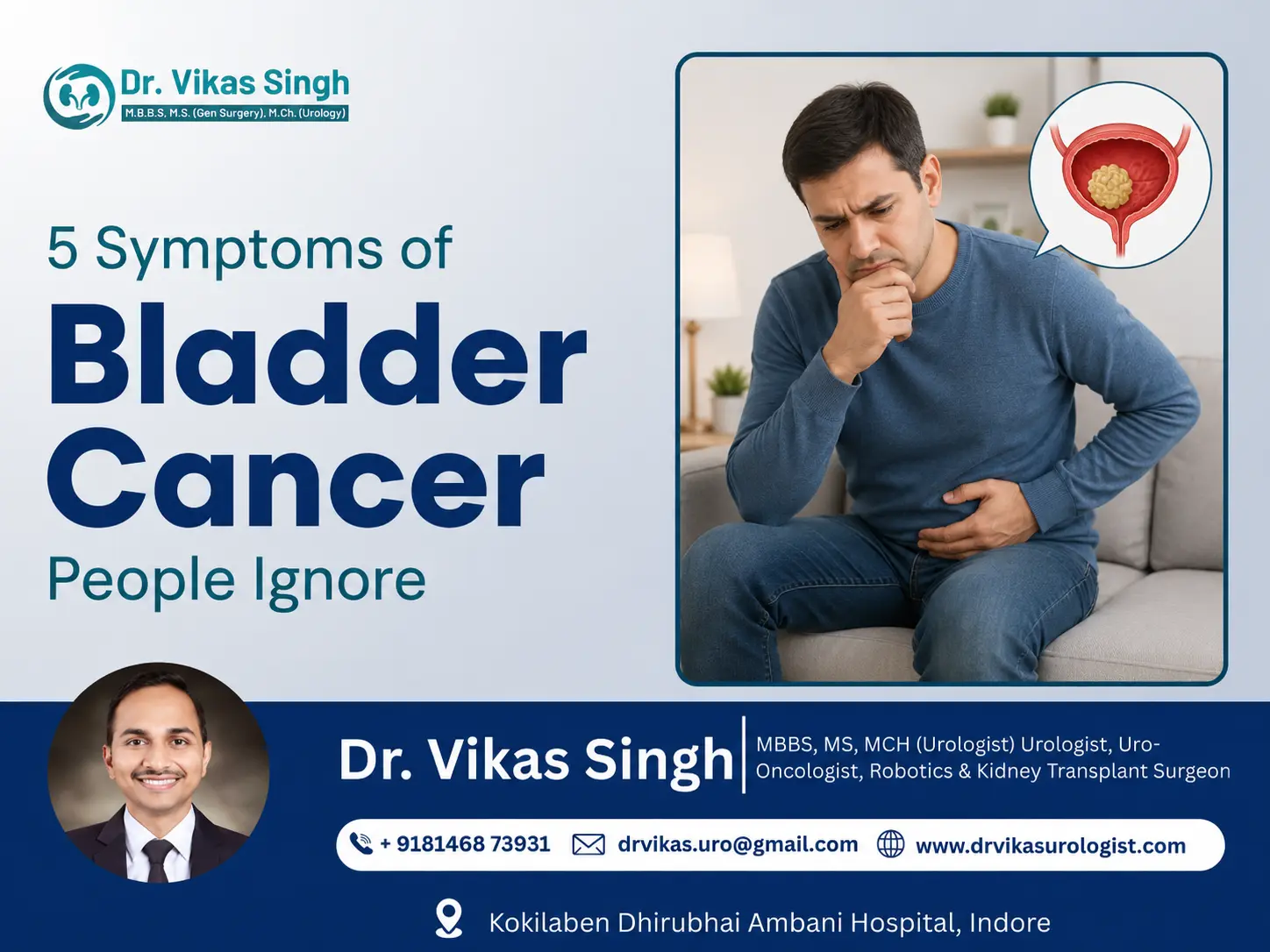
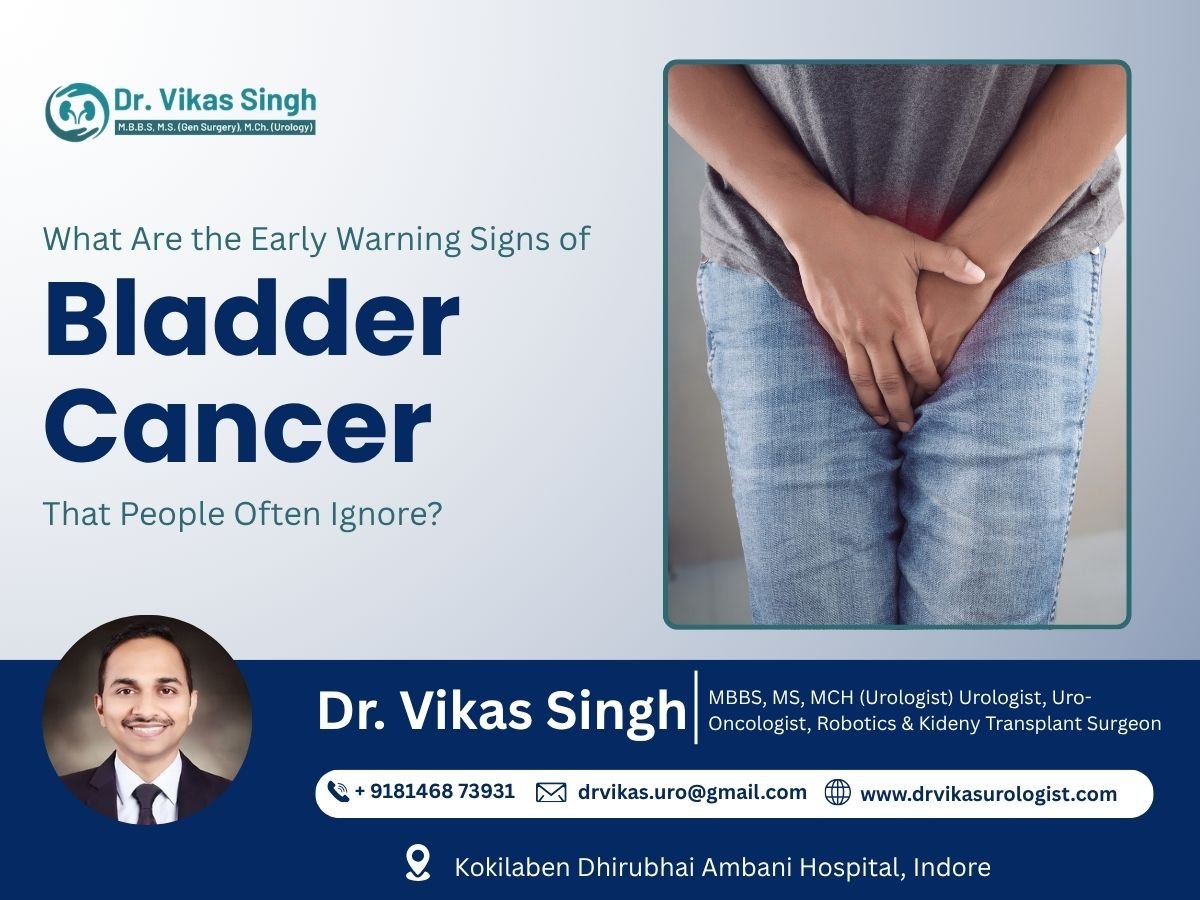
Warning Signs of Bladder Cancer — Recognize Them Early
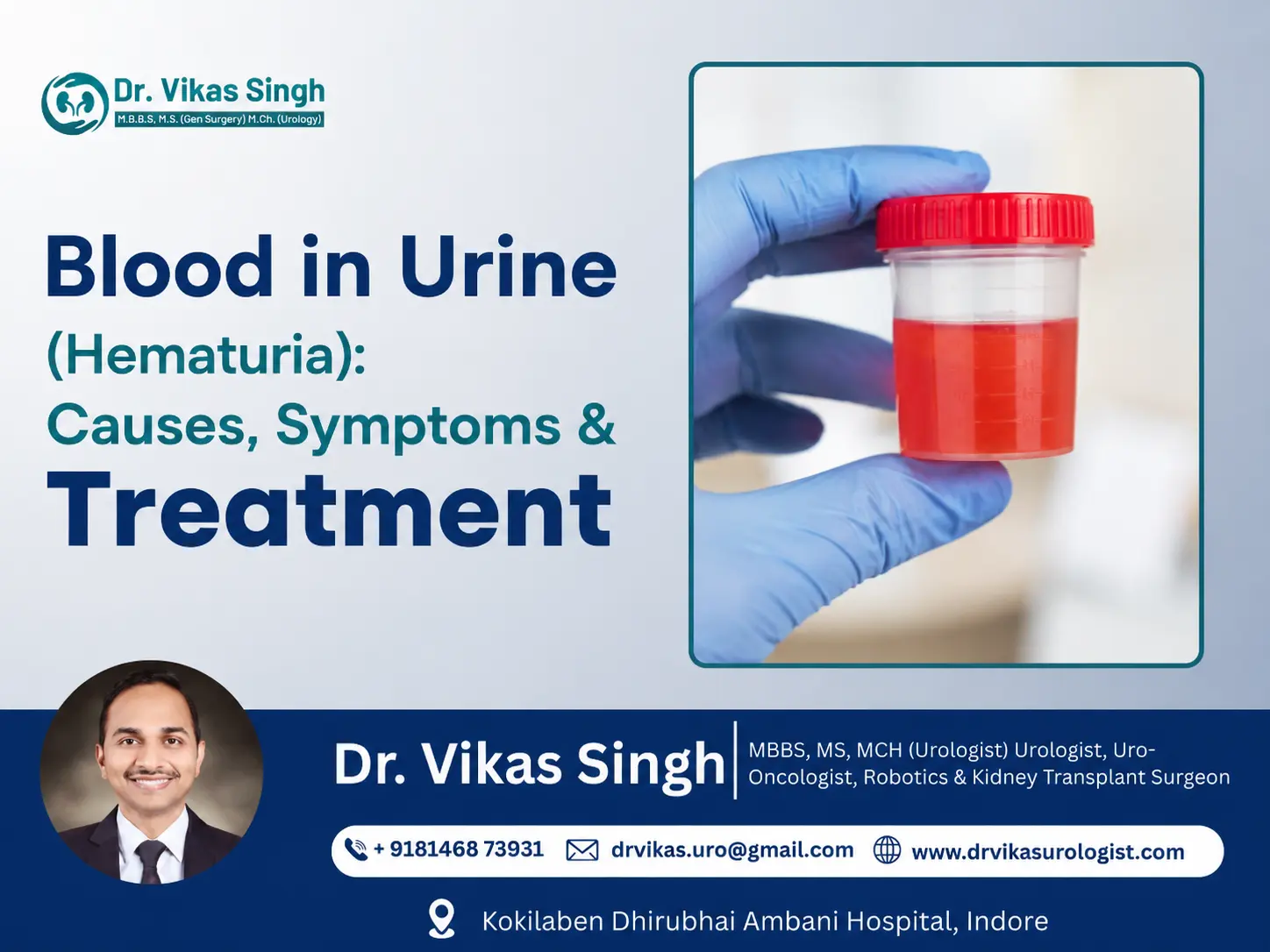
- Blood in urine (hematuria) — painless, gross or microscopic [Most common symptom in 80-85% of cases]
- Frequent urination, urgency, and burning without a proven infection
- Difficulty urinating or weak urine stream
- Pelvic pain or lower back pain (advanced disease)
- Unexplained weight loss and fatigue (advanced stages)
KEY FACT: Painless blood in urine (gross hematuria) MUST be evaluated urgently by a urologist. It is the presenting symptom in 80-85% of bladder cancer cases. Do not assume it is harmless.
Bladder Cancer Staging — What Stage Are You?
TNM Staging Summary (2025 Edition)
Stage Ta: Papillary tumor confined to inner lining — NMIBC (best prognosis, highly curable)
Stage T1: Invasion into lamina propria — NMIBC (higher risk of recurrence)
Stage CIS: Flat high-grade carcinoma in situ — aggressive, requires BCG immunotherapy
Stage T2: Invades muscle layer — MIBC (radical cystectomy recommended)
Stage T3/T4: Perivesical or adjacent organ invasion — multimodal treatment required
Stage M1: Metastatic disease — systemic chemotherapy or immunotherapy
Modern Bladder Cancer Treatment Options — 2026
1. TURBT (Transurethral Resection of Bladder Tumour)
TURBT is the primary diagnostic and therapeutic procedure for NMIBC. Performed endoscopically without any external incision, it removes visible tumours and provides staging tissue. Re-TURBT within 2-6 weeks is recommended for T1 tumours to ensure complete resection per EAU 2025 guidelines.
2. Intravesical BCG Therapy
BCG (Bacillus Calmette-Guerin) immunotherapy is instilled directly into the bladder weekly for 6 weeks (induction), followed by maintenance cycles for up to 3 years. EAU 2025 guidelines report a 60-70% reduction in recurrence and progression risk with optimal BCG therapy in high-risk NMIBC.
3. Radical Cystectomy
For muscle-invasive bladder cancer (T2+), radical cystectomy (removal of the bladder) combined with neoadjuvant cisplatin-based chemotherapy is the standard of care. Robot-assisted laparoscopic radical cystectomy (RALRC) offers minimal blood loss and faster recovery than open surgery.
4. Bladder Preservation Protocol (Trimodal Therapy)
Selected T2 patients may opt for Trimodal Therapy (TMT): maximal TURBT + concurrent chemotherapy + radiation therapy, preserving the native bladder with oncologic outcomes approaching cystectomy in properly selected patients (published in NEJM 2025).
5. Immunotherapy (Checkpoint Inhibitors)
For metastatic or BCG-unresponsive bladder cancer, PD-L1 inhibitors (pembrolizumab, atezolizumab) have shown 40% response rates in clinical trials and are now standard second-line therapy per NCCN 2026 guidelines.
Bladder Cancer Statistics — India 2026
According to the Indian Council of Medical Research (ICMR) 2025 Cancer Report, bladder cancer accounts for approximately 3.9% of all cancers in Indian men. Smoking is the most significant risk factor, responsible for 50-60% of cases. Occupational exposure to aromatic amines (dye, rubber, paint industries) is the second leading cause.
People Also Ask — Bladder Cancer FAQ
Q1: Can bladder cancer be cured?
Q2 : What causes bladder cancer?
Q3: Is bladder cancer painful?
Q4: How is bladder cancer diagnosed?
Q5: Does bladder cancer come back after treatment?
Why Choose Dr. Vikas Sharma for Bladder Cancer Treatment in Indore?
Dr. Vikas Singh, MCh Urology with specialized uro-oncology training, is skilled in TURBT (including blue-light cystoscopy), BCG therapy, and radical cystectomy. He adopts a multidisciplinary tumour board approach for personalized treatment planning and stays regularly updated with NCCN, EAU, and AUA oncology guidelines to provide evidence-based, patient-centered care.
Take control of your bladder health today. Schedule a consultation with our expert MCh Urology and uro-oncology specialist for personalized care. Benefit from advanced procedures like TURBT, BCG therapy, and radical cystectomy, guided by the latest NCCN, EAU, and AUA oncology standards. Book your appointment now for expert, compassionate care.
Reach us at: Dr. Vikas Singh, Urologist