
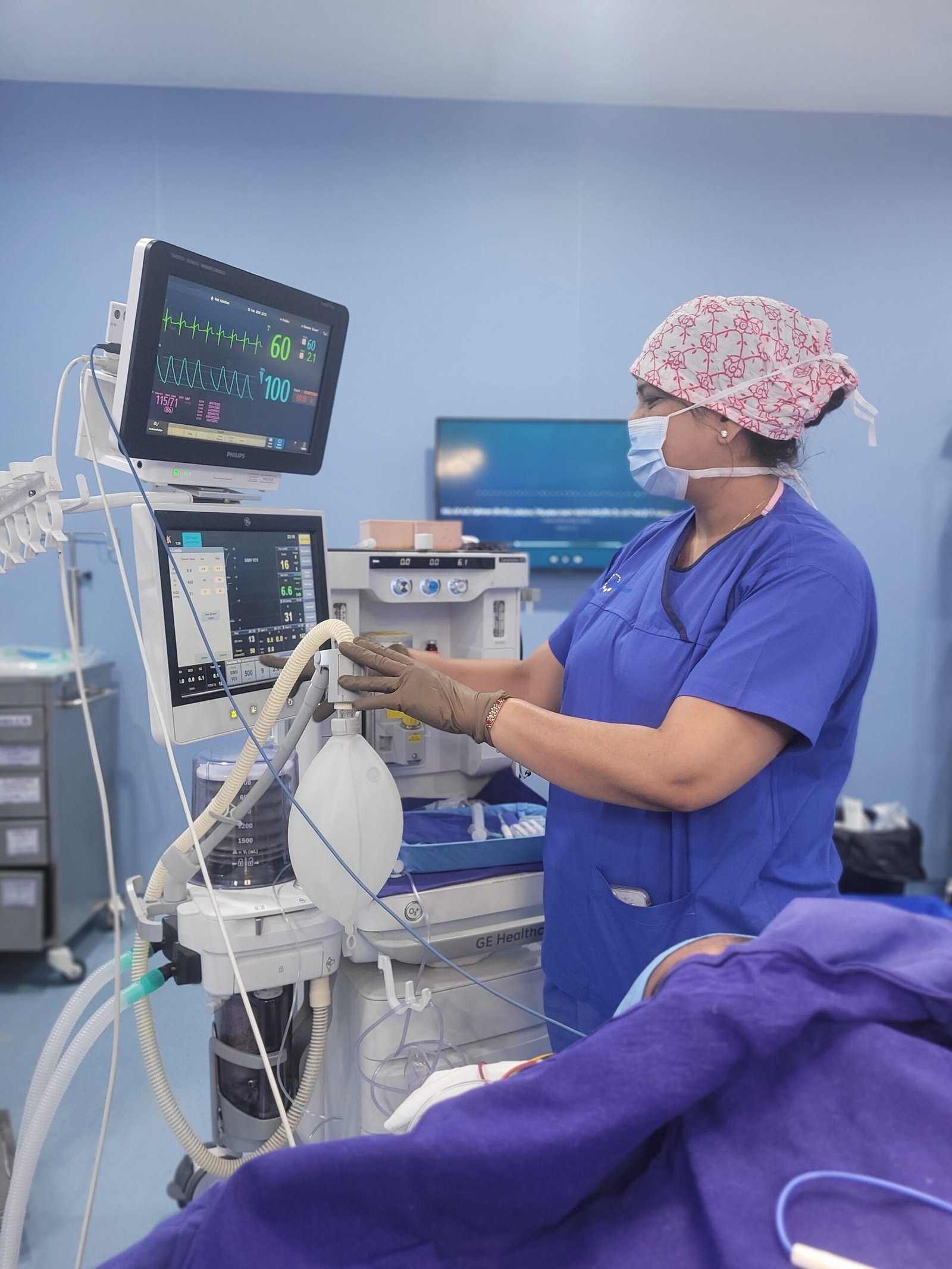
Kidney stones treatment is one of the most sought after treatments in urology. Suppose you are one of the patients who has had an experience with kidney stones; you would know the feeling of a dagger being stabbed in the back. Fortunately, kidney stones are very easy to treat with the new technologies in Urology. Patients in Indore are getting the advanced Laser Treatment and going back home in 1 to 2 days completely pain free.
Dr. Vikas Singh is Senior Consultant Urologist at Kokilaben Dhirubhai Ambani Hospital, Nipania, Indore, and one of the most experienced urologists in Central India. Dr. Vikas Singh has done over 1000 kidney stone surgeries using the latest laser technologies like RIRS, PCNL, and URS. His patients get the best treatment from a specialist with years of experience, skills and a caring attitude.
Whether you have a kidney stone of 4mm or 4cm, Whether the stone is in the kidney or has moved to the ureter, the solution is available in Indore. We can save you the trip to get expert treatment from Delhi or Mumbai.
Your kidneys help keep your blood clean. In a single day, your body filters 200 litres of blood through your kidneys, and forms urine from the waste products and additional water. If certain minerals and salts precipitate from your urine, then these can crystallize and large clusters of minerals can form a kidney stone.
Kidney stones can be scary, and they can be large or small. Rocks the size of a sand grain can go unnoticed as they exit the body via urine. Beware of the golf ball-sized stones and the ones associated with renal colic, as they cause painful cramping. These stones are so painful that many victims go to the ER.
Kidney stones are extremely common in India, including Indore. The dry, hot climate of Indore causes mild dehydration, which makes this a stone-prone area. Stones can develop in any adult; however, men 30-60 are the majority cases.
The key takeaway is that stones are very manageable. With the appropriate diagnosis and the help of a good physician, the road to a stone-free life starts within days of facing the stone.
There are various types of kidney stones which can form for different reasons, and identifying which type of kidney stones prepares Dr. Vikas Singh for how to treat and prevent them from forming in the future
The most common kidney stones, calcium stones make up nearly 80% of cases. They’re usually calcium oxalate (found in nuts, tea, spinach, and chocolate) or sometimes calcium phosphate. Low fluid intake, high oxalate diets, and certain metabolic conditions raise the risk. Drinking more water and adjusting your diet can help prevent them.
These form when urine becomes too acidic, common in people with diabetes, gout, or diets rich in red meat and shellfish. Men are more prone to them. Catching it early helps prevent stone formation, and medication can treat existing ones.
Struvite stones form due to urinary tract infections and can grow quickly, sometimes filling the entire kidney in a branching, antler-like shape. They need aggressive treatment, often including long-term antibiotics, to clear the infection and prevent recurrence.
The rarest type, caused by a hereditary condition called cystinuria, where the kidneys leak excess amino acids into urine. These stones tend to recur and need lifelong management through diet, medication, and care from a skilled specialist.
| Symptom | What It Means |
|---|---|
| Severe back, side, or lower belly pain | Pain that comes and goes, often starting in the back and moving toward the groin as the stone moves. |
| Pain while urinating | A sharp, burning feeling that suggests the stone is near the bladder or lower ureter. |
| Blood in urine (hematuria) | Urine looks pink, brown, or red, even a small trace can be significant. |
| Frequent urge to urinate | A sudden or constant need to go, even with little urine passed. |
| Nausea and vomiting | Often triggered by the intensity of the pain. |
| Cloudy or foul-smelling urine | May point to an infection linked to the stone. |
| Chills and fever | A warning sign of infection or blockage, needs urgent medical care. |
| Little or no urine output | May mean the stone is fully blocking the ureter. |
Being diagnosed accurately is the first step. At Kokilaben Dhirubhai Ambani Hospital, Indore, we have all the latest technology needed to locate, measure, and analyze your kidney stones, all under one roof.
Ultrasound is usually the first test done, it’s quick, painless, affordable, and radiation-free. It can spot most kidney and bladder stones and check for swelling caused by a blocked ureter. A KUB X-ray helps detect calcium-based stones but may miss others, like uric acid stones, so it’s often paired with ultrasound for a fuller picture.
A CT KUB scan is the most accurate way to diagnose kidney stones. It detects nearly all stone types, shows their size and location, and reveals any blockages or complications. If surgery is needed, this scan is essential. Dr. Vikas Singh reviews every CT scan personally to plan the safest treatment for you.
These tests reveal how healthy your kidneys are and help explain how your stones may have formed.
Most men attribute such symptoms to age and tend to ignore them. Some men even find it embarrassing to approach these problems. All these symptoms need to be evaluated and treated medically. These problems tend to be easier to treat if they are diagnosed and treated early and will help the patient return to the normal activities of life faster.
RIRS is the leading laser treatment for kidney stones today, and Dr. Vikas Singh has performed it over 1,000 times. A thin camera called a ureteroscope is passed through the urine passage up to the kidney, with no cuts involved. A Holmium laser then breaks the stone down into fine dust, which passes out naturally through urine. Patients in Indore value that it leaves no external cuts or stitches, works well even for large stones over 2cm, usually allows same-day discharge, has a low complication rate in experienced hands, and can treat stones in hard-to-reach parts of the kidney. It’s ideal for those who want to avoid open surgery, have stones in both kidneys, or have had previous kidney surgery.
PCNL is used for stones larger than 2cm or ones too hard for laser dusting. It involves a small, keyhole-sized cut in the back to reach the kidney directly, through which a nephroscope breaks up and removes the stone. Dr. Vikas Singh has advanced this technique further with Mini and Ultra Mini PCNL, using thinner instruments to reduce bleeding, pain, and recovery time. It’s often the best option for achieving a stone-free kidney in one surgery, especially when the stone is large, very hard, multiple stones are present, or earlier treatments like RIRS or ESWL haven’t worked.
URS treats stones that have moved into the ureter or bladder. A thin scope is passed through the urethra and bladder up into the ureter to reach the stone directly, where a Holmium laser breaks it into small pieces or dust. These either pass naturally or are removed with a small basket device. Most patients go home the same day, and a temporary stent is placed afterward to support healing and proper urine flow.
A DJ stent is a small, flexible tube placed between the kidney and bladder to keep urine flowing freely, often used alongside stone treatment. It usually stays in for 2 to 6 weeks and is removed through a simple, cut-free procedure. Some patients feel mild discomfort or urinary frequency while it’s in place, but it plays an important role in healing. Dr. Vikas Singh will explain if a stent is needed in your case and what to expect.
Not every kidney stone has to be surgically removed. Small stones – usually those that are less than 5 – 6mm big – may require some bit of patience and watchful waiting.
This typically involves:
Medical management requires regular follow-up appointments with Dr. Vikas Singh to assess whether the stone is self passing or to determine what further intervention may be necessary.
Treatment depends on stone size, location, and your overall condition. Here’s a quick guide to how Dr. Vikas Singh approaches it:
Managed with medication and increased fluids to help pass naturally
RIRS, scar-free with quick recovery
PCNL, clears the stone in one session
URS with laser, minimally invasive with strong results
Treated urgently with a DJ stent first, stone treatment follows once infection clears
RIRS can often treat both kidneys in one sitting
Renal stones are frustrating. Even more frustrating is the rate at which they recur. Research shows that stones have a 50% likelihood of reforming in 5-10 years after the first episode. The good news is that the likelihood can be reduced and stones can be prevented from reforming with changes in diet and habits.
Stay Hydrated
This is the most important prevention method. People with stones should aim to produce 2-2.5 liters of urine daily which suggests a water intake of 3 or more liters. Indore residents have the hot climate to thank for their higher water needs. The degree of hydration can be assessed by the urine color. It should be a light yellow. If it is darker, there is inadequate hydration.
Cut Down On Salts
Higher concentrations of sodium in the diet also lead to a high concentration of calcium in urine. This increases the likelihood of calcium stones forming. This means a reduction in pickled and packaged foods and salted cooking.
Cut Down On Oxalate Rich Foods
Foods such as beets, nuts, chocolate, and spinach are high in oxalate. Oxalate does not need to be avoided altogether; eating calcium-rich foods alongside it helps bind the oxalate and keep it from reaching the kidneys.
Reduce Animal Proteins
Proteins that come from meat or fish (red and white) increase the levels of uric acids which can cause both calcium stone as well as uric acid stones to form. It is important to eat them in moderation.
Calcium Intake Should Not Be Restricted Too Much
Research shows that stone risk increases with low-calcium diets. Calcium is better obtained through food like dairy, ragi, and sesame. Use supplementation only if specifically instructed by a doctor.
Ongoing care is important
Dr. Vikas Singh will schedule follow-ups for urine and blood tests post treatment to identify any ongoing metabolic issues. Certain prescription medications may be suggested to better manage your individual risk of recurrence.
Countless Urologists treat Kidney Stones in Indore. This is why Dr. Vikas Singh is a preferred choice for patients from across Madhya Pradesh and Central India.
Straightforward, Communication Focused on Patients – Dr. Vikas Singh is appreciated for explaining things in detail, responding to every concern, and never hurrying a patient. He shows patients the consideration he would show to his own relatives.
Posted on GoogleTrustindex verifies that the original source of the review is Google. Dr vikas singh is best urologist in IndorePosted on GoogleTrustindex verifies that the original source of the review is Google. Nice treatmentPosted on GoogleTrustindex verifies that the original source of the review is Google. My treatment given by Dr vikas sir he is best doctorPosted on GoogleTrustindex verifies that the original source of the review is Google. Best doctorPosted on GoogleTrustindex verifies that the original source of the review is Google. Hm log shivpuri se dr vikas sir ko dikhane aaye, sir se milkar bahut acha lga, nature or treatment bahut sahi hePosted on GoogleTrustindex verifies that the original source of the review is Google. Nice doctorPosted on GoogleTrustindex verifies that the original source of the review is Google. Very experienced and caring doctor. Excellent treatment and patient-friendly approach. Highly recommended.”Posted on GoogleTrustindex verifies that the original source of the review is Google. On dt27.06.2026 dr.vikas singh performed my prostatomegaly surgery by Urolift method . I am now fealing very well.Within two days l got discharged from Kokilaban Dhirubhai Ambani hospital Indore (MP).I am very thankfull to this very new method Urolift,Dr.Vikas singh sir and BCM Kokilaben Dhirubhai Ambani hospital,Nipania Indore. ByAdarsh kumar pauranik.Posted on GoogleTrustindex verifies that the original source of the review is Google. Good experience for testis treatment for my son
It is improbable for a 10mm stone to pass on its own. Treatment is usually needed. Dr. Vikas Singh will evaluate your stone’s size, location, and composition to propose the best option. Stones less than 5-6mm tend to have a fair probability of passing with medication and increased fluid intake, but bigger stones than that will almost always require some procedure.
During the procedure, RIRS is done under general or spinal anaesthesia, so you do not feel anything. Afterwards, you may have mild urinary discomfort or blood-tinged urine for a day or two, which is completely normal and resolves quickly. Many patients have reported that their post-operative experience was much more comfortable than they had anticipated.
Depending on the size and location of the stone, RIRS is usually 30-90 minutes. URS for ureteric stones is usually 30-60 minutes. And PCNL may take 60-90 minutes. Dr. Vikas Singh will provide you with a precise estimate based on your CT scan results.
Yes, a DJ stent is placed temporarily after RIRS or URS to allow the ureter to heal and to ensure the urine can drain. After 2-4 weeks the stent is removed in an outpatient setting. You may experience some mild urinary urgency or discomfort, which is normal while the stent is in.
Most patients after RIRS or URS return to desk work in 3-5 days. If you have a more physically demanding job, this may require 1-2 weeks. After PCNL, you can expect to return to light work in 1-2 weeks. Dr. Vikas Singh will provide you with recovery instructions after your procedure.
Probably not, at least not right away. A 4mm stone can pass with fluid and medications such as an alpha blocker. Dr. Vikas Singh may ask you to have repeat ultrasounds to monitor. After 4-6 weeks, if the stone is causing pain, infection or a blockage, then an intervention is necessary.
Prices differ with particular methods (RIRS, PCNL, URS) as well as service provider fees. There can also be differences based on the hospital and what tests or medicines are in the mix. The Kokilaben hospital is honest with pricing and offer breakdowns of costs. You can dial +91 81468 73931. They can give you a more personalised estimate. Most health insurances cover stone surgery. They can assist you in understanding your insurance.
There is a genetic component. If one of your parents or a sibling developed stones, your chances are elevated. Cystine stones are due to a genetic condition. Family history also increases your chances for calcium and uric acid stones. This makes screenings, water intake, and on the lookout for stones in your diet more important.
Having stones repeatedly signifies your metabolic structure is not well controlled. Dr. Vikas Singh recommends a 24-hour urine collection test with a blood metabolic panel to find the underlying cause of stone formation. Having a customised prevention strategy will be very effective, in combination with some dietary modifications and medicines, to bring down the chances of developing more stones soon.
Consultations can be scheduled via phone at +91 81468 73931 or in-person at Kokilaben Dhirubhai Ambani Hospital, No. 1, BCM Estate, Nipania, Indore, Madhya Pradesh. The staff will help you with booking an appointment in the soonest slot available. On this occasion, please carry any previous reports and imaging studies, as well as a note with all the current medications you are taking.