
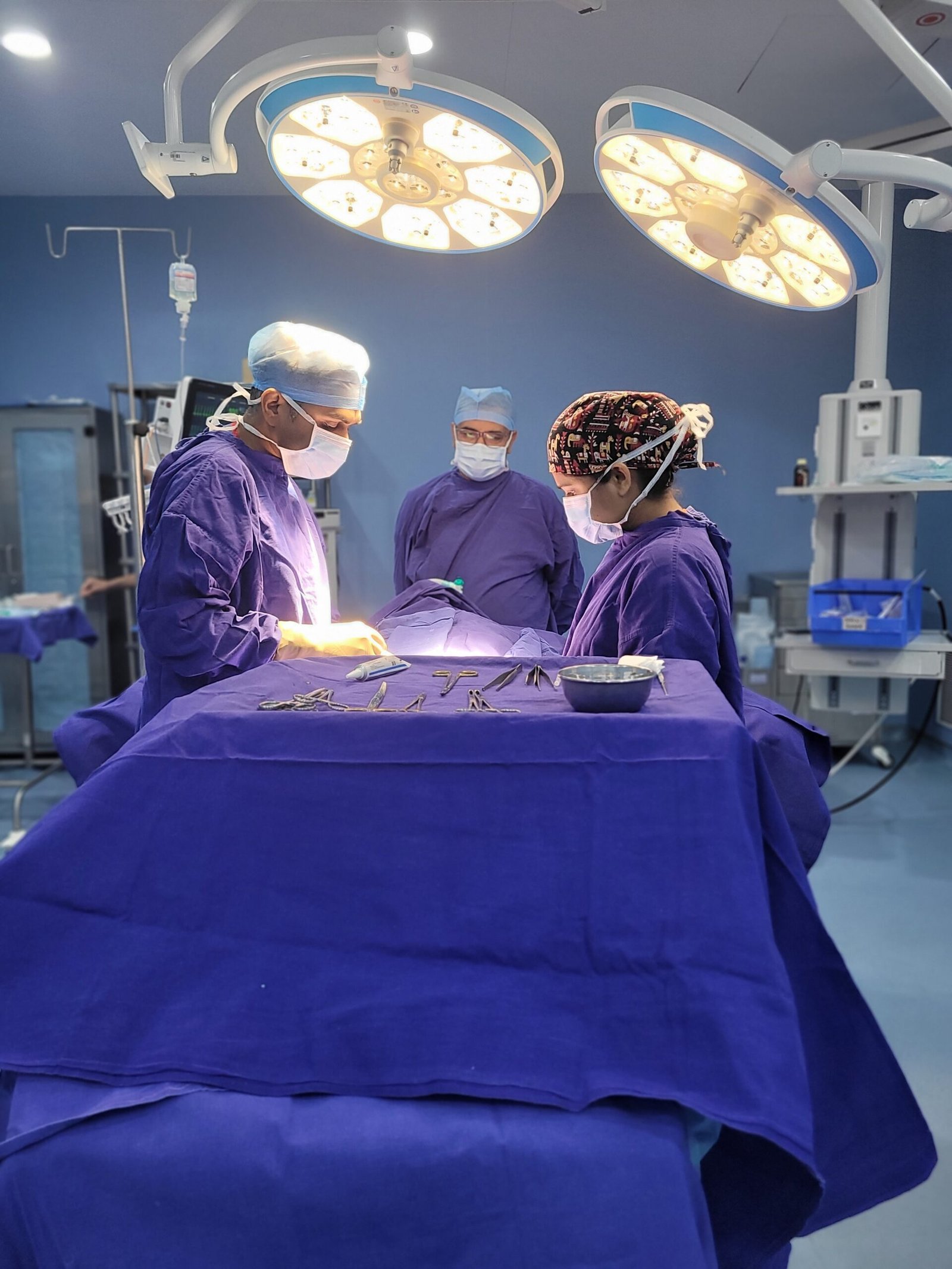
Testicular torsion is a urologic emergency. There are very few conditions in medicine where the difference between arriving at the operating theatre within six hours and twelve hours later is the difference between saving an organ and losing it forever. One is testicular torsion , when the testicle twists on its own blood supply , cutting off circulation and causing ischaemic injury that progresses rapidly to irreversible infarction. Every hour from onset to surgical detorsion counts, and recognising the symptoms clearly enough to act immediately can be the difference between keeping a testicle or losing one.
Although less immediately time-critical than torsion, testicular trauma is a surgical emergency in its own right when significant, particularly when associated with a scrotal haematocele, testicular rupture or haematoma, and requires prompt assessment and surgical exploration to preserve viable testicular tissue and prevent complications of uncorrected injury. Scrotal trauma is underappreciated by many men, who often dismiss the pain as sport or accident and wait it out, during which time a significant underlying testicular injury may be deteriorating.
The testis is suspended in the scrotum by the spermatic cord, which carries the blood vessels to the testis. In most men, the testis is attached to the adjoining tunica vaginalis and is not mobile. The testis can twist around the axis of the spermatic cord thus twisting the blood vessels that supply the testis . Some men have the so-called bell clapper deformity , in which the testis hangs more loosely within the tunica without adequate anchoring . This is testicular torsion and it is a true surgical emergency because the twisted spermatic cord strangles the testicular blood supply causing ischaemia that begins causing permanent damage within hours and results in complete infarction of the testis if not surgically reversed.
Testicular trauma is defined as any injury to the testis resulting from direct blow to the scrotum during sport, a straddle injury or, less frequently, penetrating trauma. The skin of the scrotum is loose and resilient but the testis itself has limited capacity to absorb the compressive force. The tunica albuginea, a tough fibrous capsule surrounding the testis, can rupture with a significant force, resulting in herniation of testicular contents through the tear. A haematocele is a collection of blood around the testis within the tunica vaginalis which may occur following significant scrotal trauma. If large and not drained it may compress and compromise the blood supply to the testis even in the absence of frank rupture. In testicular torsion, the salvage rate is critically dependent on time from onset to surgery :
Time from Torsion Onset | Testicular Salvage Rate | Clinical Implication |
Under 6 hours | 90–100% | Emergency surgery saves virtually all testes , get to hospital immediately |
6 to 12 hours | 50–70% | Decreasing salvage , every additional hour matters significantly |
12 to 24 hours | 20–50% | Majority of testes non-viable , orchidectomy increasingly likely |
Over 24 hours | < 10% | Most testes non-salvageable; orchidectomy usually required |
Extravaginal torsion is almost exclusively seen in neonates and results from torsion of the entire testis, epididymis and tunica vaginalis together, usually prior to the testis becoming anchored to the scrotal wall. It typically presents in the first few days of life as a firm, dark, non-tender mass in the scrotum. Most neonatal torsions have unfortunately been in utero and the testis is non-viable at birth but contralateral orchidopexy is performed as a way to secure the unaffected testis to prevent future torsion on that side.
The most common type is the intravaginal torsion . This is a torsion within the tunica vaginalis . It occurs mostly in adolescents and young adults. The peak incidence occurs in the 12 to 18 age group, although it can occur at any age . The underlying anatomic predisposition is the bell clapper deformity, where the tunica vaginalis attaches high on the spermatic cord rather than around the testis, allowing the testis to swing freely and is seen in approximately 12 per cent of males and is bilateral in most who have it. Therefore, after unilateral surgical detorsion the contralateral testis is always fixed at the same time, the same anatomical predisposition exists on the opposite side.
Torsion of testicular appendage (appendix testis) This is a separate entity to testicular torsion, with twisting of a small embryological remnant, the appendix testis, rather than the testis itself. It causes scrotal pain in young boys and adolescents that can be difficult to differentiate clinically from true testicular torsion. The blue dot sign, a small blue-black discolouration seen through the scrotal skin at the upper pole in early cases, is pathognomonic when present . Appendix testis torsion is a benign self-limiting condition which does not compromise testicular viability and is treated conservatively. However, clinical certainty of diagnosis is paramount before conservative management is preferred over surgery.
The most frequent mechanism of scrotal trauma is blunt trauma due to sport, accident or direct hit. If the compressive force between the impacting object and the pubic bone is adequate, it may rupture the tunica albuginea resulting in testicular rupture with extrusion of seminiferous tubules or a haematocele from vessel disruption within the tunica vaginalis without frank rupture. Ultrasound is important in distinguishing an intact from a ruptured testis and in helping to decide whether surgical exploration is necessary, although clinical judgement is of paramount importance. If testicular rupture is clinically suspected, exploration should not be delayed until imaging is available.
Penetrating scrotal trauma caused by sharp objects, projectiles, or cutting injuries is associated with a higher likelihood of testicular and vascular injury and almost always requires surgical exploration to assess the extent of the injury and repair or remove damaged tissue. Degloving injuries of the scrotal skin are rare and challenging problems in reconstructive surgery requiring specialist plastic-urological management. Iatrogenic testicular injury is a rare complication of inguinal hernia repair, especially if the spermatic cord vessels are inadvertently damaged resulting in testicular atrophy or ischaemia, recognition and prompt vascular repair or orchidopexy is important if recognised intraoperatively.
TESTICULAR TORSION IS A SURGICAL EMERGENCY. Don’t wait for the symptoms to settle down, don’t go to a general practitioner first, don’t drive yourself, reach the emergency department of Kokilaben Hospital Indore immediately. Salvage rate of > 90% with surgery within 6 hours falls to < 10% after 24 hours.
Sudden Severe One-Sided Testicular Pain
Any of the following findings in the setting of significant scrotal trauma should prompt prompt surgical assessment. Do not delay surgical assessment by waiting for the swelling to subside as the window for surgical testicular salvage may be closing.
Orchidectomy, the removal of one testicle, is sometimes unavoidable where the testis has been non-viable due to torsion outside the window of salvage, or where a severely traumatised testis cannot be repaired. This news obviously creates a lot of anxiety, particularly regarding fertility and hormonal function, and clear, honest information is a key part of post-operative care.
Testosterone and Hormonal Function: The remaining testis is more than capable of producing enough testosterone to maintain normal male hormonal function, sex drive, and general health in the vast majority of men. The other testis enlarges (compensatory hypertrophy) and increases in volume and functional output to compensate partially for the loss of the testis that is removed. Serum testosterone levels may be initially modestly decreased but tend to stabilise in the normal range in most men with a healthy contralateral testis. Testosterone replacement therapy after unilateral orchidectomy in men with normal contralateral testis with hypogonadism is rare and testosterone monitoring is appropriate in follow up.
Fertility: usually a single normal testis is enough sperm to get pregnant naturally. After a unilateral orchidectomy the fertility is usually preserved, provided the remaining testis is normal. However, in the setting of an existing condition such as varicocele or cryptorchidism in the remaining testis, a semen analysis at six to 12 months post-procedure provides objective reassurance or further work-up. Men wishing to preserve a biological sample may be offered sperm banking prior to orchidectomy. Any man of reproductive age who has concerns about future fertility should be discussed pre-operatively.
Psychological and cosmetic effect The psychological adjustment to the loss of a testicle should not be underestimated. Many men experience distress, major changes in body image and concerns about their sexual performance and attractiveness. These are very real concerns and should be acknowledged and responded to with appropriate follow-up. A testicular prosthesis is a saline or silicone implant placed within the scrotum. It provides a natural appearance and feel, restoring scrotal symmetry and helping many men feel more comfortable with their body image . Dr Vikas Singh talks to all men having an orchidectomy for torsion or trauma about having a testicular prosthesis at the right time after the operation.
Posted on GoogleTrustindex verifies that the original source of the review is Google. First of all Thankyou soo much sirji... Everything is all right and i am completely satisfied by sirji treatment.....one of the best urologist in indore..Posted on GoogleTrustindex verifies that the original source of the review is Google. My father is operated with prosphate, experience,nature, consultancy is very good. Allover I'm satisfied with the doctor and his services.Posted on GoogleTrustindex verifies that the original source of the review is Google. Best doctor and Best treatmentPosted on GoogleTrustindex verifies that the original source of the review is Google. Good day. Recently we visited Dr Vikas for consultation and for son's treatment at Kokilaben hospital, Indore. The hospital and its facilities are good. And Dr Vikas consultation and expert treatment were even better. He is very approachable, and listens to his patients. As parents, we are satisfied with the treatment and recommend his services. Thank you.Posted on GoogleTrustindex verifies that the original source of the review is Google. Apart from being an extremely talented urologist, Dr Vikas Singh is a great human being. I have been under his consultation for my medical conditions for last more than 2 years and I am immensely satisfied with his precision hands in surgery, his clear understanding and logical action plans to handle a complex situation of patient. I wish him all the best in his endeavours.Posted on GoogleTrustindex verifies that the original source of the review is Google. The experience is very good and nature is good while treatment
Yes. With no exception. Testicular torsion is a complete surgical emergency, requiring immediate hospital attendance and emergency scrotal exploration as soon as the diagnosis is suspected. There is no safe ‘wait and see’ period, the ischaemic injury to the testis starts immediately at the start of torsion and develops rapidly and irreversibly. Surgery within six hours has a testicular salvage rate greater than 90 percent, dropping to 50 to 70 percent in six to twelve hours and to less than 10 percent after 24 hours. If torsion is suspected, imaging, analgesics, or watchful waiting should not delay surgical exploration. In doubt explore; the consequences of an unnecessary negative exploration are incomparably less serious than those of a missed torsion.
Testicular torsion is largely a clinical diagnosis. The combination of sudden onset severe unilateral testicular pain, nausea, a high riding testis on examination and an absent cremasteric reflex on the affected side provides sufficient clinical evidence for immediate emergency surgery without waiting for confirmatory imaging. When the clinical picture is equivocal, colour Doppler ultrasound showing absent or reduced blood flow to the affected testis may help to support the diagnosis, but should never delay surgery when clinical suspicion is high. The principle is if the clinical features suggest torsion go to theatre. A negative exploration with a viable untwisted testis is an acceptable result. Waiting for a scan to find an irreversibly infarcted twisted testis is not.
The definitive treatment of testicular torsion is emergency scrotal exploration and surgical detorsion, unwinding the twisted spermatic cord under direct vision in the operating theatre. Once detorsion is performed, testicular viability is assessed by noting the return of normal pink colour and the return of pulsatile blood flow. This usually occurs over five to ten minutes of observation after detorsion. If the testis is salvageable, it is sutured to the scrotal wall with non-absorbable sutures (orchidopexy) to prevent future torsion. Meanwhile the contralateral testis is always prophylactically fixed. If the testis does not recover and remains non-viable, then orchidectomy is done. Manual detorsion, twisting the testis externally through the scrotal skin, can be attempted as a temporising measure during transfer to hospital but does not replace surgical exploration.
Bilateral testicular torsion is an extremely rare condition with only a few case reports in the medical literature. The bell clapper deformity, however, the anatomical predisposition to torsion, is bilateral in the vast majority of affected individuals. Thus, a man who has had torsion on one side is at significant risk of torsion on the contralateral side at a different time if it is not fixed. Therefore, in every urgent exploration for unilateral torsion, the contralateral testis is fixed prophylactically at the same time, thus preventing future torsion risk on the opposite side.
Clinically, it is important to distinguish testicular torsion from epididymo-orchitis (infection of the epididymis and testis) because they may have similar symptoms of scrotal pain and swelling. Key distinguishing features Torsion is usually catastrophic in presentation whereas epididymo-orchitis is slower in onset. The cremasteric reflex is absent in torsion but present in epididymo-orchitis. Fever and urinary symptoms such as dysuria are in favour of epididymo-orchitis. Younger patients, adolescents, are more likely to have torsion whereas sexually active adults are more likely to have epididymo-orchitis. However, if the diagnosis is uncertain and torsion cannot be excluded clinically, surgical exploration is the appropriate management as missing torsion and treating presumed epididymo-orchitis risks loss of the testis.
Not all testicular trauma requires surgery, but deciding which cases do and don’t needs prompt specialist assessment, not watchful waiting at home. If the pain is bearable and the scrotal ultrasound reveals a simple testicular contusion with an intact tunica albuginea, it can be treated conservatively with scrotal support, analgesia and rest. Surgical exploration is indicated if: Ultrasound suggests or cannot exclude testicular rupture; Haematocele is large, expanding or compressing the testis; Injury is penetrating; Pain and swelling are progressing despite conservative measures. The principle of the guideline is that early exploration (within 72 hours of injury) for significant scrotal trauma reduces orchidectomy rates compared to delayed or non-operative management, uncertainty should favour exploration.
Yes, for most of them. One healthy testicle produces enough sperm to conceive naturally. The contralateral testis compensates following orchidectomy and the semen quality of men with a single normal testis is generally adequate for natural fertility. The caveat is that if the remaining testis also has a pre-existing problem such as varicocele, cryptorchidism history or previous injury, fertility may be more significantly affected. Objective reassurance can be obtained by semen analysis 6 to 12 months after orchidectomy. For men worried about future fertility, sperm banking before orchidectomy is always an option that can be discussed.
After orchidectomy, saline or silicone testicular prosthesis of appropriate size is implanted within the scrotum to restore the normal appearance and symmetry of the scrotum. It looks and feels natural on the outside and helps many men feel more comfortable with their body image and sexual confidence after losing a testicle. The prosthesis has no functional role, it does not generate hormones or sperm, but the psychological benefit for many men is meaningful and should not be underestimated. It is generally performed as a planned elective procedure after resolution of the acute phase, usually several months after orchidectomy, when all inflammatory reaction has subsided and the scrotum has returned to normal size and tissue quality.
Testicular torsion has a bimodal age distribution. The first peak is neonatal, occurring in the first days of life. extravaginal torsion, most often occurring in utero. The second and larger peak is pubertal with the highest incidence in males between the ages of 12 and 18 years but torsion can occur at any age from infancy to elderly adulthood. The puberty peak is explained by the increase in testicular volume during puberty, which leads to an increase in the rotational mass, and the increase in the cremasteric activity during this period. Adult torsion (above 25 years) is less common but does occur and should always be considered in any adult male with acute testicular pain, the diagnosis should not be excluded on the basis of age alone.