
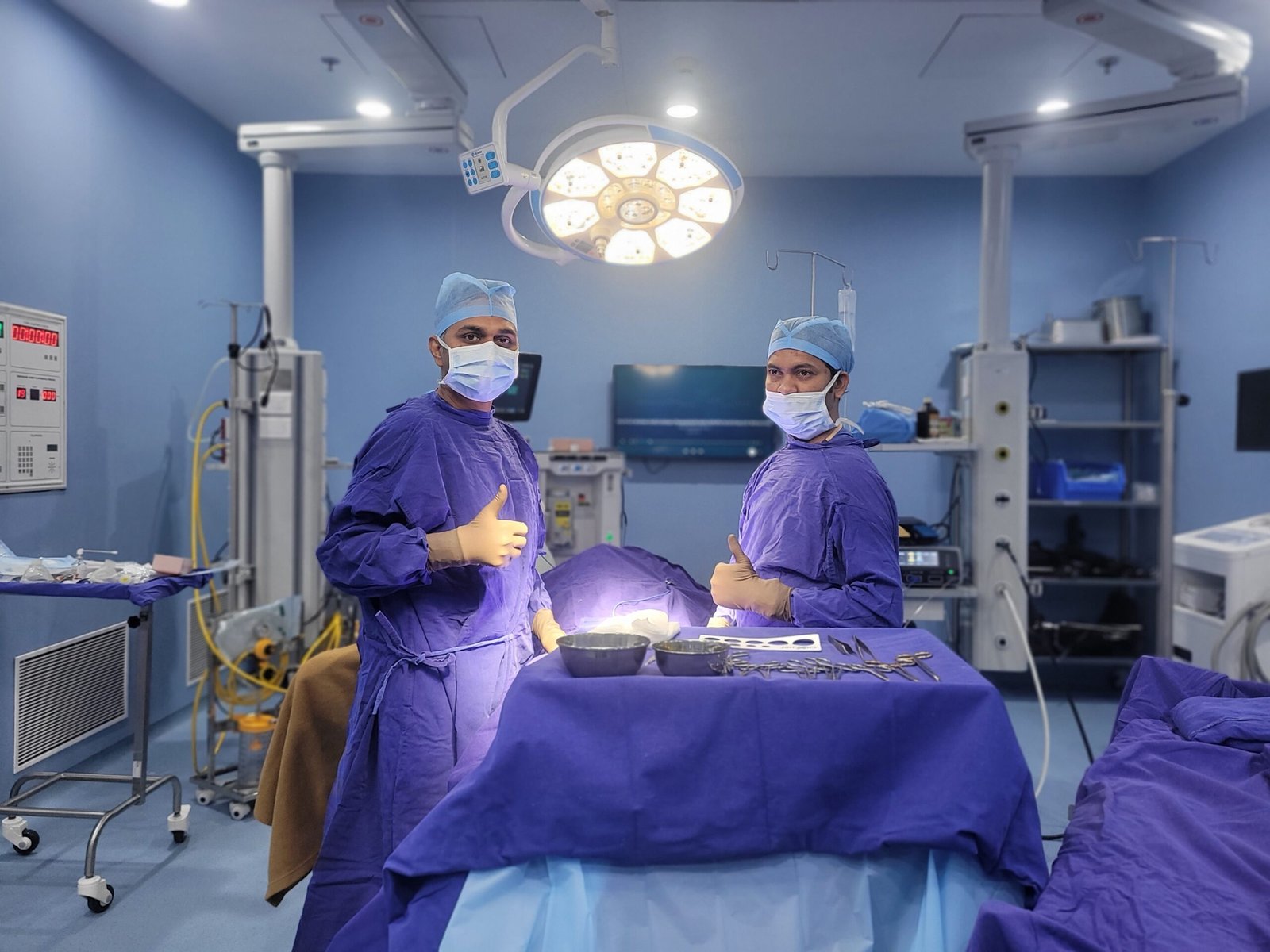
Circumcision, the surgical removal of the foreskin, is among the most common urological procedures performed globally, both for medical reasons and on elective basis. For many men and families the question is not if the procedure is necessary, but how it is done: how painful will it be, how quickly will it heal, what will it look like, and if it is safe for a child or an adult with other health problems such as diabetes.
Laser circumcision ticks off all these concerns. The procedure is done with the use of advanced laser technology, most commonly a CO2 or diode laser, with a precision and control that a conventional scalpel simply cannot match. The laser cuts and seals the blood vessels at the same time, making the procedure almost bloodless. Usually, there are no stitches. The healing time is shorter, the swelling is not so bad, the cosmetic result is clean and symmetrical, and the risk of infection is much less than traditional surgical circumcision.
Laser circumcision is the removal of the foreskin with a concentrated beam of laser light, as opposed to a standard surgical scalpel. The laser energy, delivered via a handpiece that is meticulously controlled, cuts the foreskin tissue and coagulates (seals) the blood vessels simultaneously in one motion, resulting in a clean, bloodless wound that heals faster and is less painful after surgery than a conventional incision.
The most common laser used in circumcision is the CO2 laser and the diode laser. Both deliver energy that is absorbed exactly by soft tissue, enabling the surgeon to control with submillimetre accuracy the depth and extent of tissue removal. As the laser cuts, small blood vessels are sealed, so there is virtually no bleeding during or after the procedure – in most cases sutures are not required and there is less risk of post-operative haematoma (blood pooling under the skin) and wound infection.
The procedure is done under local anaesthetic for adults and older children – a penile nerve block or ring block will numb the whole penis in a matter of minutes – or general anaesthetic for young children and patients who would prefer to be completely unconscious. The laser circumcision is a procedure that lasts around 20 to 30 minutes. Most patients leave the clinic two to three hours after arrival with a simple protective dressing and clear written instructions for the care of the wound at home.
Circumcision is the total or partial removal of the prepuce, the retractable fold of skin covering the head (glans) of the penis, also called the foreskin. The foreskin has a protective role in infancy and a physiological function . However , there are several medical conditions affecting the foreskin which require its surgical removal . Laser circumcision is preferred for all these conditions because of its safety, precision and better recovery profile.
Phimosis (Tight Foreskin That Cannot Retract)
Phimosis, in which the skin is too tight to be retracted over the glans penis, is the most common medical indication for adult circumcision. All male newborns have a physiologically non-retractile foreskin . With normal hormonal development and gentle natural stretching , the foreskin gradually becomes retractile through childhood . By puberty, in most boys the foreskin retracts fully. This may be due to scarring, recurrent infection, lichen sclerosus or simply failure of normal development . The phimosis may then be associated with pain on erection and intercourse, problems with hygiene leading to recurrent infections and, in severe cases, obstruction of urine flow . Phimosis is graded from mild (partial retraction of the foreskin) to severe (pinpoint opening, no retraction of the foreskin). Surgery is usually required for grades 3 to 5.
Paraphimosis (Foreskin Stuck Behind the Glans)
Paraphimosis is a urological emergency where the foreskin has been pulled back behind the glans and cannot be returned to the forward position . . This is often due to a tight opening of the foreskin . The retracted foreskin forms a constrictive ring around the shaft of the penis behind the glans. This progressively impairs venous drainage causing the glans to swell and become increasingly engorged and, if not promptly treated, risking ischaemia (loss of blood supply) and permanent tissue damage. Paraphimosis requires urgent manual reduction or emergency surgery to relieve the constriction. Paraphimosis has a high risk of recurrent episodes in men with tight foreskins and once the acute episode has resolved, elective circumcision is strongly recommended to prevent recurrence.
Recurrent Balanitis & Posthitis (Foreskin Infections)
Balanitis (inflammation of the glans penis) and posthitis (inflammation of the foreskin) are very common in men with a tight, badly retracting foreskin. The tight foreskin creates a warm, moist environment underneath it that is ideal for bacteria and fungi to grow, particularly Candida (thrush) and common skin bacteria. The quality of life and sexual confidence are significantly affected by recurrent episodes of redness, swelling, pain, discharge and odour. Individual episodes are managed with topical antibiotics or antifungals. Circumcision is the best treatment for patients who have 3 or more episodes per year or who do not resolve adequately with medical therapy, because it eliminates the anatomic environment that predisposes to infection.
Lichen Sclerosus (BXO) Affecting the Foreskin
Lichen sclerosus (formerly balanitis xerotica obliterans, BXO) is a chronic inflammatory skin condition of unknown etiology that results in progressive whitening, hardening, inelasticity, and scarring of the foreskin, and sometimes the glans and distal urethra. Lichen sclerosus leads to pathological phimosis of the foreskin, which is resistant to steroid treatment and ultimately requires circumcision. The tissue of the foreskin is sent for pathological examination to confirm the diagnosis histologically. Additional urethral procedures may be required in conjunction with circumcision if lichen sclerosus has already involved the urethral meatus or distal urethra. Dr Vikas Singh has special interest in management of lichen sclerosus including its urethral manifestations.
Recurrent UTIs in Children Due to Tight Foreskin
In male infants and young boys, a tight non-retractile foreskin may contribute to recurrent urinary tract infections, bacteria colonise the preputial space under the foreskin and ascend the urethra into the bladder. Boys with at least two documented urinary tract infections, especially those involving the kidney (pyelonephritis), are evaluated for factors related to the foreskin that may be contributing. When a tight foreskin is identified as a contributory cause of recurrent UTIs in a child, circumcision removes the anatomical predisposing factor and dramatically reduces the risk of further infections. In children this medical indication is approached very carefully, with the most comfortable method available: laser circumcision under general anaesthesia.
Religious & Elective Circumcision
Circumcision is a deeply significant ritual practice in Islam and Judaism and a cultural norm in many communities across India, the Middle East, Africa, and the United States, and is widely practiced for religious and cultural reasons. Some adult men choose to be circumcised for reasons of personal hygiene, aesthetics, sexual preference or the preference of a partner. Dr. Vikas Singh provides religious and elective circumcision with the same clinical care and surgical excellence as medically indicated procedures . He uses laser technique for all cases to ensure the best possible outcome regardless of the reason for the procedure.
Foreskin problems do not always present dramatically. Many men endure severe symptoms for years, writing them off as normal variation or too embarrassed to seek medical advice. If you experience these symptoms, it is important to see a urologist as they may be symptoms of a condition that needs circumcision.
Pain or Difficulty During Urination Due to Tight Foreskin
Severe phimosis can cause the opening of the foreskin to be so narrow that it balloons outwards visibly during urination, the urine cannot flow freely, pools briefly beneath the tight foreskin and then passes out in a reduced stream. This phenomenon is called ballooning and is one of the most obvious signs of significant phimosis in children but is also seen in adults. Pain or burning with urination in the setting of a tight foreskin is suggestive of concomitant infection or inflammation that should be treated prior to planned circumcision. Any boy or man who has difficulty passing urine because of a tight foreskin should be assessed promptly.
Inability to Retract Foreskin Fully in Adults
Adult men are usually not unable to retract the foreskin fully. This has implications for hygiene, since the foreskin cannot be cleaned properly underneath, leading to accumulation of smegma (the natural secretion produced beneath the foreskin), chronic odour and increased risk of infection. It also impacts sexual function . The inability to retract the foreskin partially or completely during erection and intercourse causes pain , reduces sexual pleasure and can cause tearing or small lacerations in the tight foreskin during sexual activity . Many men with adult phimosis have lived for years with these limitations, not knowing that a circumcision is a simple permanent solution.
Redness, Swelling & Discharge From Foreskin
Acute or recurrent redness, swelling, tenderness and discharge from under the foreskin or around the glans are the hallmark symptoms of balanitis or balanoposthitis. In men with a tight foreskin these episodes tend to recur, because the underlying anatomical problem, the inability to clean beneath the foreskin, cannot be resolved without circumcision. Each episode leaves a little more scar tissue which then makes the foreskin progressively tighter. This creates a cycle of getting worse phimosis and more frequent infections. The patient with three or more episodes should be evaluated for circumcision rather than managed indefinitely with repeated courses of antibiotics and antifungals.
Painful Erections Due to Phimosis
Erection requires significant engorgement of penile tissue and shaft lengthening . If the foreskin is tight and inelastic , it is stretched to its limits , which can cause pain , splitting and sometimes small lacerations at the tightest point of the foreskin margin . This phimosis-related dyspareunia (painful sex) is a major quality-of-life problem for men of all ages, and has a profound impact on sexual confidence and relationship wellbeing. It is also wholly and permanently reversible by circumcision. Circumcision in this context is thus not just a medical procedure, but a genuinely life-improving intervention.
Recurrent Foreskin Infections Not Responding to Medicines
If the infections of the foreskin do not respond to antifungal creams, antibiotic treatments or topical steroids, or if they recur within weeks or months of completing a course of treatment, then the problem is anatomical, not microbiological. The narrow foreskin provides a warm, moist, sealed environment that cannot be adequately cleaned or treated with topical medications, even using medicaments. In such cases, it is not in the best interest of the patient to keep prescribing repeat courses of medication. Circumcision treats the root cause and removes the anatomical basis for recurrence.
White Scarring or Hardening of Foreskin (BXO)
White, thickened, porcelain-like plaques on the foreskin, typically starting at the tip of the foreskin and extending proximally toward the glans, are classical features of lichen sclerosus (BXO). Contrary to simple phimosis, the changes of the foreskin associated with BXO are in the majority of cases not sufficiently responsive to topical steroids alone and show progression in the untreated state. Circumcision removes the offending tissue and also provides histologic confirmation of the diagnosis. For patients where lichen sclerosus has advanced to involve the urethral meatus causing constriction and urinary flow problems, further urethral treatment is necessary, and Dr. Vikas Singh is well-equipped to handle these more complex situations with his skills in both circumcision and urethral reconstruction.
Laser circumcision is a day care procedure and no elaborate preoperative investigation is required in most of the patients. However, prior to each procedure, a detailed assessment of the foreskin condition, the patient’s general health and any relevant complicating factors is undertaken to ensure safety and optimise outcomes.
Clinical Examination & Phimosis Grading Scale
Pre-operative assessment is performed on the basis of clinical examination of the foreskin and glans penis. Phimosis severity is graded using a validated scale: Grade 1: full retraction possible but tight Grade 2: partial retraction Grade 3: only partial exposure of the glans Grade 4: minimal retraction, only partial exposure of the meatus Grade 5: pinpoint opening, no retraction whatsoever This helps communicate the severity of the condition and informs the urgency and type of intervention. The examination also evaluates the presence of active infection, ulceration, skin changes suggestive of lichen sclerosus, or involvement of the urethral meatus, all of which will influence the surgical plan. Children are examined gently and with full explanation to parents to minimise anxiety.
Urine Culture & STI Screening If Required
Before circumcision, a urine culture is performed in the presence of symptoms of urinary tract infection such as burning urination, frequency, or cloudy urine to identify any infecting organism and guide antibiotic treatment. Surgery in the presence of acutely infected tissue increases the risk of wound complications and should be avoided if possible. Active infections are treated and resolved prior to scheduling the procedure. In adults with recurrent balanitis or penile discharge, screening for sexually transmitted infections (including Chlamydia trachomatis, Neisseria gonorrhoeae and herpes simplex virus) should be considered to identify and treat any concurrent STI before circumcision.
Skin Biopsy in Suspected Lichen Sclerosus (BXO)
If the clinical appearance of the foreskin is suspicious for lichen sclerosus (white, thickened, adherent plaques on the foreskin or glans), a skin biopsy can be performed either before or at the time of circumcision to obtain histologic confirmation of the diagnosis. Histological confirmation of BXO is important for medicolegal documentation and also for guiding post-operative management. Patients with confirmed lichen sclerosus require long term surveillance for urethral involvement and, rarely, for the very small but real risk of squamous cell carcinoma developing in areas of chronic lichen sclerosus. The material for biopsy is usually obtained from the circumcision specimen itself and sent for routine histopathology.
Blood Sugar Testing Before Surgery in Diabetic Patients
Diabetic patients will need a special pre-operative assessment prior to any surgery in the case of laser circumcision. Poorly controlled blood sugar significantly impairs wound healing, increases the risk of post-operative infection and delays recovery. A pre-operative HbA1c and fasting blood glucose measurement allows the surgical team to assess glycaemic control and, if necessary, optimize blood sugar control before surgery. Ideally, however, Dr. Vikas Singh recommends a HbA1c of less than 8 percent (ideally less than 7.5 percent) before elective circumcision in diabetic patients. Laser circumcision may benefit diabetic patients the most, as laser surgery provides a better wound sealing than traditional surgery, which lowers the risk of infection, the main problem in this group.
Laser circumcision is not just a high-tech version of the same procedure, it is a much better patient experience at every stage. This is why it is the favoured approach at Dr. Vikas Singh’s practice for patients of all ages:
Bloodless & Virtually Painless Procedure
The laser simultaneously cuts and coagulates, sealing blood vessels in the same motion as the incision, thereby creating a virtually bloodless operative field from beginning to end. There is no pooling of blood, no need for haemostatic sutures or cauterisation by diathermy, and no risk of post-operative haematoma (painful blood collection under the skin, one of the most common complications of traditional circumcision). The local anaesthetic block means the patient feels no pain during the procedure and the laser causes less damage to the surrounding tissue which means that there is very little post-operative pain. Most patients having laser circumcision cope with standard paracetamol for the first 24-48 hours, rather than the stronger analgesics often needed after conventional surgery.
No Stitches in Most Cases
The traditional circumcision uses sutures, usually dissolvable, to close the edges of the wound. These sutures can be uncomfortable, tight feeling, sometimes don’t dissolve as they should and require a follow up appointment to have them removed if they are non dissolvable. Laser circumcision offers the advantage of accurate laser excision and efficient sealing of tissue, thereby requiring sutures in most cases. The wound edges come together naturally, the sealed tissue edges unite without the mechanical aid of sutures, and the healing process proceeds with less local reaction and less discomfort. Patients who require a suture or two to close the wound have them placed using dissolvable material.
Day Care Procedure – Go Home Same Day
Laser circumcision is performed as a complete day care procedure. The patient (or child with parents) comes to the hospital, the procedure is done in about 20 to 30 minutes under local anaesthetic (adults and older children) or short general anaesthetic (young children), a protective dressing is put on and after a short recovery time of one to two hours the patient goes home the same day. No overnight hospital stay, no extended monitoring requirement, no need for inpatient nursing care. The patient receives written instructions for wound care at home and a follow-up appointment is scheduled five to seven days after the procedure.
Faster Healing & Minimal Swelling
The laser tissue removal is more precise and the wound edges seal better, resulting in faster healing and dramatically less post-operative swelling compared to traditional circumcision. This results in a large swelling of the penis with the traditional surgery due to the trauma of cutting, the suture material and the reactive wound healing which can take a week or two and cause significant pain during this time. There is usually very little swelling after laser circumcision . Most patients have only mild puffiness for three to five days . The wound heals cleanly in seven to fourteen days in most adults and even more quickly in children .
Precise & Cosmetically Superior Results
One of the most common worries about circumcision , especially for adults contemplating the procedure , is the cosmetic result. A circumcision that results in an uneven, bulky or badly positioned scar is upsetting and in some cases needs revision. This precision allows the surgeon to make the incision perfectly even and symmetrical along the desired line, to take off exactly the amount of foreskin intended, and to make a clean, well-aligned wound that heals with a neat, barely visible scar. Laser circumcision invariably yields a better cosmetic result than conventional surgery, which is an important factor for adults who may have aesthetic as well as medical reasons for the procedure.
Very Low Risk of Infection & Complications
The laser circumcision creates sealed wound edges, which means there is much less wound surface area for bacteria to colonize compared to a traditional open incision. The absence of haematoma formation (which provides a culture medium for infection), the absence of suture material (which can harbour bacteria) and the faster healing that reduces the period of wound vulnerability combine to mean that laser circumcision has a significantly lower post-operative infection rate than traditional surgery. This advantage is especially important for diabetic patients, patients on immunosuppressive medication and patients with recurrent foreskin infections in whom wound healing may already be impaired.
Safe for Children, Adults & Diabetic Patients
The technical advantages of laser circumcision mean safety benefits for all patient groups but are especially important for three groups. The bloodless, stitchless procedure is not very distressing for children, it does not lead to post-operative bleeding which can alarm parents and heals so quickly that the child’s normal activities are disrupted as little as possible. In adult patients with medical phimosis, BXO or recurrent balanitis, laser circumcision gives the same excellent outcome but with recovery in days rather than weeks. For diabetic patients, with compromised wound healing and a high risk of infection, the laser circumcision is certainly the preferred surgical option due to its superior sealing of the wound, minimal bleeding and faster closure.
The technique of laser circumcision is essentially the same for all age groups but the clinical approach, anaesthetic choice and recovery characteristics are significantly different for paediatric and adult patients. Understanding these differences can prepare families and adult patients for what to expect.
Best Age for Circumcision in Children
For medically indicated circumcision in children, mainly for recurrent UTIs, symptomatic phimosis not resolved by the expected developmental age or paraphimosis, the procedure is usually performed from the age of one year onwards, when general anaesthesia is deemed safe and routine by the paediatric anaesthesia team . Religious circumcision is performed in many communities during the newborn period or early infancy, although some families prefer to wait until the child is older. Dr Vikas Singh performs laser circumcisions on children from infancy to adolescence. He customizes the anaesthetic approach, surgical technique and post-operative care to the age and size of the child.
Physiological phimosis The non-retractile foreskin of infancy and early childhood is normal and requires no treatment. If asymptomatic (UTIs, ballooning, infections) reassurance is appropriate until the age of eight to ten years. Beyond that persistent non-retractile foreskin in a child requires evaluation. The majority of boys with physiological phimosis do not need to undergo circumcision; a trial of conservative management with topical steroid treatment (betamethasone cream with gentle stretching) is successful in a significant number of cases. Conservative management is tried in all cases, and circumcision is resorted to in those who do not respond, or in whom there are medical indications.
Anaesthesia Approach for Paediatric Circumcision
In young children, usually between the ages of 10 and 12 years, laser circumcision is performed under general anaesthesia and the child is made completely unconscious and unaware during the course of the procedure. A penile nerve block is also performed under anaesthesia in the child and provides excellent postoperative analgesia for several hours after the procedure. The general anaesthetic for paediatric circumcision is a short , light agent , usually administered by mask or via a small intravenous cannula . It wears off rapidly and the child is awake and alert within 20 to 30 minutes of the end of the procedure . Parents are present at induction and reunited with their child in recovery in less than an hour.
The procedure is performed under local anaesthesia in older adolescents and adults . This can be a penile ring block or dorsal nerve block injected at the base of the penis which will completely numb the whole penis within three to five minutes. Most adult patients are awake and comfortable throughout, and able to converse during the procedure. In particularly anxious adult patients light sedation may be added to the local anaesthetic block to improve comfort without the need for full general anaesthesia.
Adult Circumcision for Phimosis & BXO
Adult circumcision for phimosis or lichen sclerosus is a very different psychological and practical experience from paediatric circumcision. Adult patients are usually very aware of their condition, having often lived with its effects for years, and approach the procedure with a mixture of relief and anticipation as well as natural surgical anxiety. The pre-circumcision consultation therefore provides an important opportunity to address concerns directly, about anaesthesia, about the appearance of the result, about sexual function, and about the recovery time.
Adult circumcision for BXO (lichen sclerosus) requires more care since the disease process has often caused the foreskin to become adherent to the glans making foreskin retraction and separation more difficult at surgery. During the laser circumcision procedure, Dr. Vikas Singh carefully separates these adhesions without damaging the underlying glans. The specimen is sent for histopathology after circumcision to confirm the diagnosis of BXO. When there is suspicion of urethral involvement by lichen sclerosus, urethroscopy and assessment of the urethral meatus are performed at the same time.
Recovery Differences Between Children & Adults
Laser circumcision typically heals faster in children than in adults. This is because children’s tissue heals faster and young boys don’t usually have the nighttime erections that can stress the healing wound in adult men during the first two weeks of healing. Most kids return to normal play and activities in three to five days and parents usually say that by the second day the child is remarkably unconcerned with the procedure.
During the first 1 to 2 weeks of healing, sexually active adult males should be counselled about nocturnal erection-related discomfort. During this period, tight, uncomfortable erections that stretch the healing wound are normal and expected and are not a complication. They usually go away as healing continues. With adult laser circumcision, sexual activity is postponed for four to six weeks to allow the wound to attain full tensile strength before being exposed to the mechanical stress of intercourse. Most adult patients are back at desk work in five to seven days and at full physical activity in two to three weeks.
Circumcision is a procedure that requires both technical skill and authentic patient-centredness . It is performed on patients of all ages, from the newborn to the elderly man, and the result impacts not only health but quality of life and confidence. Here’s why Indore and Central India patients prefer Dr. Vikas Singh for laser circumcision:
Posted on GoogleTrustindex verifies that the original source of the review is Google. Dr vikas singh is best urologist in IndorePosted on GoogleTrustindex verifies that the original source of the review is Google. Nice treatmentPosted on GoogleTrustindex verifies that the original source of the review is Google. My treatment given by Dr vikas sir he is best doctorPosted on GoogleTrustindex verifies that the original source of the review is Google. Best doctorPosted on GoogleTrustindex verifies that the original source of the review is Google. Hm log shivpuri se dr vikas sir ko dikhane aaye, sir se milkar bahut acha lga, nature or treatment bahut sahi hePosted on GoogleTrustindex verifies that the original source of the review is Google. Nice doctorPosted on GoogleTrustindex verifies that the original source of the review is Google. Very experienced and caring doctor. Excellent treatment and patient-friendly approach. Highly recommended.”Posted on GoogleTrustindex verifies that the original source of the review is Google. On dt27.06.2026 dr.vikas singh performed my prostatomegaly surgery by Urolift method . I am now fealing very well.Within two days l got discharged from Kokilaban Dhirubhai Ambani hospital Indore (MP).I am very thankfull to this very new method Urolift,Dr.Vikas singh sir and BCM Kokilaben Dhirubhai Ambani hospital,Nipania Indore. ByAdarsh kumar pauranik.Posted on GoogleTrustindex verifies that the original source of the review is Google. Good experience for testis treatment for my son
In adults and older children, laser circumcision is performed under local anaesthesia. This is a penile nerve block which completely numbs the penis within three to five minutes. The procedure itself is not painful at all. Once the anaesthetic wears off (three to four hours after the procedure), mild to moderate soreness develops which is well controlled with paracetamol. The majority of patients experience post-operative discomfort to be much less than they expected and far milder than after a conventional circumcision. The worst pain usually lasts only the first 2 to 3 days, and most patients thereafter require little or no pain medication.
The actual laser circumcision procedure takes approximately 20 to 30 minutes. The total time in the procedure room, including local anaesthetic application, preparation and dressing afterwards, is usually 45 to 60 minutes. After the procedure, the patients spend one to two hours in the recovery area and are then discharged home. Most patients allow three to four hours for the entire day-care process from when they arrive at the hospital to when they leave.
Stitches are not required in most laser circumcision procedures as the laser is precise and seals the tissues well, allowing the wound edges to close naturally and heal without the mechanical support of sutures. In selected patients, particularly those with anatomically complex foreskins or adults with BXO where the edges of tissue need to be aligned precisely, one or two fine dissolvable sutures may be used. Usually they dissolve on their own in one to two weeks and do not need to be removed. Patients are clearly told in advance if they are expecting sutures.
Most adult patients are comfortable and mobile within 24 hours of laser circumcision, return to desk work in five to seven days and are healed in two to three weeks. Children usually recover more quickly, to normal play within three to five days. The main restrictions are no strenuous physical activity for two to three weeks and no sexual activity for four to six weeks in adults. Laser circumcision recovery time is much faster and more comfortable than traditional circumcision, which takes three to four weeks to recover and causes much more discomfort.
Yes, laser circumcision is very safe for children and an ideal approach in many ways for paediatric circumcision. The bloodless technique means no frightening blood loss, no need for haemostatic sutures in a small child’s sensitive tissue, and minimal post-operative discomfort. The procedure is done under general anesthesia in children with a penile nerve block placed concurrently for postoperative analgesia. Kids tend to bounce back quickly — most are back to their regular activities in three to five days. Dr. Vikas Singh has extensive experience in paediatric circumcision and personalizes every aspect of the procedure to the child’s age and size.
Traditional circumcision cuts the foreskin with a scalpel and requires sutures to control bleeding and close the wound. The surgery usually involves moderate bleeding, significant swelling and pain for one to two weeks after surgery and takes three to four weeks to heal completely. Laser circumcision uses focused laser energy to cut and seal blood vessels at the same time. This makes the procedure virtually bloodless and in most cases there is little or no need for sutures, very little swelling and much less post-operative pain and healing in one to two weeks. Laser circumcision also gives a more consistent cosmetic result.” Dr Vikas Singh’s practice prefers to use laser for both medical and elective circumcisions
Yes , and laser circumcision is actually the recommended surgical approach for diabetic patients needing circumcision, precisely because its better wound sealing greatly reduces the risk of infection, which is the main concern in diabetic surgery. Diabetic patients have impaired wound healing and increased susceptibility to bacterial infection, both of which are exacerbated by the open, bleeding wound of traditional circumcision. The laser sealed edges of the wound minimize the surface area for bacterial access, minimize the formation of haematoma and accelerate the initial phase of healing. To further reduce risk, all diabetic patients have pre-operative optimisation of their blood sugar control before their procedure.
Not all phimosis needs circumcision, and Dr. Vikas Singh’s assessment always starts with conservative management wherever clinically applicable. Physiological phimosis in children and mild to moderate phimosis in young adults can often be successfully treated with a six to eight week course of high potency topical steroid cream (betamethasone 0.05 or 0.1 percent) applied to the tight foreskin with gentle stretching exercises. This resolves about 70 to 80 percent of cases without surgery. Circumcision is recommended for phimosis that has failed adequate conservative treatment, phimosis associated with lichen sclerosus, recurrent paraphimosis or phimosis causing symptomatic urinary obstruction or recurrent infections.
For adults: shave or clip pubic hair around the base of the penis on the morning of surgery (or the night before) as this decreases risk of infection and makes wound care easier after the operation. Wear loose, comfortable cotton underwear on the day. If the procedure is performed under local anaesthesia only, you may eat and drink as normal. If general anaesthesia is planned (for children or anxious adults) follow the fasting instructions supplied, usually nothing to eat for six hours and nothing to drink for two hours before the procedure. Have a responsible adult drive you home and stay with you for the first 24 hours. Bring a list of all current medications to the pre-operative assessment.