RIRS (Retrograde Intrarenal Surgery) is the gold-standard, scar-free procedure for kidney stones — especially for stones 1-2 cm inside the kidney. If you are looking for the best RIRS surgeon in Indore, this guide covers how the procedure works, recovery time, stone-free rates, and who qualifies.
What Is RIRS?
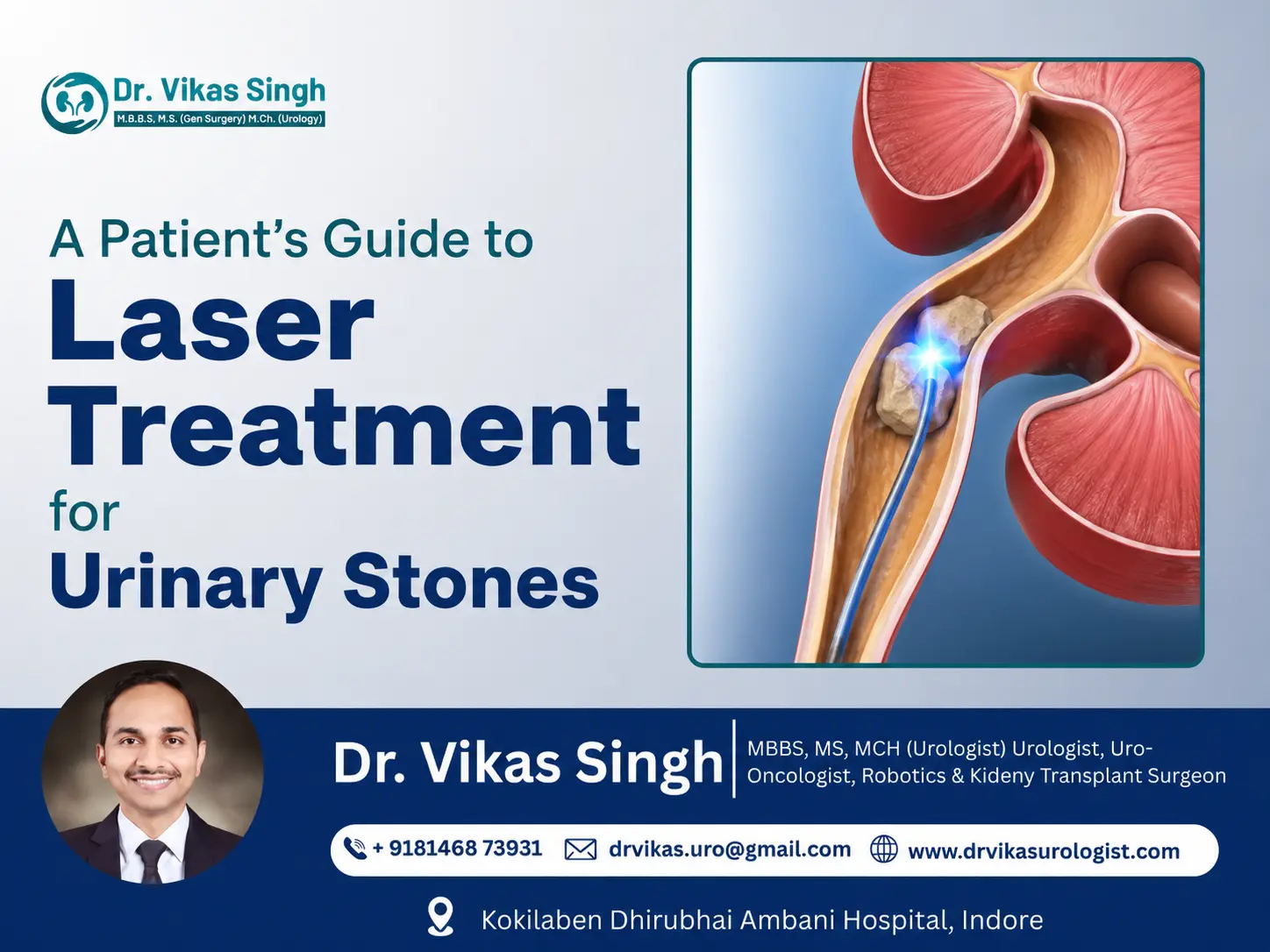
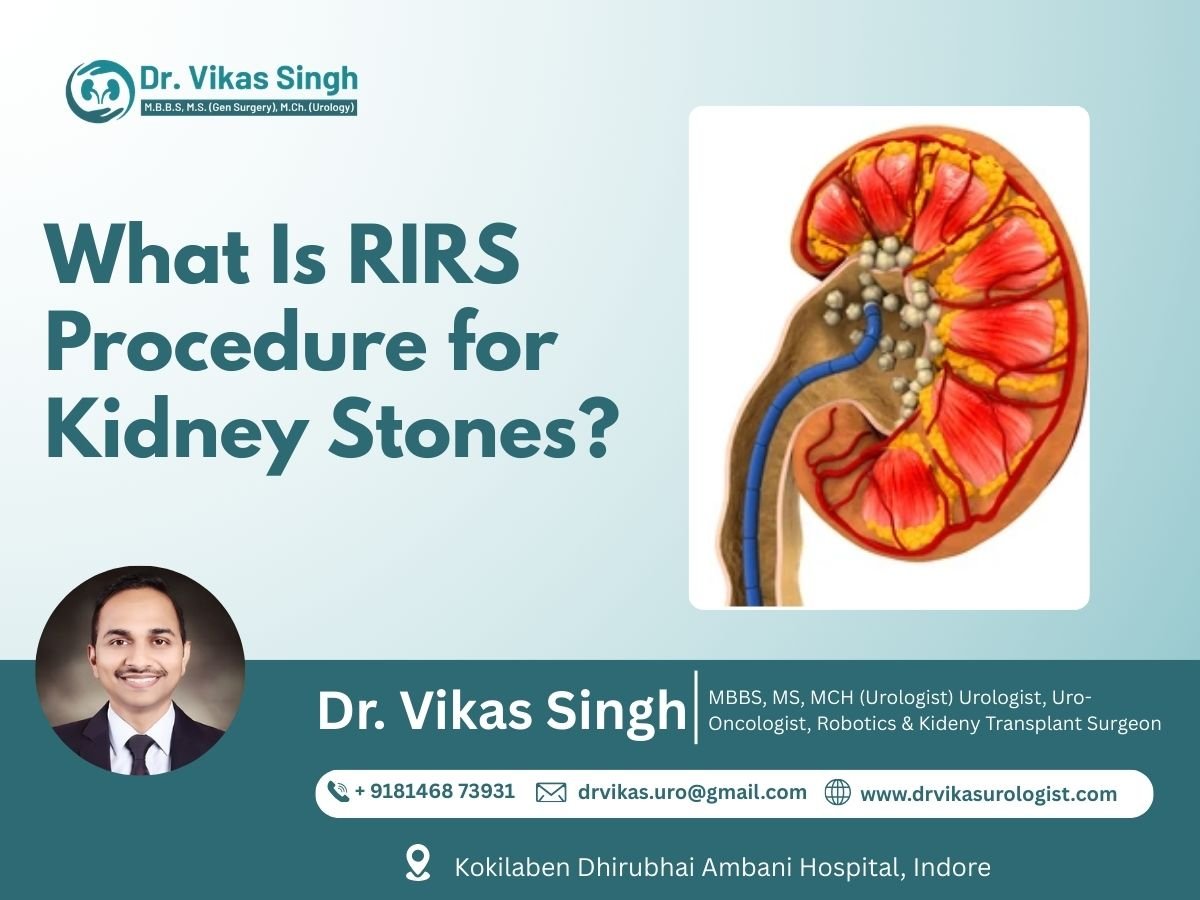
RIRS stands for Retrograde Intrarenal Surgery. It is a completely scarless kidney stone removal procedure performed using a flexible ureteroscope that is passed through the natural urinary passage (urethra to bladder to ureter to kidney) without any external incision. A holmium or thulium fiber laser pulverizes the stone into fine dust, which is then washed out naturally.
RIRS vs PCNL vs ESWL — Which Is Best for Your Stone?
Procedure Comparison (EAU 2025 Guidelines)
- RIRS: Best for 1-2 cm stones, intrarenal/upper ureteral, no incision, day care, 90-96% clearance
- Mini PCNL: Best for >2 cm or staghorn stones, small puncture, 88-95% clearance
- ESWL (shockwave): Non-invasive, 60-75% clearance, multiple sessions needed for >1 cm
- Open Surgery: Rarely needed — only for extreme anatomical complexity
According to European Association of Urology (EAU) 2025 Stone Guidelines, RIRS achieves a stone-free rate of 90-96% for stones under 2 cm, making it the preferred option over ESWL for this stone size range.
Kidney Stone Statistics in India — 2026
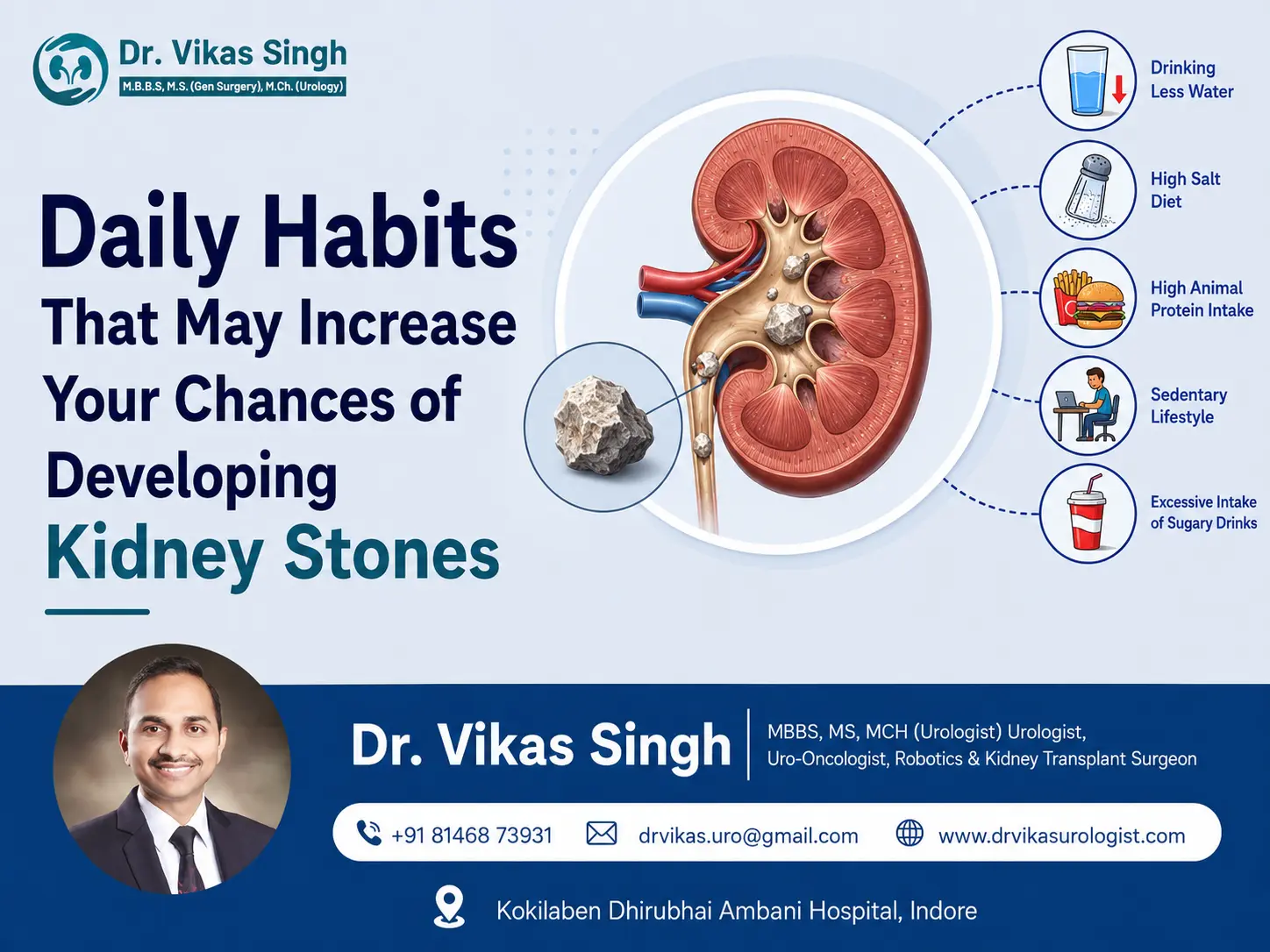
The Indian Journal of Urology (2025) reports that kidney stone disease affects approximately 12% of the Indian population, with a 70% lifetime recurrence risk. Madhya Pradesh, due to its hard water and hot climate, has a particularly high stone disease burden.
Who Is a Good Candidate for RIRS?
- Kidney stones 8 mm to 20 mm (1-2 cm) in the renal pelvis or calyces
- Upper ureteral stones above the iliac vessels
- Patients who have failed ESWL
- Patients on blood thinners who cannot stop anticoagulants
- Single kidney patients (high safety profile)
- Patients with horseshoe kidney or anatomical anomalies
- Patients who prefer absolutely no visible scar
The RIRS Procedure: What Happens Step by Step
Step 1: Pre-operative Evaluation
CT urogram maps stone size, location, and density (Hounsfield Units). Urine culture rules out infection. Blood work and anesthesia fitness evaluation are completed.
Step 2: Surgery (45-90 minutes under general anaesthesia)
A flexible digital ureteroscope is navigated from the urethra through the urinary system to the kidney. The stone is targeted with holmium laser energy and fragmented into fine dust. A safety guidewire is maintained throughout the procedure.
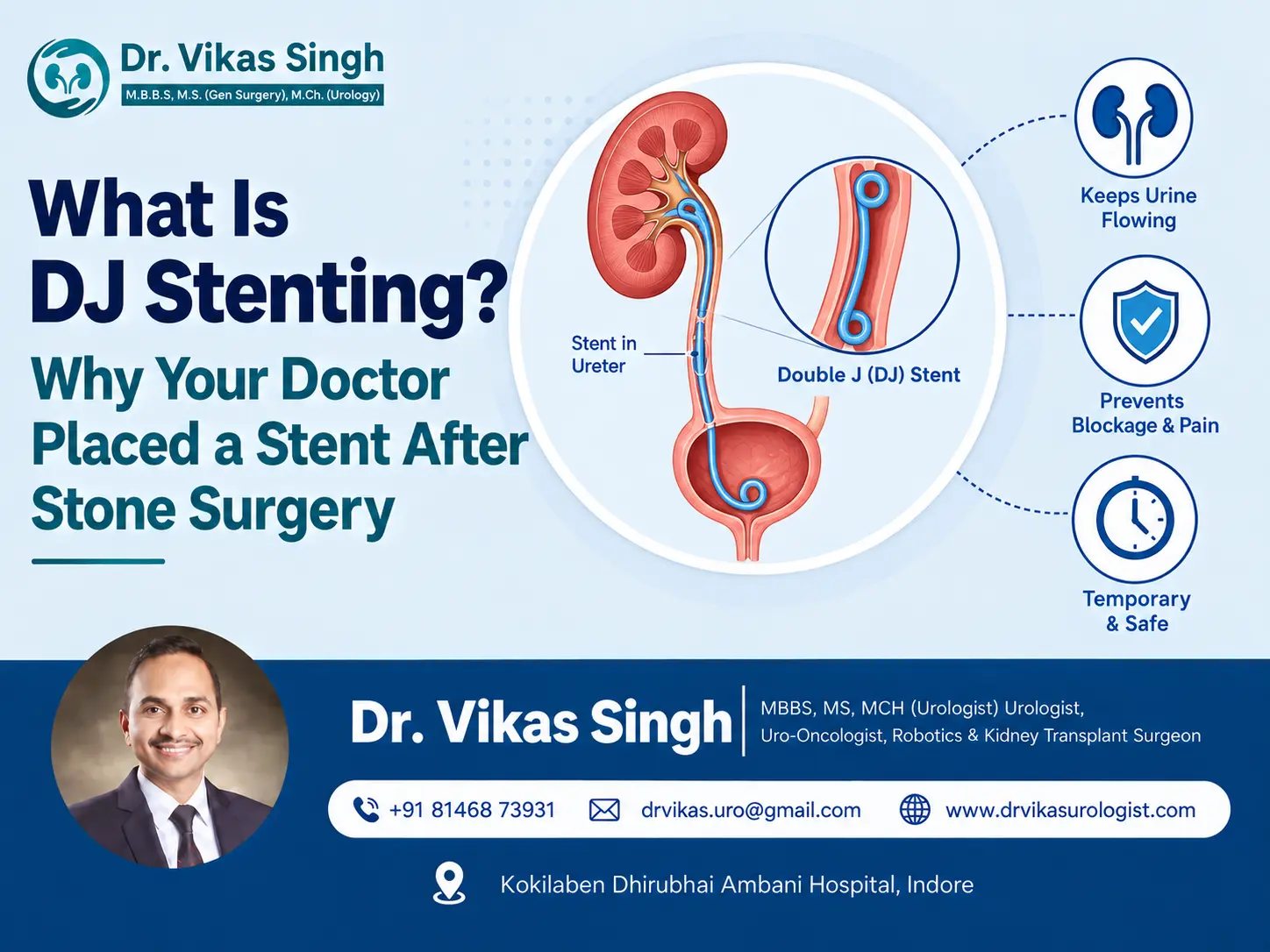
Step 3: DJ Stent Placement
A temporary Double-J (DJ) ureteric stent is placed for 2-4 weeks to allow proper urine drainage during healing. This is removed in a short office-based procedure.
Step 4: Recovery
Hospital stay: 12-24 hours. Return to office work: 3-5 days. Stent removal: 2-4 weeks after RIRS.
Advantages of RIRS Over Traditional Stone Surgery
- Zero external incisions — completely scar-free
- Suitable for difficult stone locations including lower pole and calyces
- Safe for elderly patients, diabetics, and high-risk patients
- Treats multiple stones in both kidneys in one sitting if needed
- Preserves maximum kidney function
People Also Ask — RIRS FAQ
Q1: Is RIRS painful?
Q2: What is the stone-free rate for RIRS?
Q3: How long does RIRS take?
Q4: Can RIRS treat stones in both kidneys at once?
Q5: Is RIRS safe for a single kidney?
Why Choose Dr. Vikas Singh for RIRS in Indore?
- Expert MCh Urology urologist with advanced flexible ureteroscopy training
- High-definition digital flexible ureteroscope for superior visualization
- Holmium and Thulium Fiber Laser (TFL) for superior stone dusting (‘dust and go’ technique)
- Same-day or next-day discharge in most cases
- Comprehensive stone metabolic evaluation to prevent recurrence
Take control of your kidney stone problem today. Book a consultation for advanced, scar-free RIRS treatment in Indore and get expert guidance tailored to your condition. Experience faster recovery, high stone clearance, and long-term prevention strategies. Don’t wait for complications—schedule your evaluation now and move toward a pain-free, healthier life.
Reach us at: Dr. Vikas Singh, Urologist