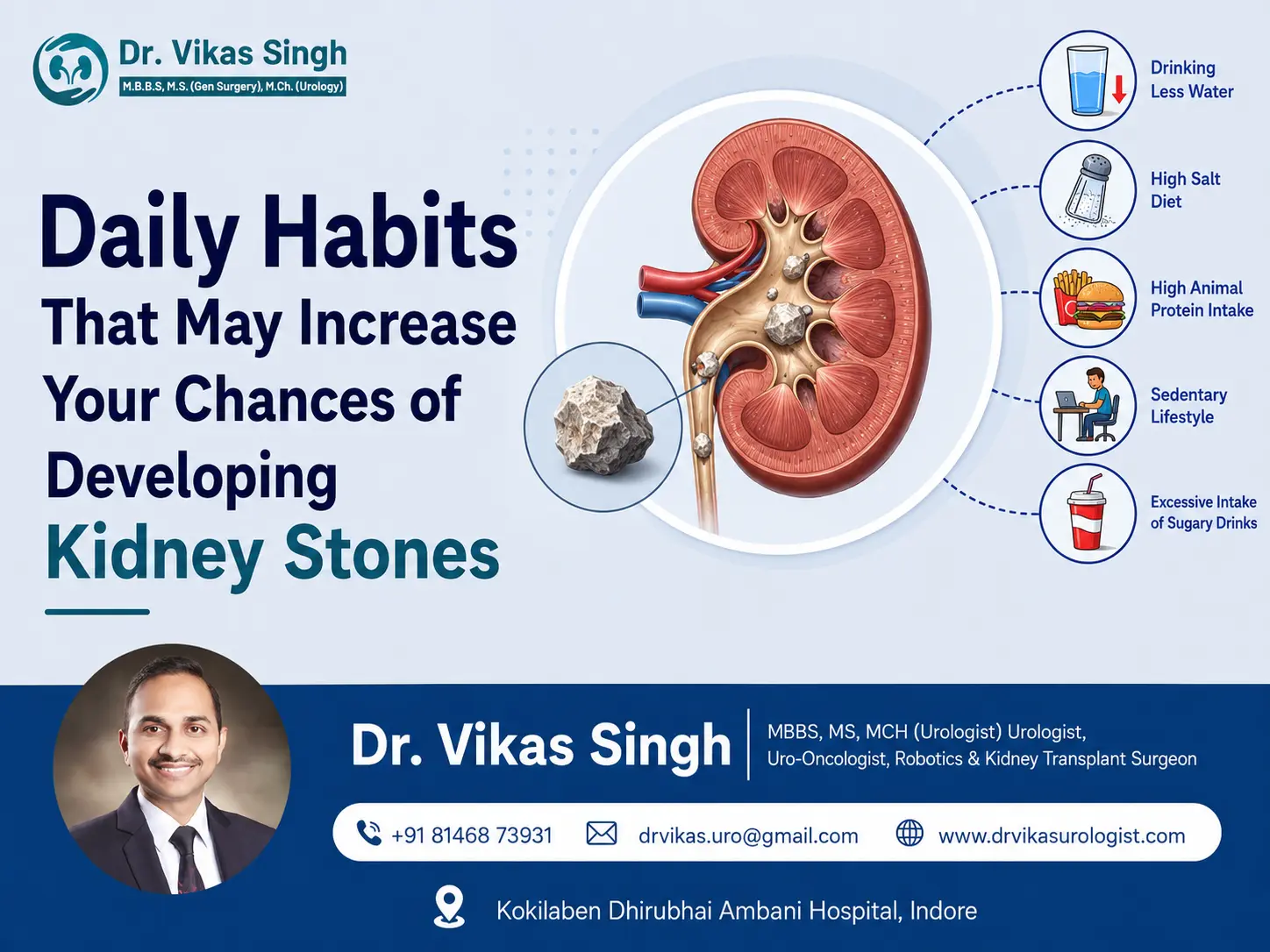
Small, everyday choices often play a bigger role in your chances of developing kidney stones than most people realise. Kidney stones are one of the most common urological problems, and while genetics and medical conditions play a part, daily habits like low water intake, high-salt diets, and a sedentary routine are often the real drivers.
The reassuring part is that most of these habits are easy to spot and even easier to change once you know what to look for. This guide breaks down the everyday patterns that quietly raise your risk, and what a kidney stone specialist in Indore recommends to lower it.
Why Daily Habits Matter More Than You Think
Kidney stones form when urine becomes too concentrated with minerals like calcium, oxalate, and uric acid, allowing crystals to stick together. Most of the factors that concentrate urine or raise these mineral levels come down to what you eat, drink, and do every single day.
This is why two people with the same genetic risk can have very different outcomes; one may go their whole life stone-free, while the other develops repeated stones simply because of daily habits that quietly work against them.
Not Drinking Enough Water Raises Your Chances of Developing Kidney Stones
Low fluid intake is, by far, the single biggest daily habit linked to kidney stones. When you don’t drink enough water, urine becomes concentrated, allowing stone-forming minerals to crystallize.
This is especially true in a hot city like Indore, where fluid loss through sweat is high and easy to underestimate.
Watch for these warning signs of low fluid intake:
- Dark yellow or amber-colored urine.
- Urinating fewer than 4-5 times a day.
- Feeling thirsty often, especially after physical activity.
- Headaches or fatigue linked to mild dehydration.
Eating Too Much Salt and Processed Food
A high-sodium diet is another daily habit that significantly increases your chances of developing kidney stones. Excess salt causes the kidneys to excrete more calcium into the urine, which raises the risk of calcium oxalate stones, the most common stone type.
Common everyday sources of hidden salt include:
- Packaged snacks, instant noodles, and papad.
- Pickles, chutneys, and salted condiments.
- Restaurant and fast food meals.
- Canned or processed foods with preservatives.
High Animal Protein Diets and Uric Acid Stones
Regularly eating large amounts of red meat, eggs, or seafood raises uric acid levels and lowers citrate, a natural compound that helps prevent stones from forming. Over time, this combination can meaningfully increase your chances of developing kidney stones, particularly uric acid stones.
This doesn’t mean cutting out protein entirely; it simply means being mindful of portion size and balancing animal protein with plant-based sources.
Skipping Meals or Following Extreme Diets
Crash diets, prolonged fasting, and skipping meals can alter urine chemistry and concentrate minerals in ways that favour stone formation. Rapid weight loss in particular has been linked to a higher short-term risk of kidney stones.
Sustainable, balanced eating patterns are far safer for kidney health than extreme, short-term diet trends.
Low Calcium Intake and High-Oxalate Foods
It may seem counterintuitive, but too little dietary calcium can actually raise your chances of developing kidney stones. Calcium normally binds with oxalate in the gut before it reaches the kidneys; without enough calcium, oxalate is absorbed more easily and ends up concentrated in urine instead.
Foods naturally high in oxalate, when eaten in excess alongside low calcium intake, add to this daily risk:
- Spinach and other leafy greens.
- Nuts and nut-based products.
- Chocolate and cocoa.
- Tea consumed in very large quantities.
A Sedentary Lifestyle and Excess Body Weight
Long hours of sitting, minimal physical activity, and excess body weight are all daily patterns linked to a higher risk of kidney stones. Obesity is associated with metabolic changes that increase calcium, oxalate, and uric acid levels in urine.
Even light daily movement, like a 20-30 minute walk, can meaningfully support healthier urine composition over time.
Holding Urine for Long Periods
Habitually delaying bathroom trips, whether due to a busy work schedule or long commutes, allows urine to sit longer in the bladder and kidneys. This daily habit can contribute to mineral concentration and, in some cases, urinary tract infections that further raise stone risk.
Overusing Vitamin C or Calcium Supplements
High-dose vitamin C supplements can convert into oxalate in the body, while excessive calcium supplements, taken without food, may raise urinary calcium levels. Both, when used daily in high doses without medical guidance, can quietly increase your chances of developing kidney stones.
It’s always best to check supplement dosages with a doctor, especially if you have a personal or family history of stones.
How to Lower Your Chances of Developing Kidney Stones
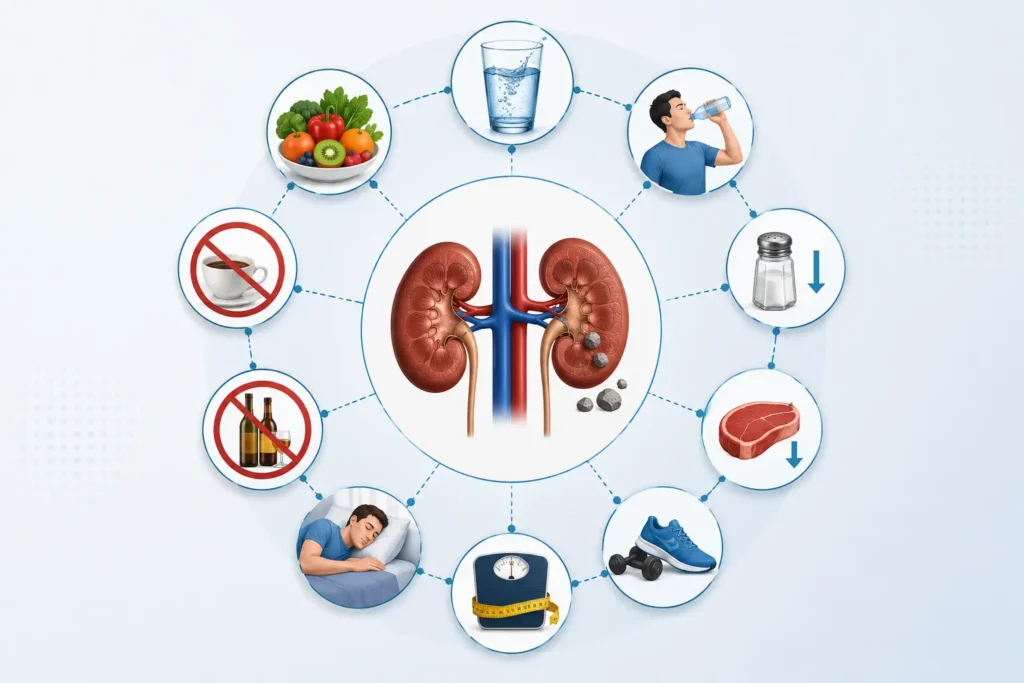
The good news is that most of these daily habits are fully within your control. Simple, consistent changes make a real difference over time:
- Drink 2.5-3 liters of water daily, more in hot weather or after exercise.
- Reduce salt and limit processed or packaged foods.
- Balance animal protein with plant-based meals.
- Maintain adequate calcium intake through diet, not just supplements.
- Stay physically active with regular light exercise.
- Avoid holding urine for long periods.
- Get a metabolic evaluation if you’ve had a stone before.
When to See a Kidney Stone Specialist in Indore
If you’ve had a kidney stone before, or you notice symptoms like flank pain, blood in urine, or burning during urination, it’s time to consult a specialist rather than rely on home remedies alone.
A proper evaluation can identify exactly which daily habits are contributing to your personal risk, rather than relying on generic advice.
Why Choose Dr. Vikas Singh for Kidney Stone Care in Indore
Dr. Vikas Singh (MBBS, MS, MCh) is widely regarded as the best urologist for kidney stones in Indore, offering accurate diagnosis and personalised prevention plans based on your specific stone type and daily habits, not a one-size-fits-all approach.
As a trusted urologist doctor in Indore, he combines advanced diagnostic tools with practical, sustainable lifestyle guidance. Patients across the city consider him the best kidney stone doctor in Indore for both treatment and long-term prevention.
Whether you need a first-time evaluation or you’re dealing with recurrent stones, Dr. Vikas Singh, a leading kidney stone specialist in Indore and one of the most trusted male urologists in Indore names in the region, is well equipped to guide you toward lasting relief.
Book Your Kidney Stone Risk Evaluation in Indore
| Get a personalised risk evaluation and prevention plan today. Dr. Vikas Singh, regarded as the best urologist in Indore for kidney stone care, offers accurate diagnosis and honest, practical advice. Call +91 81468 73931 or book your appointment online today. |
Frequently Asked Questions
1. What daily habits cause kidney stones?
The most common daily habits that raise kidney stone risk are not drinking enough water, eating too much salt or processed food, consuming excess animal protein, and living a sedentary lifestyle. Together, these habits concentrate minerals in the urine and make crystal formation more likely.
2. How much water should I drink daily to prevent kidney stones?
Most doctors recommend 2.5 to 3 liters of water a day, and more if you live in a hot climate, exercise regularly, or have had a kidney stone before. The goal is to keep urine pale yellow throughout the day, which is a simple sign of good hydration.
3. Can lifestyle changes really lower kidney stone risk?
Yes. Simple, sustained changes like drinking more water, reducing salt intake, staying active, and maintaining balanced calcium intake can significantly reduce your chances of developing kidney stones, especially when combined with guidance from a specialist for your specific stone type.