If an enlarged prostate is disrupting your sleep and daily life, you may be searching for a prostate treatment that doesn’t involve cutting, heat, or a device left permanently inside your body. iTind is exactly that: a temporary device that reshapes the prostatic urethra to relieve symptoms of BPH, then is removed entirely within about a week, with nothing left behind.
For men who want relief from urinary symptoms without the risks and side effects of traditional surgery, iTind offers a genuinely different path. This guide explains how it works, what makes it different from other options, and who it’s right for.
What Is iTind? A New Kind of Prostate Treatment
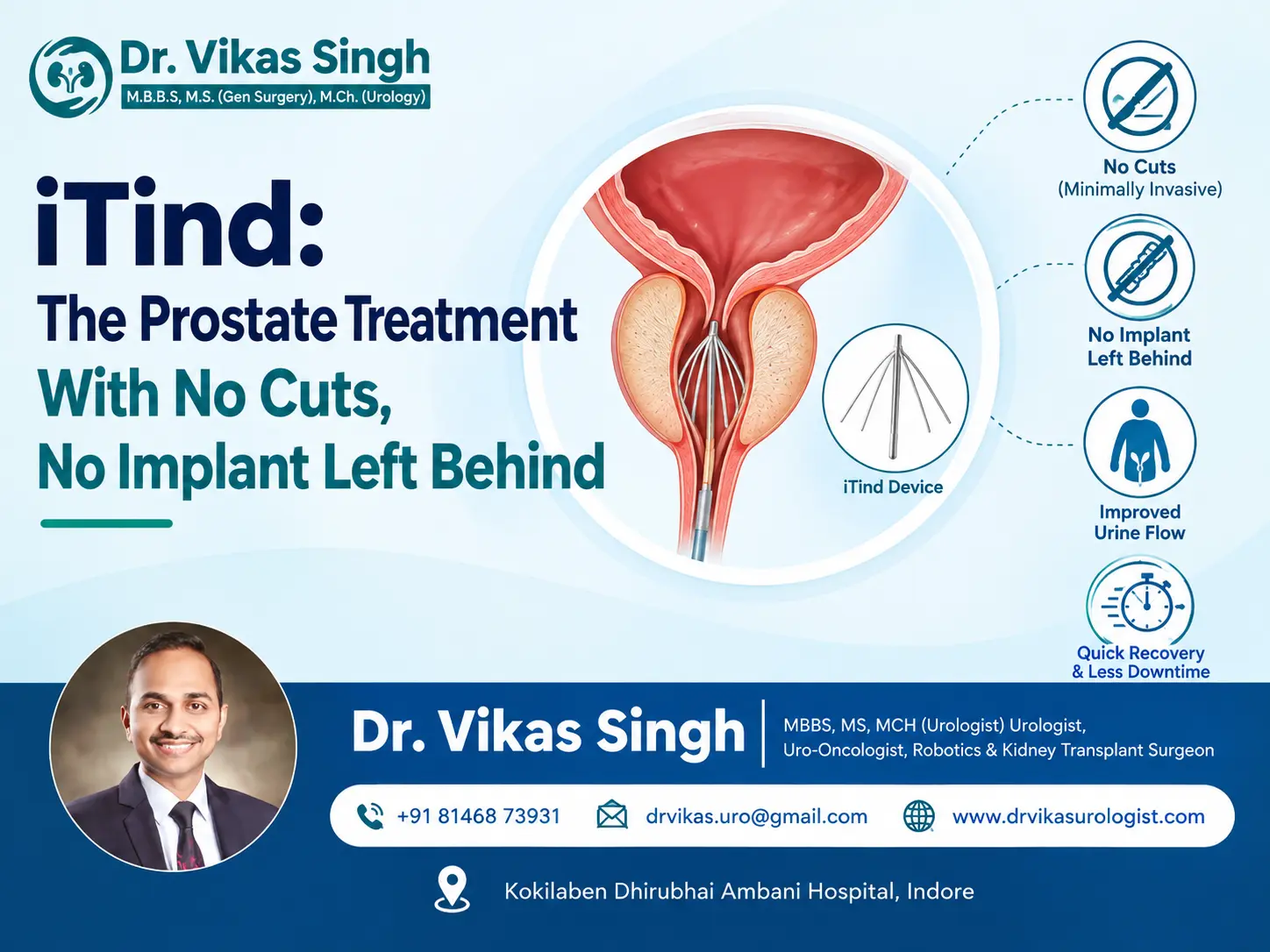
iTind stands for temporarily implanted nitinol device, and it’s a minimally invasive prostate treatment designed for men with benign prostatic hyperplasia, commonly known as an enlarged prostate. Unlike most BPH procedures, iTind doesn’t cut, burn, or remove any prostate tissue.
Instead, it’s inserted through the urethra using a cystoscope and gently expands into place, using three flexible struts to create small channels that widen the narrowed urethra. After about five to seven days, it’s removed in a simple outpatient visit, leaving nothing implanted permanently.
How iTind Differs From Traditional Prostate Treatment Options
Most BPH treatments fall into two categories: daily medication that manages symptoms without addressing the underlying narrowing, or surgical procedures that remove or reshape prostate tissue, often with some risk to sexual function. iTind occupies a unique middle ground as a prostate treatment that’s more effective than medication alone, without the risks associated with tissue removal.
| Treatment | Tissue Removed? | Anesthesia | Sexual Function Impact |
| Daily Medication | No | None | Possible side effects, varies by drug |
| iTind | No | Local/light sedation | Ejaculatory function typically preserved |
| UroLift | No | Local/light sedation | Ejaculatory function typically preserved |
| TURP (Surgery) | Yes | General/spinal | Higher risk of retrograde ejaculation |
Because no tissue is removed and no permanent implant remains, iTind is often considered by men who want meaningful symptom relief while preserving ejaculatory function, something that’s not always guaranteed with more invasive prostate treatment options.
How the iTind Procedure Works Step by Step
The entire iTind placement procedure typically takes about 10 to 15 minutes and is usually performed under local anesthesia or light sedation, without requiring a hospital stay.
- The device is inserted through the urethra using a cystoscope, with no external incision needed.
- Once positioned within the prostatic urethra, it self-expands into place.
- The three struts gently reshape the channel over the following days, relieving pressure on the urethra.
- Most men go home the same day and resume light activities within 24 to 48 hours.
What to Expect During and After iTind Placement
Because iTind is inserted through the natural urinary passage, most men experience only mild discomfort during placement, similar to a catheter insertion. Some urinary urgency, mild burning, or occasional spotting in the days following the procedure is common and expected.
These symptoms are generally well managed with over-the-counter pain relief and typically improve significantly once the device is removed.
The 5-7 Day Window: Living With iTind Temporarily
During the week the device is in place, most men can continue normal daily activities, though your doctor will likely recommend avoiding strenuous exercise, heavy lifting, and sexual activity until after removal.
Staying well hydrated and following any prescribed medication during this window helps minimize discomfort and supports a smoother removal appointment.
iTind Removal: What Happens Next
Removal is a quick, straightforward outpatient procedure performed in the clinic, typically taking just a few minutes. The device is gently withdrawn through the urethra, and most men notice improved urinary flow within days to a few weeks as the reshaped tissue heals.
Because nothing is left behind, there’s no ongoing device to monitor or replace later, unlike some other minimally invasive prostate treatment options.
Benefits of This Prostate Treatment: No Cuts, No Implant Left Behind
The core appeal of iTind lies directly in its name: it involves no incisions, no tissue removal, and no permanent implant remaining in the body. Additional benefits reported by patients and studied in clinical research include:
- Preservation of ejaculatory and sexual function for most patients.
- A quick outpatient procedure with minimal downtime.
- No need for general anaesthesia in most cases.
- The option to pursue other treatments later, since nothing is permanently altered or implanted.
- Meaningful improvement in urinary flow and symptom scores reported in clinical studies.
Who Is a Good Candidate for This Prostate Treatment?
iTind is generally best suited for men with moderate BPH symptoms who want an alternative to long-term medication but aren’t ready for, or don’t need, more invasive surgery. It’s often considered by men who prioritize preserving sexual function or who want to avoid the recovery time associated with traditional prostate surgery.
A proper evaluation, including prostate size measurement and symptom assessment, helps determine if iTind is the right fit for your specific case.
Who Might Not Be a Good Candidate
iTind isn’t suitable for every case of BPH. Men with very large prostates, certain urethral abnormalities, or specific bladder conditions may be better suited to a different prostate treatment approach, which your urologist can assess during consultation.
When to See a Urologist About BPH Prostate Treatment
If you’re dealing with a weak urine stream, frequent nighttime urination, or a constant feeling of incomplete bladder emptying, it’s worth discussing your options with a urologist rather than adjusting to symptoms as your new normal.
A thorough evaluation can determine whether iTind, medication, or another prostate treatment approach is the best fit for your specific prostate size and symptom severity.
iTind Prostate Treatment in Indore
Dr. Vikas Singh (MBBS, MS, MCh) offers iTind and other advanced, minimally invasive BPH treatment options in Indore, helping men find relief from urinary symptoms without unnecessary surgery or long-term medication dependence.
As a trusted urologist doctor in Indore, he carefully evaluates prostate size, symptom severity, and personal priorities, including sexual function preservation, before recommending the right approach for each patient. Whether you’re exploring iTind for the first time or comparing it with other options, his clinic offers clear, honest guidance rather than a one-size-fits-all recommendation.
As an experienced male urologist in Indore and widely regarded as the best urologist in Indore for advanced BPH care, Dr. Vikas Singh combines the latest treatment technology with a genuinely patient-focused approach.
Book Your BPH Treatment Consultation in Indore
| Tired of BPH symptoms disrupting your sleep and daily life? Find out if iTind or another minimally invasive option is right for you. Dr. Vikas Singh, regarded as the best urologist in Indore for advanced prostate care, offers honest evaluation and clear treatment guidance. Call +91 81468 73931 or book your appointment online today. |
Frequently Asked Questions
1. Is iTind a permanent implant?
No, iTind is a temporary device. It stays in place for about five to seven days and is then removed in a quick outpatient visit, leaving nothing implanted in the body afterwards.
2. Does iTind affect sexual function?
Most clinical studies show that iTind preserves ejaculatory and sexual function in the large majority of patients, which is one of its main advantages over more invasive prostate surgery options like TURP.
3. How long do the results of iTind last?
Clinical studies have shown that symptom improvement from iTind can last for several years in many patients. Individual results vary, and your urologist can discuss expected outcomes based on your specific prostate size and symptoms.