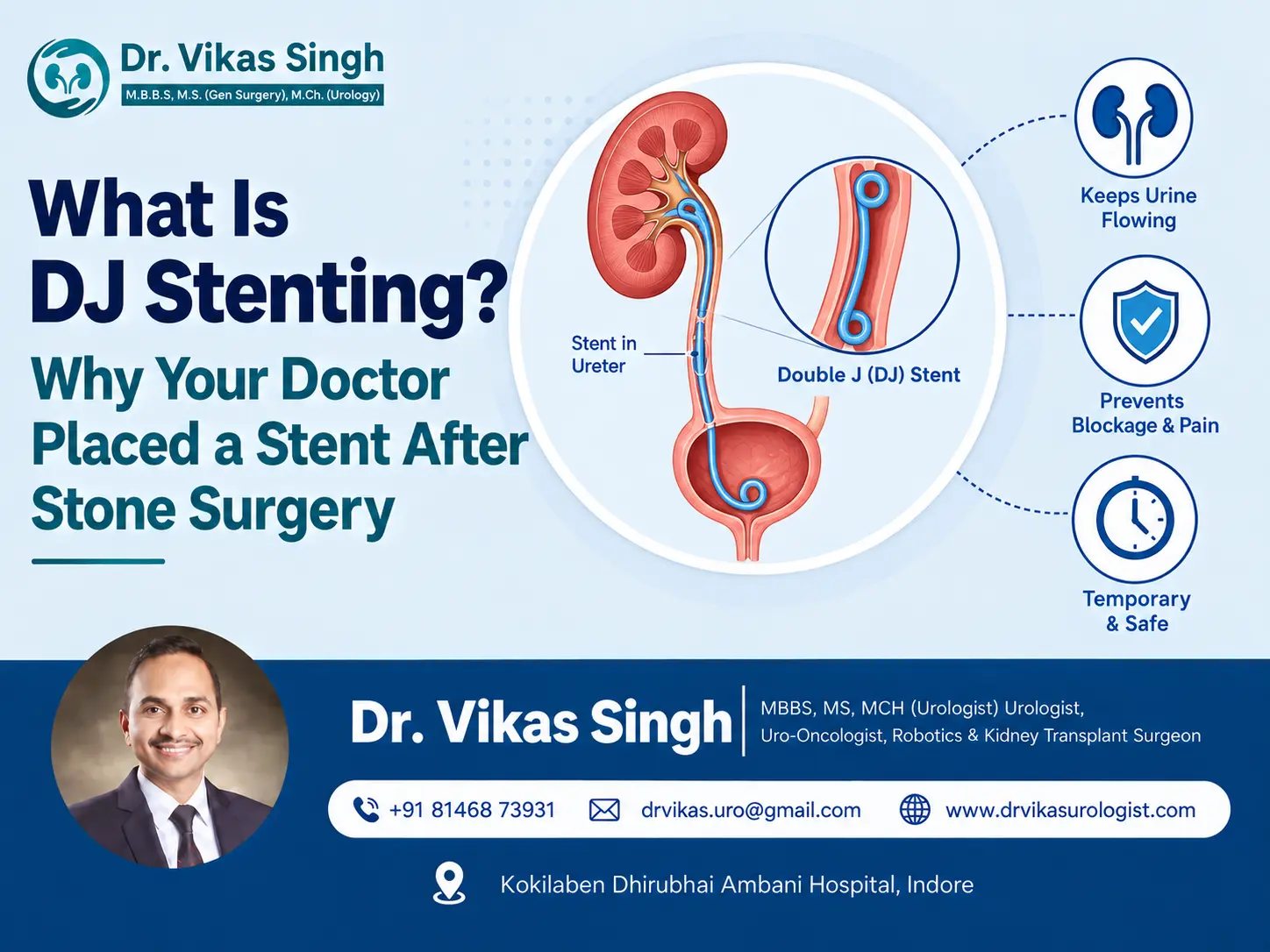
If you’ve just had kidney stone surgery and your doctor mentioned a stent, you’re probably wondering, what is DJ stenting, and why did I need one? A DJ stent, short for double J stent, is a small, flexible tube placed inside the ureter to keep urine flowing freely from the kidney to the bladder while the area heals.
It’s a routine, well-established part of most stone procedures, not a sign that something went wrong. This guide explains exactly what a DJ stent does, why your doctor placed one after your stone surgery, and what to expect until it’s removed.
What Is DJ Stenting?
DJ stenting is the process of placing a thin, coiled tube inside the ureter, the tube that carries urine from the kidney to the bladder. Both ends of the stent curl into a J-shape, one inside the kidney and one inside the bladder, which is exactly where the name “double J,” or “DJ,” comes from.
This design keeps the stent securely in place without stitches while allowing urine to drain around and through it even if the ureter is swollen, narrowed, or blocked by a stone fragment.
Why Your Doctor Placed a Stent After Stone Surgery
After procedures like URS, RIRS, or PCNL, the ureter is often swollen or irritated from the stone itself or from the instruments used to remove it. Without a stent, this swelling could block urine flow and cause severe pain or even kidney damage.
A DJ stent is placed to protect the kidney during this healing window. Common reasons your doctor placed one include:
- To keep the ureter open while swelling from surgery subsides.
- To allow small stone fragments to pass safely without blocking urine flow.
- To support healing after the ureter has been stretched or manipulated during the procedure.
- To prevent a urine blockage that could otherwise cause kidney swelling or infection.
How a DJ Stent Works Inside the Body
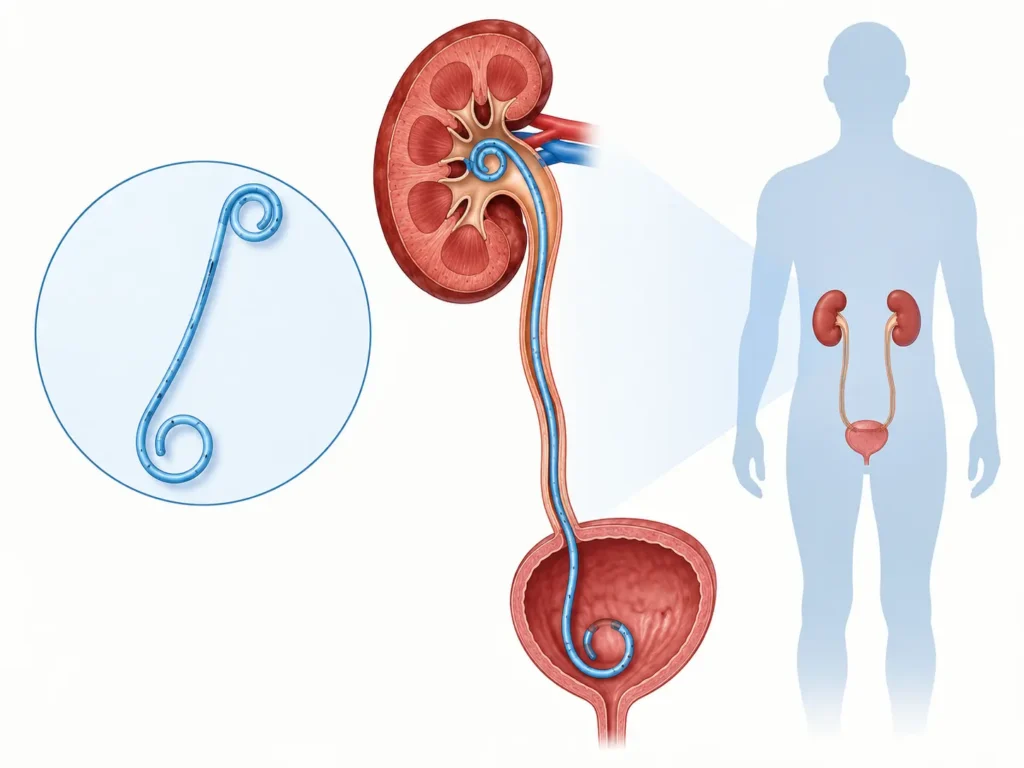
Once placed, the stent essentially acts as a scaffold, holding the ureter open from the inside so urine can drain normally regardless of any temporary swelling or narrowing. Urine flows both through the hollow center of the stent and around it, which is why it works even in a partially blocked ureter.
The stent is invisible from the outside and does not interfere with daily activities like walking, working, or sleeping, though it can cause some noticeable sensations, which we’ll cover next.
What Does a DJ Stent Feel Like?
Most patients do feel some awareness of a DJ stent, and that is completely normal. Because the lower end sits in the bladder, it can trigger sensations tied to the bladder’s stretch reflex, especially during movement or a full bladder.
It’s important to understand this discomfort is expected and temporary, not a sign of a problem, unless it becomes severe or is paired with fever or heavy bleeding.
Common Symptoms After DJ Stent Placement
Understanding what’s normal versus what needs attention makes the recovery period far less stressful.
| Symptom | Why It Happens | What Helps |
| Frequent urge to urinate | Stent tip in the bladder triggers stretch receptors | Stay hydrated; avoid holding urine |
| Mild flank or lower abdominal discomfort | Stent movement or kidney-to-bladder reflux | Prescribed pain relief; avoid heavy lifting |
| Blood-tinged urine | Minor irritation of the ureter lining | Usually resolves in a few days; drink plenty of fluids |
| Discomfort during urination | Stent tip irritating the bladder lining | Alpha-blocker medication if prescribed |
| Discomfort during physical activity | Stent shifting slightly with movement | Avoid strenuous exercise until removal |
How Long Does a DJ Stent Stay In After Stone Surgery?
Most DJ stents are removed within one to three weeks after surgery, though the exact timeline depends on how much healing the ureter needs and how the procedure went. Your urologist will give you a specific removal date based on your individual case.
Leaving a stent in longer than recommended increases the risk of complications like encrustation or infection, which is why keeping your follow-up and removal appointment is important.
DJ Stent Removal: What to Expect
DJ stent removal is typically a quick, straightforward outpatient procedure. In most cases, it is done using a thin scope passed through the urethra under local anaesthesia, taking only a few minutes with minimal discomfort.
Some clinics use stents with an attached string that allows for an even simpler, string-pull removal without a scope, depending on the case. Either way, most patients feel noticeably better within a day or two of removal, once the temporary bladder irritation resolves.
Tips to Manage Discomfort While the Stent Is In
A few simple habits can make the weeks with a DJ stent much more comfortable:
- Drink plenty of water throughout the day to flush the urinary tract.
- Take prescribed pain relief or alpha-blocker medication as directed.
- Avoid heavy lifting, strenuous exercise, or high-impact activity.
- Empty your bladder regularly rather than holding urine for long periods.
- Use a heating pad on the lower back or abdomen if cramping occurs.
When to Call Your Doctor: Warning Signs
While mild discomfort is expected, certain symptoms need prompt medical attention rather than waiting for your scheduled removal date:
- Fever or chills, which may indicate infection.
- Heavy or persistent bleeding in the urine.
- Severe pain not relieved by prescribed medication.
- Inability to urinate at all.
- Foul-smelling or cloudy urine.
DJ Stent Placement and Removal in Indore
Dr. Vikas Singh (MBBS, MS, MCh) is a trusted DJ stent specialist in Indore, guiding patients through both stent placement during stone surgery and a smooth, low-discomfort removal process afterwards.
As an experienced DJ stent doctor in Indore, he ensures every patient understands why the stent was placed, what symptoms to expect, and exactly when it will be removed, rather than leaving patients guessing during recovery. For patients specifically searching for a double J stent doctor in Indore or a DJ stent removal specialist in Indore, his clinic offers quick, minimally uncomfortable removal appointments.
As a leading urologist doctor in Indore and one of the most trusted names among urologists in Indore for stone-related procedures, Dr. Vikas Singh combines technical precision with clear, reassuring communication throughout your recovery.
Book Your DJ Stent Removal or Consultation in Indore
| Have questions about your DJ stent, or is it time for removal? Dr. Vikas Singh, a trusted DJ stent specialist in Indore, offers quick, comfortable stent removal and clear guidance throughout your recovery. Call +91 81468 73931 or book your appointment online today. |
Frequently Asked Questions
1. Is DJ stent removal painful?
DJ stent removal is generally quick and only mildly uncomfortable for most patients, often described as a brief pinching or pulling sensation. It’s typically done in a few minutes as an outpatient procedure, and most patients resume normal activities the same day.
2. How long can a DJ stent stay in the body?
A DJ stent is usually left in place for one to three weeks after stone surgery, though your urologist will set an exact timeline based on your specific case. Leaving it in longer than recommended raises the risk of complications like infection or encrustation.
3. Can I feel a DJ stent inside my body?
Yes, many patients notice some awareness of a DJ stent, especially urinary urgency, mild flank discomfort, or sensations during movement. This is a normal part of having a stent in place and typically resolves quickly after it’s removed.