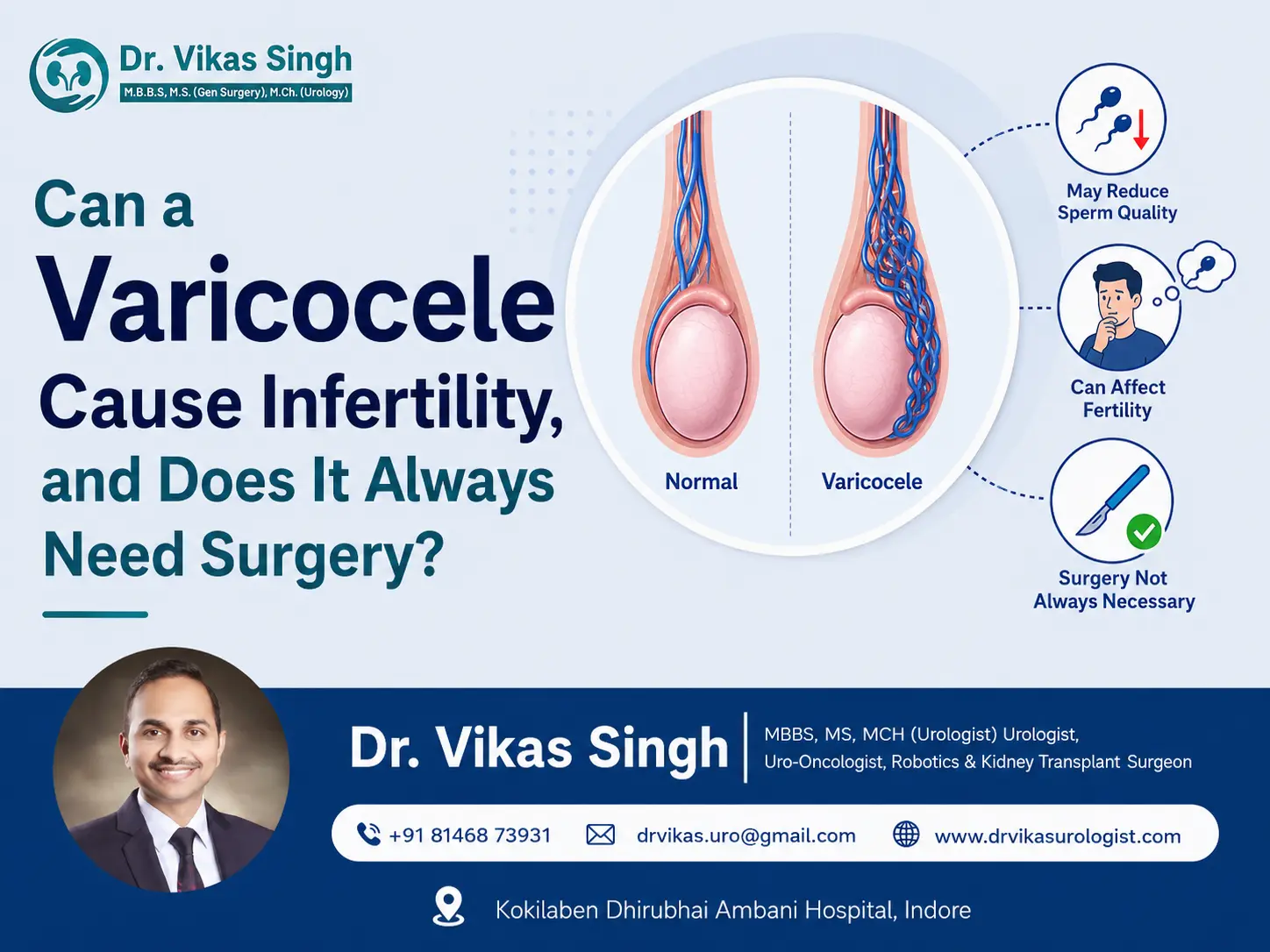
So, can a varicocele cause infertility? Yes, it can, but not in every man, and it does not always need surgery. A varicocele is a group of enlarged veins in the scrotum that can raise temperature around the testicle and affect sperm production and quality.
The reassuring news is that many men with a varicocele stay fertile and father children naturally. Treatment is usually reserved for men with pain, poor semen results, or a shrinking testicle. This guide explains the link to fertility and when a varicocele doctor in Indore may recommend surgery.
What Is a Varicocele?
A varicocele is like a varicose vein, but in the scrotum. It happens when the small valves inside the veins do not work properly, so blood pools and the veins swell.
Varicoceles are common, affecting roughly one in six men, and most develop on the left side. Many cause no symptoms at all and are found only during a check-up.
What Causes a Varicocele?
A varicocele forms when tiny one-way valves inside the scrotal veins stop working well. Blood that should flow upward pools instead, and the veins stretch and swell.
Most varicoceles appear on the left side because of how that vein drains. They usually develop during the teenage years as the body grows, and there is often no single lifestyle cause to blame.
Can a Varicocele Cause Infertility? How the Link Works
This is the key question for many men, so let us answer it clearly. A varicocele can affect fertility because pooled blood raises the temperature around the testicle, and sperm need a slightly cooler environment to form well.
Over time this can lower sperm count, movement, and shape. Varicoceles are the most common correctable cause of male infertility, yet many men with one still have healthy sperm, which is why testing matters more than the diagnosis alone.
Signs and Symptoms of a Varicocele
Many varicoceles are silent, but some cause noticeable signs. Watch for:
• A dull ache or heaviness in the scrotum, often worse after standing
• A soft lump that feels like a ‘bag of worms’ above the testicle
• Visible or swollen veins in the scrotum
• A testicle that looks or feels smaller on the affected side
• Difficulty conceiving, sometimes the only sign
How Is a Varicocele Diagnosed?
Diagnosis is quick and painless. A urologist examines the scrotum while you stand and may ask you to bear down so the veins are easier to feel.
Two simple tests confirm the picture:
• A scrotal ultrasound to measure the veins and testicle size
• A semen analysis to check sperm count, movement, and shape
These results, not the varicocele alone, decide whether treatment is needed.
Varicocele Grades and Why They Matter
Doctors grade varicoceles by size, which helps guide treatment decisions:
• Grade 1: small, felt only when you bear down
• Grade 2: medium, felt easily by hand while standing
• Grade 3: large, visible through the scrotal skin
Larger varicoceles are more likely to affect sperm, but grade alone does not decide treatment. Your semen results and symptoms matter just as much.
Does a Varicocele Always Need Surgery?
No, a varicocele does not always need surgery. Many men have a small, painless varicocele that never affects fertility and simply needs monitoring.
Surgery or embolisation is considered when there is a clear reason, such as ongoing pain or a fertility problem. In short, the treatment fits the man, not just the diagnosis.
Varicocele Treatment Options
Treatment ranges from watchful waiting to a short procedure. The table below compares the main options.
| Option | What it involves | Often best suited for |
| Watchful waiting | Regular checks and semen tests; no procedure unless problems appear | Small, painless varicoceles with normal fertility |
| Microsurgical varicocelectomy | Keyhole microscope-guided surgery that ties off the faulty veins | Pain, poor sperm quality, or testicular shrinkage |
| Embolization | A radiologist blocks the faulty vein through a tiny catheter | Men who prefer a non-surgical, day-care option |
| Lifestyle & fertility support | Diet, antioxidants, and healthy habits alongside monitoring | Supporting sperm health in mild cases |
When Is Surgery Recommended for a Varicocele?
A specialist usually suggests repair only when the benefits are clear. Common reasons to treat a varicocele include:
• Poor semen quality that is affecting fertility
• Ongoing pain or heaviness that does not settle
• A noticeable difference in testicle size, especially in teenagers
• A couple planning pregnancy when other causes have been ruled out
If none of these apply, watchful waiting is often the wisest choice.
Does Varicocele Repair Improve Fertility?
For the right man, yes. When a varicocele is clearly affecting sperm, repair can improve sperm count, movement, and shape over several months.
This often raises the chance of natural conception or improves results with fertility treatments. Because new sperm take about three months to mature, improvements are usually seen from three to six months after surgery.
What to Expect During Recovery After Varicocele Surgery
Modern varicocele surgery is a short, day-care procedure, so you go home the same day. Most men feel back to normal within a week or two.
Simple aftercare helps you heal smoothly:
• Rest for a day or two and avoid heavy lifting for about two weeks
• Wear supportive underwear to reduce swelling
• Take prescribed pain relief and keep the area clean
• Repeat a semen test after about three months to track improvement
Can Lifestyle Improve Fertility With a Varicocele?
Healthy habits will not remove a varicocele, but they can support better sperm health while you decide on treatment. Small, steady changes often help.
Simple steps that support fertility include:
• Eating an antioxidant-rich diet with plenty of fruit and vegetables
• Keeping a healthy weight and exercising regularly
• Avoiding smoking, excess alcohol, and long exposure to heat
• Managing stress and getting enough sleep
Varicocele Treatment in Indore
Choosing an experienced specialist gives you the best results and honest advice on whether you even need surgery. Dr. Vikas Singh (MBBS, MS, MCh) is a male urologist in Indore who diagnoses varicoceles and offers modern microsurgical repair when it is truly needed.
Explore the dedicated pages for more detail:
• Varicocele condition & symptoms | Microscopic varicocelectomy in Indore
Book Your Varicocele & Fertility Consultation in Indore
Worried a varicocele may be affecting your fertility? Get a clear answer before deciding on surgery. Dr. Vikas Singh, regarded as one of the best urologists in Indore and an experienced varicocele treatment specialist in Indore, offers accurate testing and honest, tailored advice. Call +91 81468 73931 or book your appointment online today.
Frequently Asked Questions
1. Can a man with a varicocele still have children?
Yes. Many men with a varicocele are fertile and father children without any treatment. A varicocele affects fertility only in some men, and when it does, treatment often improves sperm quality and the chance of conception.
2. Does a varicocele always need surgery?
No. Many varicoceles need no treatment at all. Surgery or embolization is considered mainly when there is ongoing pain, poor semen quality causing infertility, or when a teenager’s testicle is not growing normally.
3. Can a varicocele go away on its own?
A varicocele rarely disappears on its own, because it is caused by faulty vein valves. However, a small, painless varicocele that is not affecting fertility may simply be monitored and never need treatment.