
You finish urinating, zip up, and within minutes feel the urge to go again. If this sounds familiar, you are probably wondering why your bladder never empties completely. The most common reasons are an enlarged prostate in men, a weak bladder muscle, a narrowed urethra, nerve problems, certain medicines, or pelvic floor issues in women.
It is a very common complaint and usually treatable once the cause is found. A bladder problem specialist can identify exactly what is happening, which is why this guide explains the causes, warning signs, and treatment options in plain language.
Why Does My Bladder Never Empty Completely?
A bladder that does not empty fully means some urine stays behind after you finish urinating. Doctors call this incomplete bladder emptying, or a form of urinary retention.
It happens when something blocks the flow of urine, or when the bladder muscle or its nerves are too weak to squeeze properly. Both problems are common, and both are treatable.
What Does It Mean When Your Bladder Never Empties Completely?
Normally, the bladder contracts firmly and the urethra opens, so almost all urine leaves the body. When this teamwork breaks down, a leftover amount remains, known as the post-void residual.
A small leftover amount is normal. A larger one means urine is sitting and stagnating, which can lead to infections, stones, and bladder strain over time.
Common Symptoms of Incomplete Bladder Emptying
Symptoms vary, and some people only notice a vague feeling that something is not right. Common signs include:
- A constant feeling that your bladder is still full after urinating.
- A weak, slow, or interrupted urine stream.
- Difficulty starting, or needing to strain to pass urine.
- Frequent trips to the bathroom, often passing small amounts.
- Waking up several times at night to urinate.
- Dribbling or leaking after you finish.
- Repeated urinary tract infections.
- A heavy or full feeling in the lower abdomen.
Causes When Your Bladder Never Empties Completely in Men
In men, the prostate is the most common culprit. It surrounds the urethra, and as it enlarges with age, it squeezes the tube and makes urine flow harder.
An experienced urologist in Indore will usually look at these male-specific causes first:
- Enlarged prostate (BPH), especially after age 50.
- Urethral stricture, a narrowing caused by scar tissue from injury, infection, or catheter use.
- Prostate infection or inflammation.
- Bladder neck problems that restrict the opening of the bladder.
- Prostate cancer, which is a less common but important cause to rule out.
Causes in Women
Women can also feel their bladder never empties completely, though the causes are different. Common reasons include pelvic organ prolapse, where the bladder sags and kinks the urethra, and weakened or overly tight pelvic floor muscles.
Previous pelvic surgery, childbirth, and menopause-related tissue changes can also play a role. Constipation and urinary infections are frequent contributors in women of every age.
Other Causes in Both Men and Women
Several conditions affect men and women equally:
- Weak bladder muscle from age, long-term overstretching, or chronic blockage.
- Nerve damage from diabetes, multiple sclerosis, Parkinson’s disease, stroke, or spinal injury.
- Medicines such as certain antihistamines, decongestants, antidepressants, and strong painkillers.
- Constipation, which presses on the bladder and urethra.
- Bladder stones that partly block the outlet.
- Urinary tract infections that cause swelling and irritation.
- Anxiety or muscle tension that stops the pelvic floor from relaxing.
.
Quick Guide: Possible Causes and Clues
| Possible Cause | Who It Often Affects | Typical Clue |
| Enlarged prostate | Men over 50 | Weak stream, frequent night-time urination |
| Urethral stricture | Men with past injury, infection, or catheter use | Very slow stream, spraying, straining |
| Weak bladder muscle | Older adults, people with diabetes | Straining, feeling never empty |
| Nerve problems | Diabetes, MS, Parkinson’s, spinal injury | Reduced awareness of a full bladder |
| Pelvic organ prolapse | Women after childbirth or menopause | Bulge or pressure, needing to reposition to urinate |
| Medicines | Anyone on certain drugs | Symptoms started after a new medicine |
| Constipation | All ages | Hard stools, bloating, then bladder symptoms |
Why a Bladder That Never Empties Completely Needs Attention
Leftover urine is not just uncomfortable. Over time, it can cause real harm if ignored. A urinary retention doctor in Indore will often explain that stagnant urine is the root of many bladder complications.
- Repeated urinary tract infections, because bacteria multiply in leftover urine.
- Bladder stones, which form from concentrated urine that sits too long.
- A stretched, weakened bladder muscle that struggles even more to empty.
- Overflow leakage, where the full bladder dribbles constantly.
- Kidney strain or damage if pressure backs up toward the kidneys.
When to Seek Urgent Medical Help
Most cases develop slowly, but certain signs mean you should not wait:
- You cannot pass urine at all, or can only pass a few drops.
- Severe pain or swelling in the lower abdomen.
- Fever, chills, or pain in the back or side.
- Blood in your urine.
- Sudden confusion or feeling very unwell with urinary symptoms.
How Doctors Diagnose Why Your Bladder Never Empties Completely
A urologist doctor in Indore will start by asking about your symptoms, medicines, medical history, and bowel habits. A physical examination, including a prostate check for men, follows.
Common tests include:
- Urine test to look for infection or blood.
- Bladder scan or ultrasound to measure how much urine remains after urinating.
- Uroflowmetry, which measures the speed and pattern of your stream.
- Blood tests for kidney function, blood sugar, and PSA in men.
- Cystoscopy or urodynamic studies when the cause is still unclear.
Treatment Options for Incomplete Bladder Emptying
Treatment depends entirely on the cause, which is why diagnosis comes first. A urology specialist in Indore can tailor the approach to your situation.
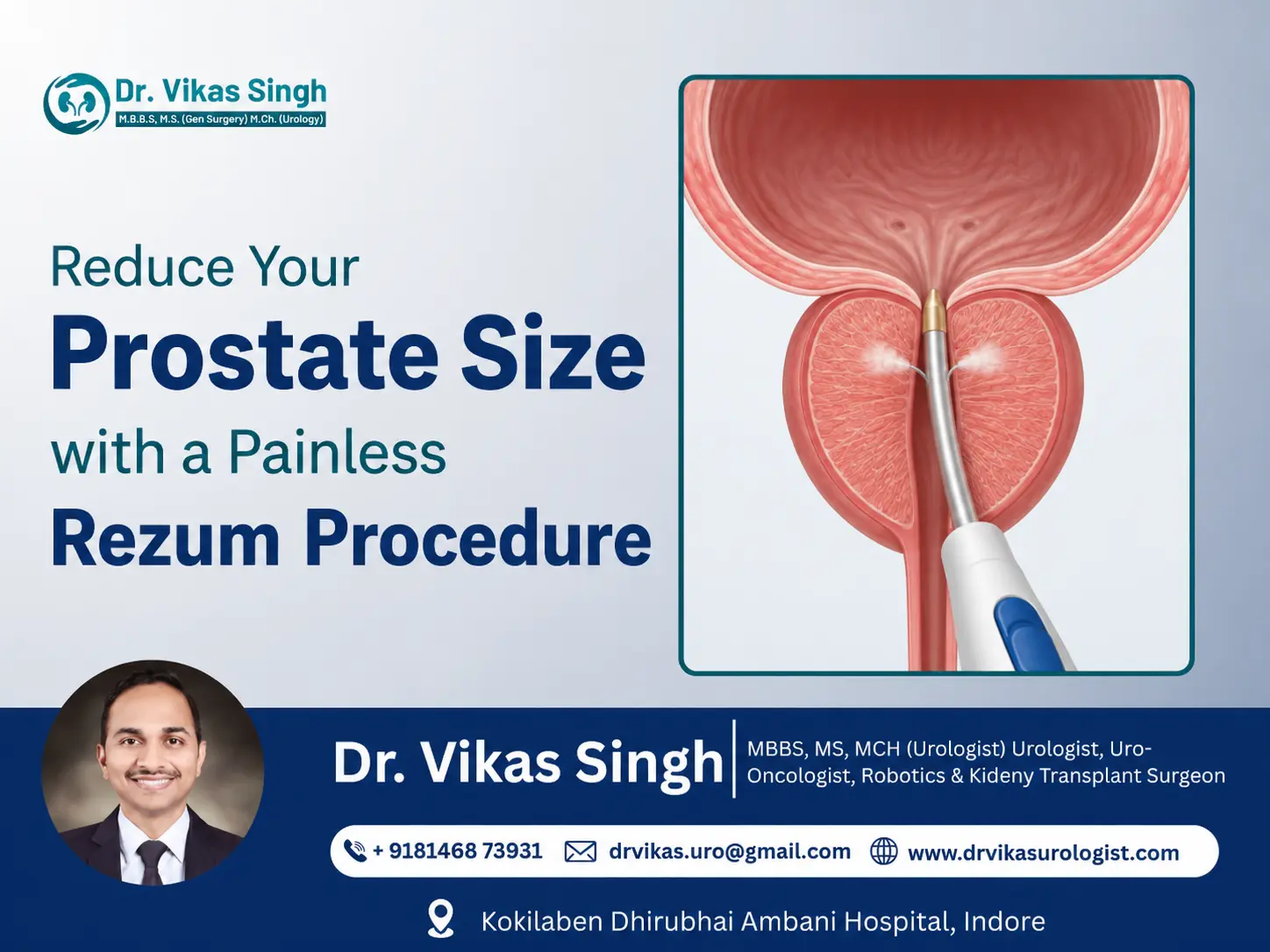
- Enlarged prostate: medicines that relax or shrink the prostate, or procedures such as UroLift, iTind, or surgery.
- Urethral stricture: dilation, internal urethrotomy, or urethroplasty for lasting repair.
- Weak bladder or nerve problems: timed urination, medicines, and sometimes clean intermittent catheterization.
- Prolapse or pelvic floor problems: pelvic floor therapy or surgical repair.
- Medicine-related causes: dose changes or alternatives, guided by your doctor.
- Infections or stones: antibiotics or stone removal.
Simple Self-Care Tips While You Wait for an Appointment
These habits can ease symptoms, though they do not replace a medical check-up:
- Double voiding: after you finish, wait a moment and try again.
- Relax your shoulders and pelvic muscles instead of straining.
- Urinate on a regular schedule, rather than waiting for strong urgency.
- Treat constipation with fibre, fluids, and movement.
- Limit caffeine and alcohol, which can irritate the bladder.
- Drink enough water during the day, but reduce fluids before bedtime.
When to See a Urologist
Book a consultation if the feeling lasts more than a couple of weeks, your stream is getting weaker, or you keep getting urinary infections. Early evaluation is simple and painless, and often prevents complications.
Why Choose Dr. Vikas Singh for Bladder and Urinary Problems
Dr. Vikas Singh (MBBS, MS, MCh) is widely regarded as the best urologist in Indore, and many patients also know him as a famous urologist in Indore for his thorough, patient-first approach.
He takes time to listen, orders only the tests you truly need, and explains your results clearly. Whether the cause is the prostate, a stricture, or the bladder itself, he builds a treatment plan around your symptoms and lifestyle.
Book Your Bladder Health Consultation in Indore
| Tired of feeling like you never finish urinating? Find the cause and fix it. Dr. Vikas Singh, regarded as the best urologist in Indore for bladder and prostate problems, offers accurate diagnosis and effective treatment. Call +91 81468 73931 or book your appointment online today. |
Frequently Asked Questions
1. What causes the feeling that your bladder is not empty after urinating?
Common causes include an enlarged prostate in men, a urethral stricture, a weak bladder muscle, nerve problems from diabetes or other conditions, constipation, certain medicines, and pelvic organ prolapse in women. A simple bladder scan can show how much urine is left behind.
2. Is it dangerous if my bladder doesn’t empty completely?
It can be if ignored. Leftover urine raises the risk of infections, bladder stones, and bladder or kidney damage over time. Mild cases are manageable, but you should see a doctor if the problem persists or worsens.
3. How can I empty my bladder completely?
Try double voiding, relax your muscles instead of straining, urinate on a regular schedule, and treat constipation. If the feeling continues, get medically checked, because the underlying cause often needs treatment.