
Waking up to leaks, needing to rush to the bathroom, or dealing with unexpected dribbling after prostate surgery can feel isolating, but urinary incontinence in men after this procedure is far more common, and far more treatable, than most patients realize.
It happens because the surgery affects the muscles and nerves that control bladder function, and for most men, it improves significantly within the first year with the right approach. This guide explains why it happens, how long it typically lasts, and the treatments that actually help men regain control.
What Is Urinary Incontinence in Men?
Urinary incontinence is the unintentional leakage of urine, ranging from a few drops during physical activity to a complete loss of bladder control. In men, it is most commonly linked to prostate surgery, though it can also result from an enlarged prostate, nerve damage, or age-related muscle weakness.
Understanding the specific type of incontinence you’re experiencing is the first step toward effective treatment, since not all cases are caused by the same underlying problem.
Types of Urinary Incontinence in Men
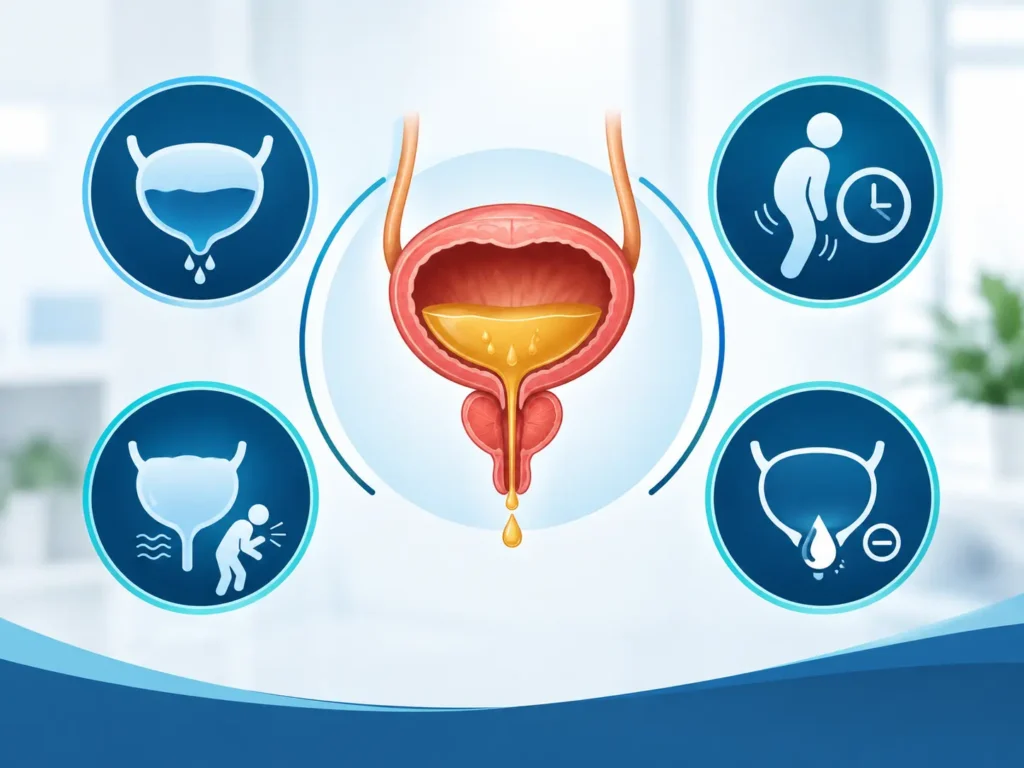
Doctors classify urinary incontinence in men into a few distinct categories, each with different causes and treatment approaches:
- Stress incontinence: leakage during physical exertion, coughing, sneezing, or lifting, caused by a weakened sphincter muscle.
- Urge incontinence: a sudden, strong need to urinate followed by involuntary leakage, often linked to an overactive bladder.
- Overflow incontinence: frequent dribbling caused by a bladder that doesn’t empty completely.
- Mixed incontinence: a combination of stress and urge incontinence occurring together.
After prostate surgery, stress incontinence is by far the most common type, since the procedure can affect the muscles that keep urine from leaking during movement.
Why Prostate Surgery Causes Urinary Incontinence in Men
The prostate sits close to the urinary sphincter, the muscle responsible for holding urine in the bladder. During procedures like a radical prostatectomy, this muscle or its supporting nerves can be stretched, weakened, or temporarily affected, even with the most precise surgical technique.
Common surgical reasons behind urinary incontinence in men after prostate surgery include:
- Direct impact on the urinary sphincter during prostate removal.
- Temporary nerve disruption near the surgical site.
- Swelling or scar tissue affecting normal muscle function during early healing.
- Weakness in the pelvic floor muscles that support bladder control.
How Common Is Urinary Incontinence in Men After Prostate Surgery?
Some degree of urinary leakage is expected in nearly all men immediately after prostate surgery, particularly a radical prostatectomy. The encouraging part is that most men see steady improvement over the following weeks and months as swelling resolves and pelvic floor strength returns.
Long-term, persistent incontinence affects a smaller percentage of men, and even then, effective treatments are available to restore meaningful bladder control.
How Long Does Urinary Incontinence in Men Last After Prostate Surgery?
Recovery timelines vary from person to person, but most men notice gradual improvement within the first three to six months after surgery. Continued progress, especially with pelvic floor exercises, often continues for up to a year.
If leakage hasn’t improved meaningfully after 12 months, it’s a good time to discuss further treatment options with a urologist rather than assuming nothing more can be done.
Non-Surgical Treatments for Urinary Incontinence in Men
Most men start with conservative treatment, which is highly effective, especially in the first year after surgery.
• Pelvic floor (Kegel) exercises: strengthen the muscles that support bladder control, ideally started before or soon after surgery
• Bladder training: gradually extending the time between bathroom visits to improve bladder capacity and control
• Scheduled voiding: urinating on a fixed schedule rather than waiting for urgency, which helps retrain the bladder
• Medications: certain drugs can help manage urge incontinence or overactive bladder symptoms
• Absorbent products and external devices: practical, short-term support while other treatments take effect
Surgical and Procedural Treatments for Persistent Incontinence
When conservative treatment doesn’t fully resolve symptoms after 12 months or so, several effective procedural options exist depending on the severity of leakage.
| Treatment | Best For | What It Involves |
| Pelvic floor physiotherapy | Mild leakage in the first year | Guided exercises to rebuild sphincter and pelvic floor strength |
| Urethral bulking injections | Mild stress incontinence | A substance is injected near the urethra to add support and reduce leakage |
| Male sling procedure | Mild to moderate stress incontinence | A supportive mesh sling repositions and supports the urethra |
| Artificial urinary sphincter (AUS) | Moderate to severe stress incontinence | A device is implanted to manually control urine release, offering the highest success rate for significant leakage |
Lifestyle Tips to Manage Symptoms While Recovering
Alongside formal treatment, a few daily habits can meaningfully reduce leakage and improve confidence during recovery:
- Maintain a healthy weight to reduce pressure on the pelvic floor.
- Limit caffeine and alcohol, both of which can irritate the bladder.
- Stay consistent with prescribed pelvic floor exercises, even after symptoms improve.
- Avoid heavy lifting or straining during the early recovery period.
- Track fluid intake and bathroom habits to identify patterns.
When to See a Specialist for Urinary Incontinence in Men
It’s worth consulting a urologist if leakage hasn’t improved after several months of pelvic floor exercises, if it’s significantly affecting your quality of life, or if you notice new symptoms like pain or blood in the urine. Early evaluation often leads to faster, more effective treatment.
For further trusted reading on urinary incontinence after prostate surgery:
Urinary Incontinence Treatment in Indore
Dr. Vikas Singh (MBBS, MS, MCh) offers comprehensive urinary incontinence treatment in Indore, guiding men through every stage of recovery after prostate surgery, from pelvic floor rehabilitation to advanced surgical solutions when needed.
As a trusted urologist doctor in Indore, he takes time to identify the specific type and severity of incontinence before recommending a plan, ensuring men aren’t left trying generic exercises alone when a more targeted treatment could help faster.
As an experienced male urologist in Indore and widely regarded as the best urologist in Indore for post-prostatectomy recovery, Dr. Vikas Singh combines clinical expertise with genuine reassurance, helping patients understand that this is a common, manageable part of recovery, not a permanent setback.
Book Your Incontinence Consultation in Indore
| Still dealing with leakage after prostate surgery and unsure what’s normal? Get an accurate evaluation and a treatment plan built around your specific symptoms. Dr. Vikas Singh, regarded as the best urologist in Indore for post-surgical recovery, offers honest, compassionate guidance. Call +91 81468 73931 or book your appointment online today. |
Frequently Asked Questions
1. How long does incontinence last after prostate surgery?
Most men see steady improvement within three to six months after surgery, with continued progress for up to a year, especially with consistent pelvic floor exercises. If leakage hasn’t improved significantly after 12 months, further treatment options should be discussed with a urologist.
2. Can urinary incontinence in men be cured after prostate surgery?
For most men, yes, symptoms improve substantially or resolve completely with time and pelvic floor exercises. For those with persistent leakage, procedures like a male sling or artificial urinary sphincter can restore meaningful, long-term bladder control.
3. What exercises help with incontinence after prostate surgery?
Pelvic floor exercises, commonly known as Kegel exercises, are the most effective first-line treatment. They involve repeatedly contracting and relaxing the muscles that control urine flow, ideally guided by a physiotherapist or urologist for correct technique.