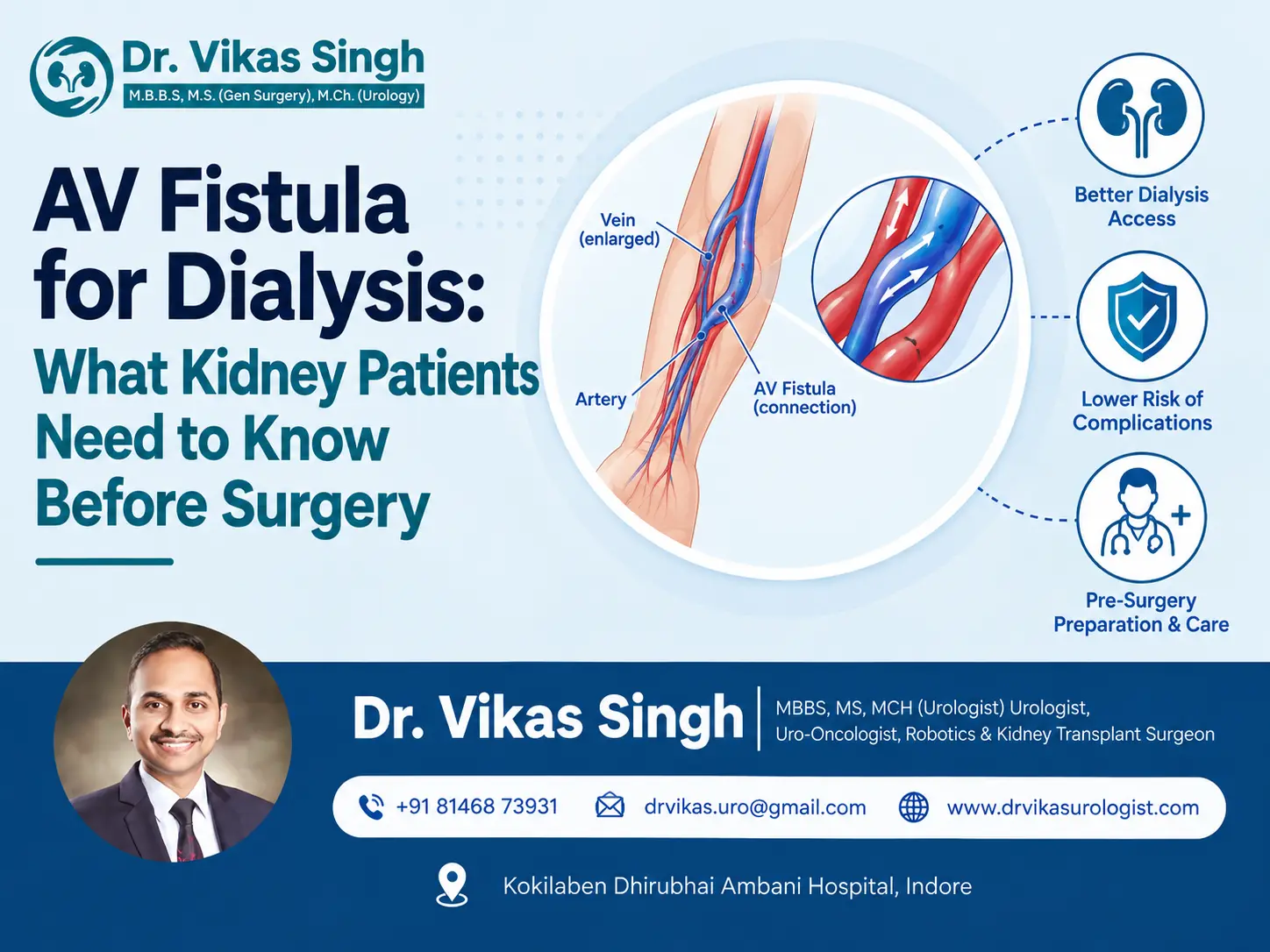
If your nephrologist has recommended an AV fistula for dialysis, you’re likely facing a mix of questions and uncertainty about what the surgery involves and why it’s needed. An AV fistula is a surgically created connection between an artery and a vein, usually in the arm, that provides safe, reliable access for dialysis treatment.
It’s considered the gold standard vascular access for long-term dialysis because it lasts longer and carries fewer complications than other access types. This guide walks you through exactly what to expect before, during, and after AV fistula surgery, so you can go in prepared and confident.
What Is an AV Fistula for Dialysis?
An AV fistula, short for arteriovenous fistula, is created by surgically joining an artery directly to a nearby vein, most commonly in the wrist or forearm. This connection allows a much larger volume of blood to flow through the vein, causing it to thicken and widen over time, a process called maturation.
Once matured, the vein can be safely and repeatedly accessed with dialysis needles, allowing blood to be filtered and returned to the body efficiently during each session.
Why Doctors Prefer an AV Fistula for Dialysis Over Other Access Types
There are three main types of vascular access used for dialysis, and an AV fistula is consistently recommended first whenever it’s a viable option for the patient.
| Access Type | Durability | Infection Risk |
| AV Fistula | Can last many years with proper care | Lowest, since it uses the patient’s own blood vessels |
| AV Graft | Shorter lifespan than a fistula, often a few years | Moderate, due to synthetic material |
| Central Venous Catheter | Meant for short-term or urgent use only | Highest, as it exits directly through the skin |
Who Needs an AV Fistula for Dialysis?
An AV fistula is recommended for patients expected to need dialysis for an extended period, particularly those with chronic kidney disease progressing toward end-stage renal failure. Ideally, the fistula is planned and created well before dialysis actually becomes necessary.
Your nephrologist or urologist will assess several factors before recommending surgery, including:
- The condition and size of your veins and arteries, often checked with an ultrasound.
- How soon dialysis is expected to be needed.
- Your overall health and any history of vascular disease.
- Which arm is non-dominant, since that side is typically preferred for the fistula.
How AV Fistula Surgery Works
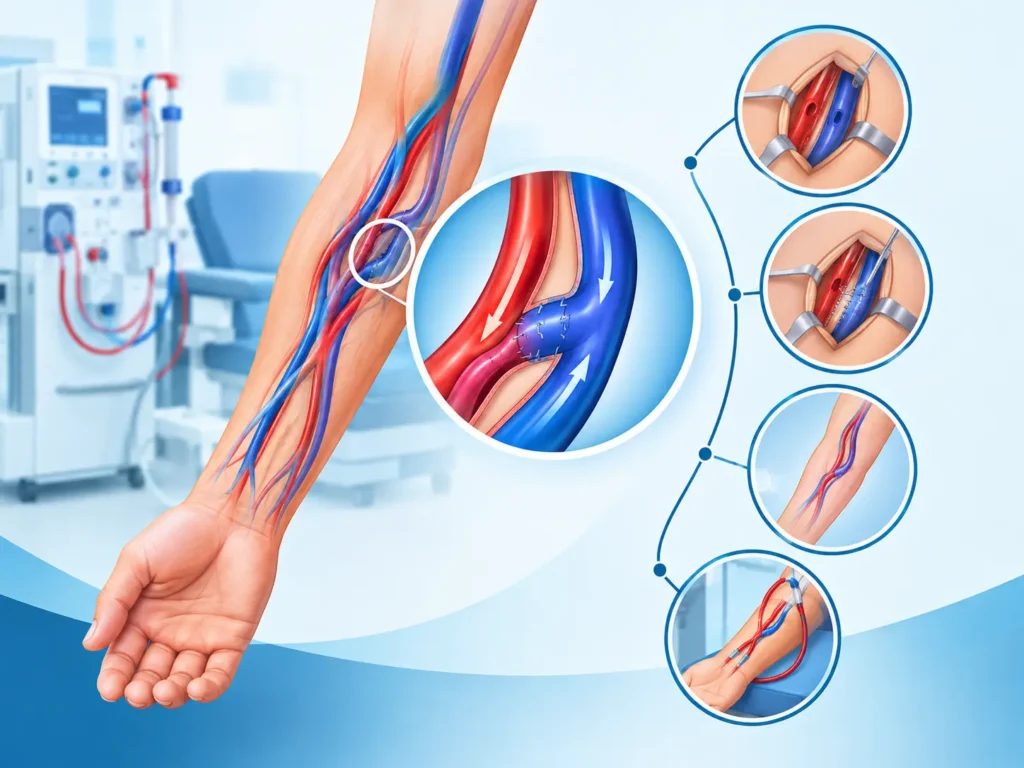
AV fistula surgery is typically performed under local or regional anesthesia and takes about one to two hours in most cases. The surgeon makes a small incision, usually near the wrist or elbow, and joins the artery to the vein directly.
Most patients go home the same day, since this is generally an outpatient procedure with a relatively quick recovery from the surgery itself, even though the fistula needs additional time to mature before it’s ready for use.
Life Before Surgery: What to Expect and How to Prepare
Preparing properly for AV fistula surgery can improve both the outcome and how smoothly your recovery goes.
- Avoid blood draws, IVs, and blood pressure cuffs on the arm planned for the fistula in the weeks leading up to surgery.
- Keep the planned arm’s veins protected and unused for other medical procedures.
- Inform your doctor of all medications, especially blood thinners.
- Ask your surgeon about vein-preserving practices well in advance if dialysis is anticipated.
The Maturation Process: Why Your AV Fistula Needs Time Before Use
After surgery, an AV fistula for dialysis typically needs six to twelve weeks to mature before it’s ready for needle access. During this period, increased blood flow gradually strengthens and widens the vein wall.
Using the fistula too early, before it has properly matured, increases the risk of complications, which is why your care team will carefully assess readiness before your first dialysis session using it.
Caring for Your AV Fistula After Surgery
Proper care significantly extends the life of your fistula and reduces the risk of complications. Simple daily habits make a real difference:
- Check the fistula daily for a thrill, a gentle buzzing vibration that confirms good blood flow.
- Avoid tight clothing, jewelry, or blood pressure checks on the fistula arm.
- Don’t sleep on the arm with the fistula or put pressure on it.
- Keep the surgical site clean and dry until fully healed.
- Perform gentle hand exercises, if recommended, to encourage healthy vein development.
Signs of a Problem: When to Call Your Doctor
While most fistulas function well for years, certain warning signs need prompt medical attention rather than waiting for your next appointment:
- Loss of the normal thrill or buzzing sensation over the fistula.
- Signs of infection like redness, warmth, or pus at the surgical site.
- Significant swelling in the hand or arm.
- Cold, pale, or numb fingers, which could indicate reduced blood flow.
- Persistent pain that doesn’t improve with rest.
Risks and Complications of an AV Fistula for Dialysis
Although an AV fistula is the safest long-term access option, it isn’t entirely without risk. Possible complications include failure to mature properly, narrowing of the vein over time, clotting, or, less commonly, an aneurysm forming at the access site.
Regular monitoring by your care team helps catch these issues early, often before they become serious enough to affect your dialysis schedule.
AV Fistula Surgery in Indore
Dr. Vikas Singh (MBBS, MS, MCh) is a trusted AV fistula surgeon in Indore, guiding kidney patients through every stage, from initial vein assessment to surgery and long-term fistula care.
As an experienced AV fistula doctor in Indore, he carefully evaluates each patient’s vascular anatomy before surgery, aiming to create a fistula with the best chance of long-term success rather than rushing into a procedure. For patients specifically searching for the best AV fistula doctor in Indore, his clinic combines precise surgical technique with clear guidance on maturation and aftercare.
As a leading urologist doctor in Indore and one of the most trusted male urologist in Indore names for dialysis access surgery, Dr. Vikas Singh helps patients approach this important step in their kidney care journey with confidence rather than anxiety.
Book Your AV Fistula Consultation in Indore
| Preparing for dialysis and need an AV fistula evaluation? Get an expert assessment of your vein health and a clear surgical plan. Dr. Vikas Singh, regarded as the best AV fistula doctor in Indore, offers precise surgical care and honest guidance every step of the way. Call +91 81468 73931 or book your appointment online today. |
Frequently Asked Questions
1. How long does an AV fistula last for dialysis?
A well-functioning AV fistula can last many years, often a decade or longer, with proper care and regular monitoring. This durability is one of the main reasons doctors prefer it over other types of dialysis access.
2. Is AV fistula surgery painful?
AV fistula surgery is typically performed under local or regional anesthesia, so patients feel little to no pain during the procedure itself. Some mild soreness or swelling at the site is normal for a few days afterward and is usually managed with simple pain relief.
3. How long does it take for an AV fistula to be ready for use?
Most AV fistulas need about six to twelve weeks to mature before they’re ready for dialysis needle access. Your care team will check factors like blood flow and vein thickness before confirming it’s safe to use.