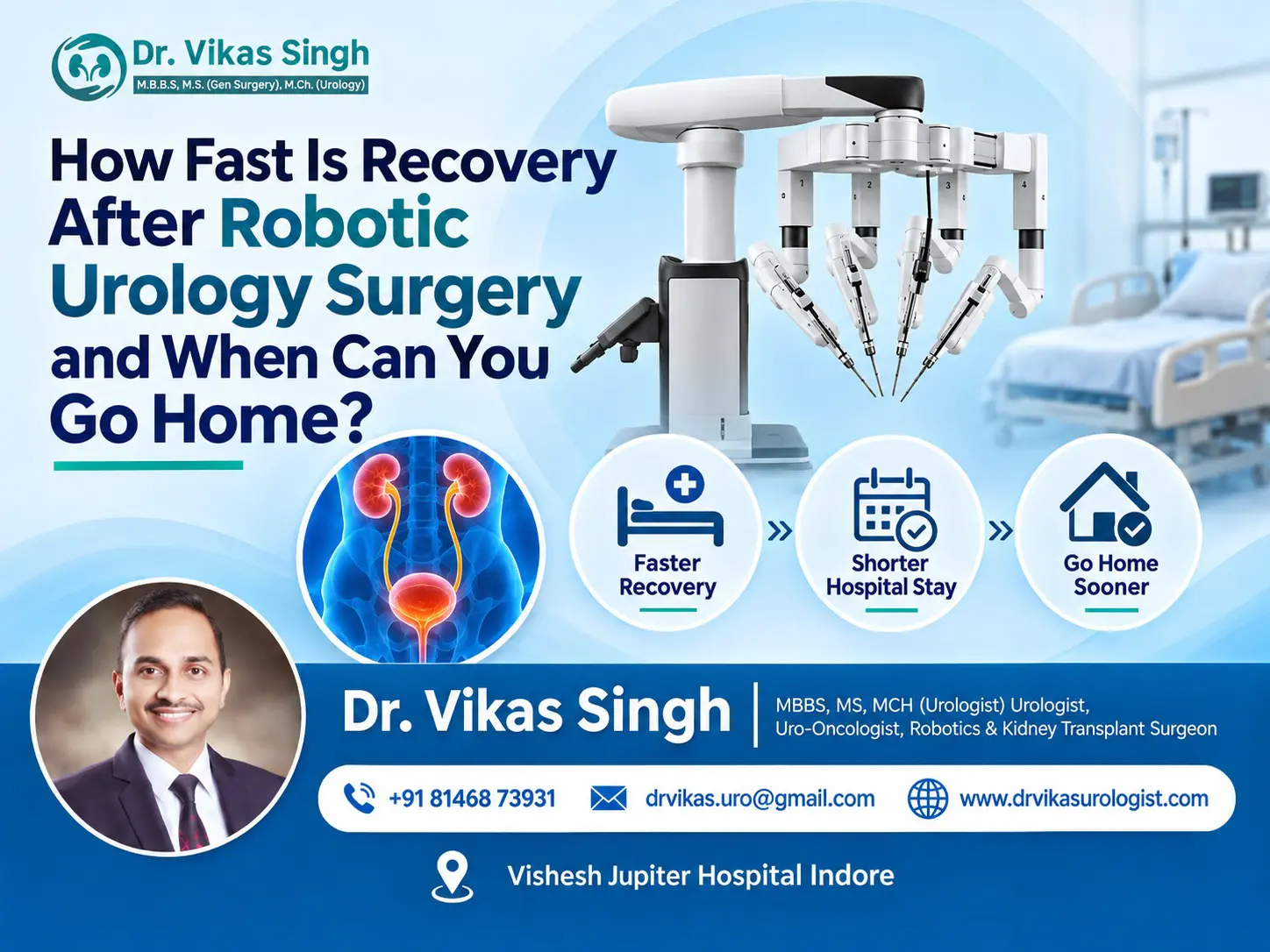
If you or a family member is planning a kidney, prostate, or bladder operation, one of the first questions is usually about recovery after robotic urology surgery. The encouraging answer is that recovery is often faster than after traditional open surgery. Many patients go home within one to three days and return to light activity within a couple of weeks, though the exact timeline depends on the procedure.
A minimally invasive urology surgeon uses small keyhole cuts instead of one large incision, which usually means less pain and quicker healing. This guide explains what to expect, from hospital discharge to full recovery.
How Fast Is Recovery After Robotic Urology Surgery?
Most patients walk within hours of surgery and spend one to three days in hospital after common robotic procedures. Larger operations, such as bladder removal or kidney transplant, usually need a longer stay.
Light daily activity often resumes within one to two weeks, while heavy lifting and strenuous exercise are usually avoided for about four to six weeks. Your own timeline will depend on the operation, your age, and your general health.
Why Recovery After Robotic Urology Surgery Is Often Faster
Robotic surgery is performed through several small incisions, each about the size of a buttonhole. A robotic urology specialist controls the instruments from a console, working with a magnified, three-dimensional view.
Compared with open surgery, this approach generally brings several advantages:
- Smaller wounds, which heal faster and look less noticeable.
- Less blood loss during the operation.
- Usually less pain and a lower need for strong painkillers.
- A lower risk of wound infection and hernia at the cut site.
- A shorter hospital stay and earlier return to normal routines.
When Can You Go Home After Robotic Urology Surgery?
Your surgical team decides on discharge based on how well you are recovering, not on a fixed date. Before you leave, a robotic surgery doctor will usually check that:
- Your pain is controlled with tablets rather than injections.
- You can drink and eat without vomiting.
- You are walking around independently.
- Your bowel function is returning, such as passing gas.
- You have no fever and your blood tests look stable.
- You and your family understand how to care for any catheter, drain, or wound.
Typical Hospital Stay and Recovery by Procedure
Every patient is different, and these are only approximate ranges. A urology specialist in Indore will give you a personal estimate after reviewing your case.
| Robotic Procedure | Typical Hospital Stay | Return to Light Activity | Avoid Heavy Lifting |
| Prostate removal (prostatectomy) | 1 to 2 days | About 2 to 3 weeks | About 4 to 6 weeks |
| Partial kidney removal (nephrectomy) | 2 to 3 days | About 2 to 4 weeks | About 4 to 6 weeks |
| Pyeloplasty (kidney blockage repair) | 1 to 2 days | About 1 to 2 weeks | About 4 weeks |
| Bladder removal (cystectomy) | 5 to 8 days | Several weeks | 6 weeks or more |
| Kidney transplant | About 4 to 7 days | Several weeks | As advised by the transplant team |
Recovery After Robotic Urology Surgery: A Week-by-Week Timeline
While details vary, most patients pass through these stages:
- Day of surgery: you are encouraged to sit up and take short walks within hours, which lowers the risk of clots and chest problems.
- Days 1 to 3: you stay in hospital, with pain relief, a catheter or drain if needed, and gradual return to normal food.
- Week 1: you rest at home, walk several times a day, and manage any catheter or wound care.
- Weeks 2 to 4: energy improves, you can return to desk work if cleared, and short outings feel easier.
- Weeks 4 to 6: many restrictions ease, and gentle exercise can often restart with your doctor’s approval.
- Months 2 to 3: most people feel close to normal, although full functional recovery can take longer after some operations.
What Is Normal During Recovery?
Knowing what to expect makes recovery far less stressful. An experienced urologist in Indore will usually prepare you for these common experiences:
- Mild to moderate soreness around the small incisions.
- Shoulder or upper abdominal discomfort from the gas used during surgery, which settles within a few days.
- Bloating or constipation, especially while taking pain medicines.
- Tiredness, which can last a few weeks.
- Blood-tinged urine or mild urinary urgency, depending on the operation.
- Bruising or mild swelling near the incisions.
Warning Signs: When to Call Your Surgeon
Most recoveries go smoothly, but contact your surgical team promptly if you notice:
- Fever of 38 degrees Celsius (100.4 degrees Fahrenheit) or higher, or chills.
- Redness, swelling, or discharge from a wound.
- Severe or worsening pain that medicines do not relieve.
- Little or no urine output, or a catheter that stops draining.
- Heavy bleeding or large clots in the urine.
- Persistent vomiting or inability to eat or drink.
- Pain, redness, or swelling in one calf.
Factors That Affect Your Recovery
Two people having the same operation can recover at different speeds. The main influences include:
- The type and complexity of the operation.
- Your age and overall fitness.
- Conditions such as diabetes, obesity, or heart and lung disease.
- Smoking, which slows wound healing.
- Previous abdominal surgeries or scarring.
- How closely you follow your aftercare instructions.
How to Speed Up Your Recovery After Robotic Urology Surgery
You can influence your recovery both before and after the operation. A robotic surgery specialist in Indore will usually suggest steps like these:
- Before surgery: stop smoking, control blood sugar, stay active, and eat a balanced diet.
- Before prostate surgery: begin pelvic floor exercises as advised.
- After surgery: walk a little more each day, rather than staying in bed.
- Drink plenty of fluids and eat protein-rich foods to support healing.
- Take medicines exactly as prescribed, including stool softeners if recommended.
- Avoid heavy lifting, straining, and strenuous exercise until cleared.
- Keep every follow-up appointment.
Going Back to Work, Driving and Daily Life
Many people return to desk work within two to four weeks, depending on the procedure and how they feel. Jobs that involve heavy lifting or long physical effort usually need a longer break.
Avoid driving while taking strong painkillers, and wait until you can brake suddenly without pain. Your surgeon will also advise when it is safe to resume exercise and intimacy.
Questions to Ask Before Your Surgery
Clear answers reduce anxiety and help you plan time off and home support. Consider asking your urologist doctor in Indore:
- How long will I be in hospital?
- Will I go home with a catheter, and for how long?
- When can I return to work and exercise?
- What pain relief will I be given?
- Who do I call if something worries me after discharge?
Why Choose Dr. Vikas Singh for Robotic Urology Surgery
Dr. Vikas Singh (MBBS, MS, MCh) is a robotic urology surgeon in Indore and a uro-oncologist who also performs robotic kidney transplant surgery. He is widely regarded as the best urologist in Indore, and many patients also know him as a famous urologist in Indore for his careful, patient-first approach.
He explains each step, from preparation to discharge, so you know what to expect before you walk into the operating theatre. With clear aftercare guidance and close follow-up, he helps patients heal safely and return to normal life as quickly as their bodies allow.
Book Your Robotic Surgery Consultation in Indore
| Planning robotic urology surgery and want to know what recovery will look like for you? Get a clear, personal answer from Dr. Vikas Singh, regarded as the best urologist in Indore for robotic and minimally invasive surgery. Call +91 81468 73931 or book your appointment online today. |
Frequently Asked Questions
1. How long does it take to recover from robotic surgery?
Many people feel comfortable doing light activity within one to two weeks, and return to most normal routines in four to six weeks. Larger operations, such as bladder removal or kidney transplant, take longer, and your surgeon will give you a personal timeline.
2. How long do you stay in the hospital after robotic surgery?
Common robotic urology procedures usually need a stay of one to three days. Bigger operations may need five to eight days or more, and discharge depends on your pain control, eating, walking, and overall recovery.
3. Is robotic surgery less painful than open surgery?
Generally, yes. Smaller incisions usually mean less pain and less need for strong painkillers. Some soreness and shoulder discomfort from the surgical gas are still normal, and pain levels vary between patients.